
Africa’s Refining Reset: Dangote Scales Up as Ghana Tests Crude-at-Home
Africa’s downstream reset is no longer just a policy slogan. As Dangote tests above nameplate capacity in Nigeria, Ghana is pushing its own crude into local refineries, with Sentuo receiving Jubilee crude and TOR’s recovery gathering infrastructure momentum. The real test now is whether these milestones can become a durable refining system built on steady feedstock, disciplined pricing and industrial trust.
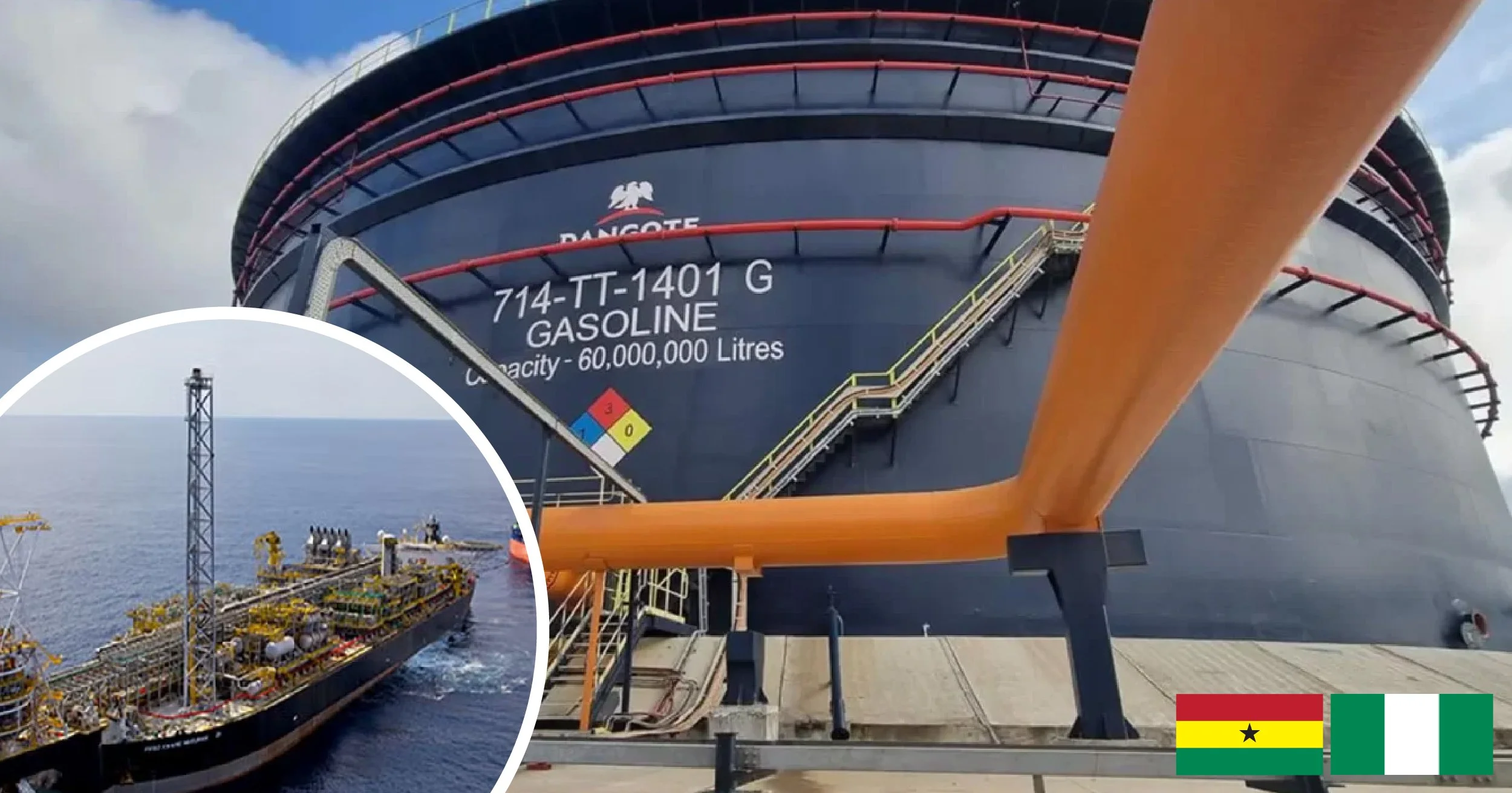
Lagos, Nigeria | June 9, 2026 - At 700,000 barrels per day in a performance test, the Dangote Refinery has crossed from promise into market power. But Ghana’s quieter move may prove the more revealing test of Africa’s downstream future: Jubilee crude has now berthed for processing at Sentuo Oil Refinery, while Tema Oil Refinery’s own crude-processing reset is being folded into a wider infrastructure and expansion push.
The two developments sit on opposite ends of Africa’s refining ambition. Dangote is scale, private capital and regional product-market force. Ghana is trying something more delicate: linking upstream production to domestic refining through both a newer private refinery and a legacy state-owned plant that is still rebuilding trust after years of stop-start recovery.
Together, they mark a week in which Africa’s old downstream contradiction moved from policy paper to physical barrel.
That contradiction was sharpened this month by the African Petroleum Producers’ Organisation (APPO). In its June editorial, APPO said Africa produces about 12% of the world’s oil but imports more than 60% of its refined products, a structure it described as the result of weak regulatory coordination and inadequate financing for downstream infrastructure. The diagnosis is familiar across the continent: crude leaves African shores, value is added elsewhere, and finished fuels return at a premium.
Dangote, Sentuo and TOR now sit inside that problem, and perhaps inside its first serious reversal.
Dangote Crosses the Scale Line
Nigeria’s Dangote Petroleum Refinery has long been treated as Africa’s refining wager: a privately built mega-asset designed to break the import dependence of the continent’s largest crude producer. This week, it acquired a harder number.
In an official update from Dangote Petroleum Refinery, the company said the refinery had increased crude oil processing capacity to 700,000 bpd in a performance test, above its 650,000 bpd nameplate capacity. Reuters also reported that the refinery had processed 700,000 bpd during the test, citing the company, and noted that the milestone came as Dangote pushes a plan to more than double capacity to 1.4 million bpd within 30 months.
That matters because Dangote is no longer merely a Nigerian fuel-security project. At 700,000 bpd, it becomes a regional supply force, with implications for product flows into West Africa, Europe, the United States and beyond. Reuters reported that the refinery has been supplying domestic markets while exporting to African countries, Europe, the US and Saudi Arabia, with exports rising earlier this year before easing in May.
The refinery’s management is already speaking in global terms. In a separate Reuters report, Dangote Refinery Chief Executive David Bird said the 650,000 bpd facility had a surplus of jet fuel and could supply global markets. The same report said Dangote’s expansion strategy could lift refining capacity to 1.4 million bpd by 2028, with an additional East African plant potentially taking group capacity to 2.1 million bpd.
That East African ambition has also been amplified by Aliko Dangote. He mentions a proposed $17 billion refinery project in Kenya, planned for Mombasa, with a designed processing capacity of up to 650,000 bpd. The proposal remains an expansion signal, not a completed deal. But it shows how Dangote is increasingly positioning refining as a pan-African industrial platform rather than a one-country import-substitution project.
The old African refinery story was about state assets struggling to run. Dangote has changed the benchmark. It is now about whether private capital can build at a scale large enough to redraw product flows.
Ghana’s Different Test
Ghana’s refinery story is smaller in scale but sharper in policy meaning.
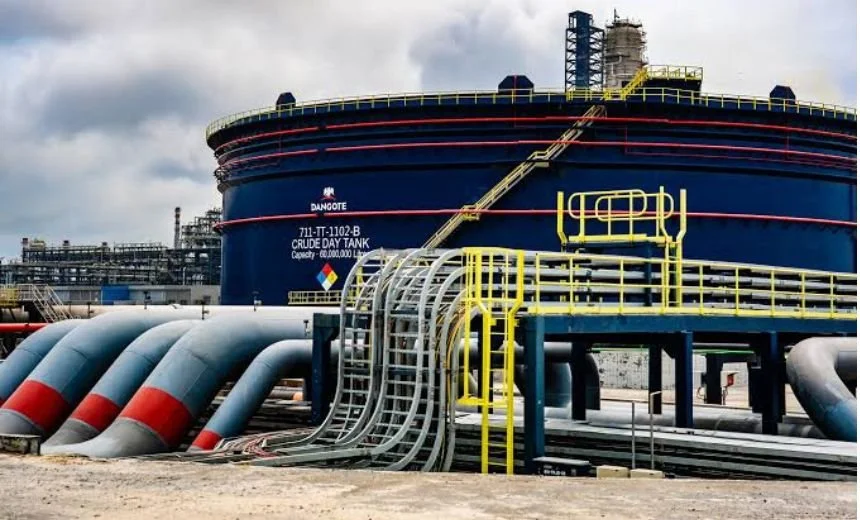
On June 8, Sentuo Oil Refinery received one million barrels of Jubilee crude for domestic processing at its Tema facility, in a ceremony streamed by GBC. Energy Minister John Abdulai Jinapor described the delivery of locally produced Jubilee crude to Sentuo as a significant milestone in Ghana’s petroleum industry, saying it reflected the government’s commitment to add value to natural resources locally, strengthen energy security and retain more economic benefits within the country.
The Minister placed the delivery in a longer chronology. He said the milestone built on President John Dramani Mahama’s vision to deepen local participation and industrial development in the petroleum sector, and followed the successful supply of Ghanaian crude oil from the TEN Fields to Tema Oil Refinery in 2016. He also said TOR is currently refining after receiving one million barrels of crude oil, further enhancing Ghana’s refining capabilities and reducing reliance on imported fuel products.
Sentuo’s Jubilee cargo is therefore not just a nationalist milestone. It is a test of whether Ghana can align government, industry stakeholders, petroleum partners, traders, regulators and refiners around a domestic value-addition model that can outlast a single shipment.
Sentuo currently operates a 40,000 bpd processing train and is preparing a second phase intended to raise total capacity to 100,000 bpd. The crude from the Jubilee Field was made available for processing into refined petroleum products for the Ghanaian market, with the liftings arranged through Tullow’s commercial relationship with Glencore and delivered via the Suezmax Mare Siculum.
That commercial chain is important. Refining resets do not survive on ceremony. They survive on crude allocation, marketing arrangements, shipping logistics, storage, pricing formulas and product offtake.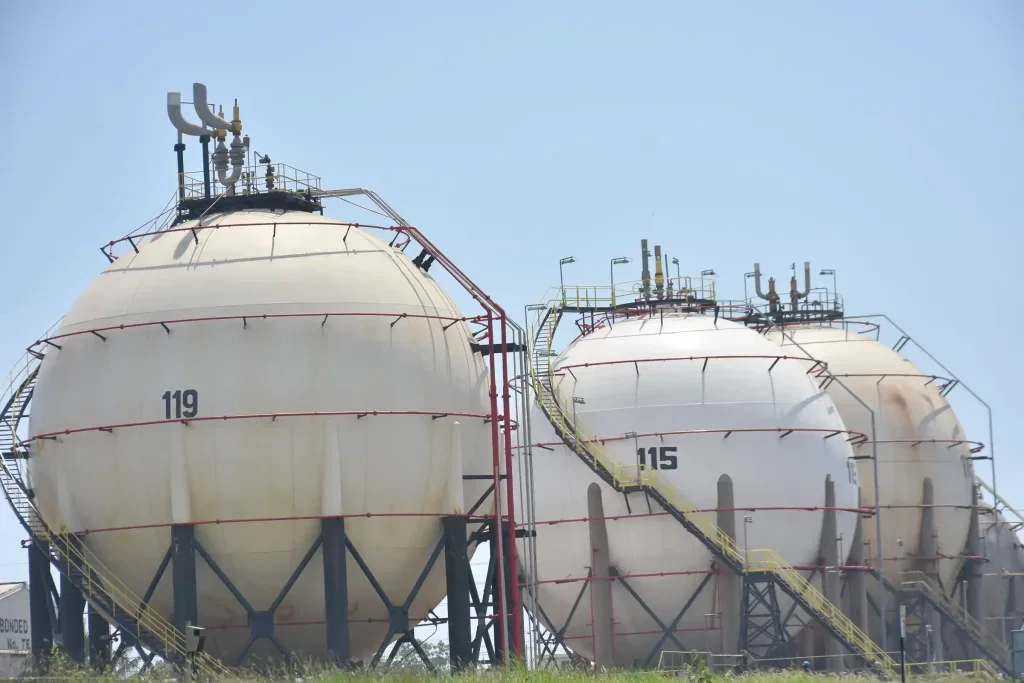
The Continental Frame
Across the continent, the same problem is being attacked from several directions.
APPO’s June editorial puts the financing and policy case most directly. It links Africa’s refined-product import dependence to the need for harmonised petroleum codes, intra-African petroleum markets and the Africa Energy Bank, which it says is scheduled to become operational in Abuja in September 2026. APPO’s argument is that refinery, pipeline, storage and terminal infrastructure cannot be built at scale without a financing architecture that understands African hydrocarbon realities.
ARDA’s engagement in Algiers this week points to the institutional layer of the same agenda. The African Refiners and Distributors Association said it met Algeria’s Minister of State and Minister of Hydrocarbons, Mohamed Arkab, with senior ministry officials and leadership from Sonatrach and Naftal in attendance. Discussions covered refining, petrochemicals, LPG, storage, distribution, environmental protection, industrial safety, regulatory frameworks and petroleum-market dynamics.
Cameroon adds the regional build-out context. Official SNH material confirms the CSTAR financing push, while project reporting describes CSTAR as a planned 30,000 bpd refinery designed to process Cameroonian crude. SNH records that it mandated BGFIBANK Cameroon to raise $210 million for the CSTAR project. That does not, by itself, verify recent claims that the project is nearing completion. But it does show that Ghana and Nigeria are not isolated cases. Refinery security is returning to the centre of African industrial policy.
South Africa shows how quickly downstream exposure reaches consumers when crude-price pressure, levy adjustments and fiscal relief rollbacks converge. The South African government’s June fuel-price adjustment statement said petrol 93 and petrol 95 would rise by 143 cents per litre from June 3, while a slate levy of 157.74 cents per litre would be implemented and general fuel-levy relief reduced. Whatever the country-specific mechanics, the lesson travels: when refined-product exposure meets crude-price pressure, currency movement and fiscal relief rollback, downstream policy arrives quickly at the pump.
The global comparison is just as instructive. Vitol said Vitol Asia signed a crude oil sale and purchase agreement with Nghi Son Petroleum Products Distribution Branch, authorised by Petrovietnam, for one crude cargo to Nghi Son Refinery. Petrovietnam’s earlier joint release with Vitol had already framed their cooperation around crude oil, petroleum products, LNG, infrastructure, decarbonisation and trading capabilities. Reuters also reported the one-cargo crude supply agreement. The relevance for Ghana is plain: refineries are not made bankable by nameplate capacity alone. They are made bankable by feedstock arrangements that work.
The Real Test Begins After the Ceremony
Africa has announced refinery ambition for decades. Many of those announcements collapsed under the weight of undercapitalisation, feedstock insecurity, poor maintenance, opaque pricing, weak offtake discipline and politics that treated refineries as symbols before treating them as businesses.
This week’s developments are different because they include physical milestones. Dangote has tested above the nameplate capacity. Sentuo has received Jubilee crude. TOR has returned to a phased operating path while preparing for capacity restoration and infrastructure expansion. APPO and ARDA are pushing the continental policy and institutional frame. Cameroon is building its own refining-security case. South Africa is reminding the region what product-price exposure feels like when fiscal cushions thin.
But the harder test starts now.
For Dangote, the question is how much market power it will acquire as it expands from Nigerian import substitution into regional and global product supply. For Ghana, the question is whether Jubilee, TEN and other available barrels can be channelled into domestic refining on terms that work for producers, refiners, government and consumers alike.
The next chapter will not be written by a first cargo, a board inspection or a performance test alone. It will be written by regular crude supply, transparent pricing, reliable operations, storage depth, disciplined offtake and capital that can stay the course.
Africa’s downstream reset has entered the refinery gate. Whether it leaves as a durable industrial system is now the real story.
