
Ceasefire Strains Emerge as Saudi Oil Artery Reportedly Hit in Early Test of Iran–US Truce
A fragile ceasefire between Iran and the United States faced an immediate test after Saudi Arabia’s critical oil infrastructure was reportedly struck within hours of its announcement, casting early doubt over a truce framed around the reopening of the Strait of Hormuz and exposing the risks still embedded in the region’s energy and security architecture.
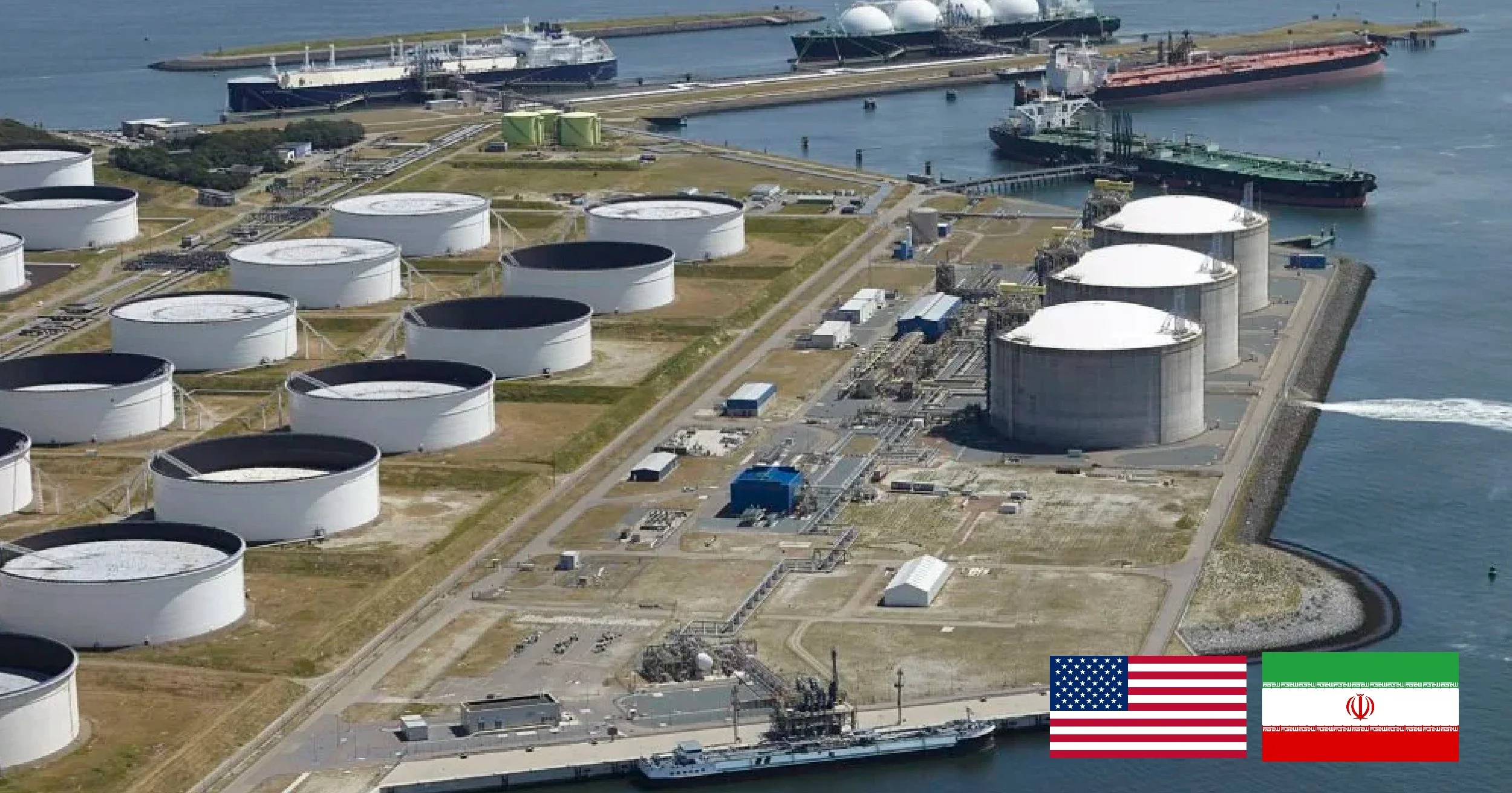
The Gulf Coast, Middle East | April 9, 2026 - Hours after a tentative ceasefire between Iran and the United States—framed around the prospective reopening of the Strait of Hormuz and outlined alongside a ten-point proposal from Tehran—Saudi Arabia’s critical oil infrastructure has reportedly come under attack, underscoring the fragility of a diplomatic process still taking shape.
At issue is Saudi Arabia’s East–West pipeline, a strategic conduit transporting crude from the Gulf coast to the Red Sea. The pipeline has reportedly been struck, according to three people familiar with the matter, with no immediate official confirmation from Riyadh. The incident, occurring in close proximity to the ceasefire announcement, highlights the continued exposure of regional energy infrastructure even as negotiations proceed.
A ceasefire framed, not settled
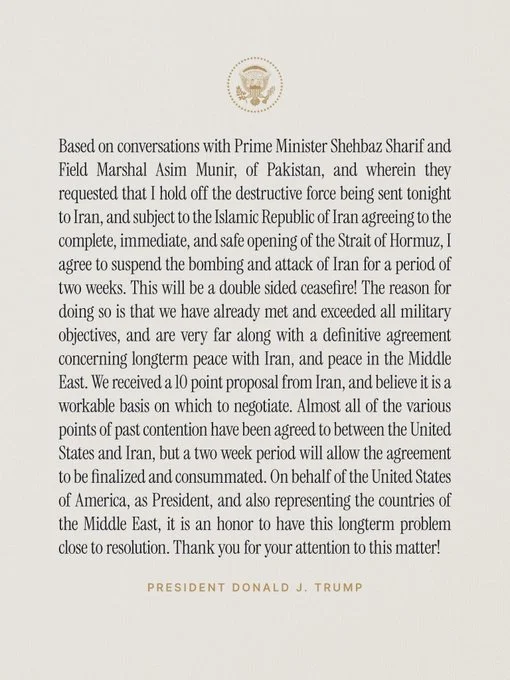
The ceasefire has been presented less as a concluded agreement than as an evolving framework. Central to its structure is the anticipated reopening of Hormuz, a maritime chokepoint through which a significant share of global oil flows, alongside a ten-point proposal advanced by Tehran as a basis for further negotiation within a two-week window.
However, the degree to which these elements reflect a shared and fully aligned understanding between both sides remains unclear. The absence of a jointly ratified framework leaves room for divergent interpretations, a gap that appears to have surfaced almost immediately.
Early signals of divergence
Mohammad Bagher Ghalibaf, the Iranian Parliament Speaker appeared to signal dissatisfaction with the trajectory of events, referencing what he described as violations of the proposed framework. While specifics were not elaborated, the intervention points to unease within Tehran over how the terms are being interpreted or applied in practice.
From Washington, JD Vance, the American Vice President, offered a clarifying note on the scope of the arrangement, stating that “the Iranians thought that the ceasefire included Lebanon and it just didn't.” The remark underscores a material disconnect in expectations, particularly regarding the geographic extent of de-escalation.
Taken together, these positions suggest that while a cessation of hostilities may have been announced, its operational boundaries remain contested.
Diplomacy continues amid uncertainty
Despite the early strain, diplomatic engagement is proceeding. Karoline Leavitt, the White House Press Secretary, confirmed that President Donald Trump is dispatching a negotiating team, led by Vance, to Pakistan for a new round of talks, with initial discussions scheduled to begin on Saturday.
The selection of Pakistan as a venue suggests an effort to establish a neutral setting for continued dialogue following it’s Prime Minister’s role in the announced ceasefire , even as questions persist over the coherence of the initial ceasefire terms.
Energy infrastructure in focus
The reported strike on the East–West pipeline carries strategic implications beyond its immediate operational impact. The pipeline functions as a key alternative route that allows Saudi crude to bypass Hormuz, reducing dependence on the strait during periods of heightened tension.
Its reported disruption, even if temporary, raises the prospect of renewed risk premiums in oil markets already conditioned by geopolitical uncertainty. The incident also serves as a reminder that critical energy infrastructure remains exposed to disruption irrespective of diplomatic overtures.
A sequence under strain
The sequence of developments, as it has unfolded, points to mounting pressure on the nascent ceasefire framework. An announcement of de-escalation was followed in close succession by reports of an infrastructure attack, public indications of dissatisfaction from Tehran, and clarifications from Washington that reveal differing interpretations of the agreement’s scope. This has been accompanied by a rapid pivot back to structured negotiations.
Fragility beneath the surface
What is emerging is not the collapse of diplomacy, but an early test of its resilience. The interplay between tentative agreements, contested interpretations and on-the-ground developments illustrates the difficulty of stabilising a theatre where strategic, political and military considerations remain tightly interwoven.
Until there is verifiable clarity on the status of the Strait of Hormuz and a more clearly defined and mutually accepted framework, the region’s risk profile is likely to remain elevated. The reported attack on Saudi infrastructure, in this context, stands less as a definitive turning point and more as an indicator of how delicate the present equilibrium remains.
