
Nigeria’s Dangote Refinery Opens a New Front as Jet Fuel Exports Pull West Africa Into Europe’s Supply Shock
Nigeria’s Dangote Refinery is beginning to change the geography of refined-fuel trade, pushing West African jet fuel into Europe just as supply shocks force the continent to widen its options. But the refinery’s rising export profile has collided with a renewed domestic fight over petrol imports, after Dangote returned to court to challenge licences issued to marketers and NNPC Ltd. The result is a defining test for Nigeria’s downstream market: whether the country can protect its new refining capacity without narrowing the competition needed to keep fuel flowing.

Lagos, Nigeria | May 18, 2026 - Nigeria is beginning to occupy a position few would have predicted at the start of Dangote Refinery’s long march from ambition to operation: an alternative source of jet fuel for Europe after a Middle East-driven supply shock forced refiners, airlines and regulators to widen their supply options. But at home, the same refinery now driving West Africa’s rise in aviation-fuel exports is locked in a fresh legal battle over whether Nigeria should keep allowing imported petrol into a market Dangote says it can increasingly supply.
The clash has turned Nigeria’s downstream sector into a two-front contest. Abroad, Dangote’s 650,000-barrel-per-day refinery is helping West Africa push jet fuel into Europe at a time of supply anxiety. At home, the refinery is again challenging import licences issued to marketers and the Nigerian National Petroleum Company Limited (NNPC Ltd), exposing a deeper struggle between industrial policy, supply security and market competition.
Europe’s Fuel Crunch Opens a Door for Nigeria
The global setting has shifted quickly. In Europe, jet fuel markets came under strain after disruption linked to the Middle East conflict, with S&P Global reporting that European aviation bodies and regulators had issued guidance on how United States-grade Jet A could supplement traditional Jet A-1 supplies where needed. European jet fuel and kerosene stocks in the Amsterdam-Rotterdam-Antwerp hub had fallen to a six-year low in April 2026, while around 40% to 44% of Europe’s jet fuel imports in 2025 originated from the Persian Gulf, leaving the region exposed to any disruption through the Strait of Hormuz.
That is where Nigeria has begun to matter. S&P Global reported that West Africa’s jet fuel exports rose to 329,000 metric tonnes in April 2026, up from just 61,000 tonnes in April 2024. Northwest Europe received 38,000 tonnes from West Africa in April, while the Mediterranean took 135,000 tonnes, compared with zero flows to both regions in the same period a year earlier. The ramp-up, S&P Global said, has been driven primarily by Nigeria’s Dangote Refinery, which began exporting jet fuel in April 2024 and has been operating at or near full levels, with separate S&P Global reporting putting its March run rate at 94% of capacity.
For Nigeria, that export momentum is strategically significant. A country long defined by the paradox of crude production and refined-product dependence is now being watched as a source of refined fuel into one of the world’s most sophisticated energy markets. But the export success has arrived just as the domestic petrol market is again becoming contested terrain.
The Old Argument Returns: Local Refining or Import Flexibility?
The fault line was visible as early as July 2024. Nigerian lawmakers set up a committee to investigate crude shortages to local refineries and alleged imports of dirty fuels, issues Reuters described as being at the heart of a rift between Dangote Refinery and the downstream regulator. The committee was also asked to examine why refineries, including Dangote, were unable to secure adequate crude supplies and why fuel queues were rising.
That dispute fed into a broader regulatory argument. Dangote accused market structures and import practices of undermining domestic refining. Regulators and marketers countered that imports remained necessary to protect supply. By March 2025, the refinery was in court seeking to halt petrol imports, arguing that the Nigerian Midstream and Downstream Petroleum Regulatory Authority (NMDPRA) was violating the law by continuing to issue import permits to NNPC Ltd and fuel traders. Reuters reported that the lawsuit said imports should be allowed only to address production shortfalls and sought 100 billion naira in damages from NMDPRA, NNPC Ltd and five smaller marketers.
The legal push appeared to soften in July 2025, when Dangote withdrew its lawsuit against the regulator and several fuel importers, including NNPC Ltd. No reason was given for the withdrawal. But the dispute itself was not resolved. The refinery’s position remained clear: if domestic supply was sufficient, continued import licences would undercut the policy case for local refining.

March Looked Like a Win for Dangote
By March 2026, policy appeared to be moving in Dangote’s direction. Reuters reported that Nigeria had suspended the issuance of petrol import licences for a second straight month as regulators began enforcing provisions of the Petroleum Industry Act, which allow imports only when domestic supply falls short. NMDPRA data showed no import licences were issued in February, while the Crude Oil Refineries Association of Nigeria said none had been issued so far in March.
The regulator’s position at the time was anchored in domestic supply. Reuters reported that Nigeria’s average daily petrol consumption fell to 56.9 million litres per day in February 2026 from 60.2 million litres in January, while Dangote Refinery supplied 36.5 million litres of petrol and 8 million litres of diesel to the local market. The regulator deemed those volumes sufficient, leading to its decision to withhold import licences.
For Dangote and other local-refining advocates, that was more than a regulatory adjustment. It was a test of whether the Petroleum Industry Act would be used to protect domestic refining margins and reduce Nigeria’s historic dependence on imported fuel.
Then the Import Gate Reopened
That position shifted sharply in May. S&P Global reported that NMDPRA had reversed course from its March posture by issuing six Nigerian marketers new petrol import licences on May 6, amounting to 720,000 metric tonnes, or roughly a fifth of the country’s average first-quarter consumption. The licences covered Matrix, AA Rano, AYM Shafa, Nipco, Pinacle and Bono, with authorisations ranging from 60,000 to 150,000 tonnes depending on permit type.
The move marked a significant departure from the import restrictions that had been used to support Dangote’s domestic refining push. It also came after a leadership change at the regulator. S&P Global reported that Saidu Mohammed had exited as NMDPRA chief executive after four months in office, while President Bola Tinubu nominated Rabiu Umar, described by S&P Global as an outgoing sales and marketing executive at Dangote Industries Limited, with local media reporting Senate confirmation on May 7.
The market logic was not straightforward. S&P Global reported that Dangote ran at 94% of capacity in March and produced enough fuel to cover Nigeria’s entire domestic petrol consumption, although supplies to the local market fell. Nigeria still imported 60,000 barrels per day, or 218,000 tonnes, of petrol in April, more than double March’s all-time low but still less than half of the 2026 average.
Dangote’s concern was not only volume. It was quality and competitive parity. In comments reported by S&P Global, Dangote Refinery chief executive David Bird said: “The only reason that could be undercut is through inferior or sanctioned products.” He added: “We are more than happy to compete on level playing field from a product quality perspective at import parity pricing.”
Dangote Goes Back to Court
On May 15, the dispute returned to the courts. Reuters reported that Dangote Petroleum Refinery had filed a new lawsuit against Nigeria’s attorney general, seeking to overturn fuel import licences issued to marketers and NNPC Ltd. The filing asks the Federal High Court in Lagos to set aside import permits issued or renewed by NMDPRA, arguing that they breach an earlier order to maintain the status quo.
The new case revives the core argument from Dangote’s earlier legal challenge: that imports should be allowed only where domestic supply falls short. Reuters reported that Dangote said in the filing that the licences issued in May undermine its operations and contravene the law. NMDPRA did not immediately respond to Reuters’ request for comment, while regulators and marketers have previously argued that imports are needed to ensure adequate supply and prevent shortages.
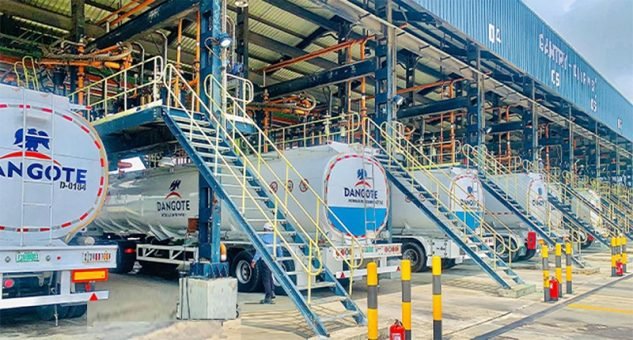
The lawsuit lands at a delicate moment. Dangote is no longer merely a domestic industrial project trying to prove it can refine. It is now part of the supply architecture feeding West Africa’s export relevance in a stressed global aviation-fuel market. That strengthens the refinery’s strategic case, but it also raises the stakes of Nigeria becoming overly dependent on one dominant fuel source.
Marketers Push Back
The Depot and Petroleum Products Marketers Association of Nigeria (DAPPMAN) responded forcefully on May 17, arguing that the import licences are not “administrative courtesies” but legal instruments through which Nigeria’s fuel supply chain functions. DAPPMAN said its members had invested billions of naira in depots, logistics networks and compliance systems on the basis that their operating licences were valid, lawful and durable.
The association framed the lawsuit as a threat not merely to individual companies but to the structure of Nigeria’s downstream market. “We respect Dangote Petroleum Refinery’s right to pursue legal remedies,” DAPPMAN said. “What we do not accept is the premise that a private refinery’s commercial interests should override a regulatory authority’s mandate to ensure adequate supply to Nigerian consumers.”
DAPPMAN’s position is the clearest articulation yet of the marketers’ counter-case: Nigeria’s fuel market, in their view, must remain multi-participant, even as domestic refining expands. Its warning was blunt: “The downstream sector works because multiple players operate within it. A lawsuit that seeks to reduce that field of players is ultimately a lawsuit against Nigerian consumers.”
The Strategic Question Now
Nigeria’s downstream story has therefore entered a more complicated phase. Dangote Refinery has strengthened the case for local refining by proving export capability, helping West Africa appear on Europe’s jet fuel map after a supply shock exposed the region’s reliance on Gulf flows. But its domestic campaign against petrol import licences has reopened the unresolved question of how Nigeria should balance refinery protection with market diversity.
For the government, the policy choice is increasingly narrow. If import licences are issued too freely, the economics of domestic refining could be weakened just as Nigeria is trying to break a decades-old dependence on imported fuel. If imports are restricted too tightly, the country risks concentrating supply around one refinery in a market where fuel shortages have immediate political and economic consequences.
That is why the Dangote lawsuit is larger than a commercial dispute. It is a test of whether Nigeria’s Petroleum Industry Act will be interpreted as an instrument for refinery-led industrial sovereignty, a safeguard for consumer supply security, or some uneasy compromise between the two. Europe may now see Nigerian jet fuel as part of its supply diversification arithmetic. Nigeria, meanwhile, is still arguing over the rules of its own fuel market.
