TotalEnergies Extends Block 32 Production Horizon as Policy Reforms Drive Angola’s Next Production Cycle
Angola’s extension of Block 32’s production horizon to 2043 is more than a routine upstream agreement. It is a calculated bet that fiscal reform, mature-field reinvestment and long-life deepwater infrastructure can help steady the country’s next oil-production cycle, with TotalEnergies again at the centre of Luanda’s push to turn ageing offshore assets into new barrels.
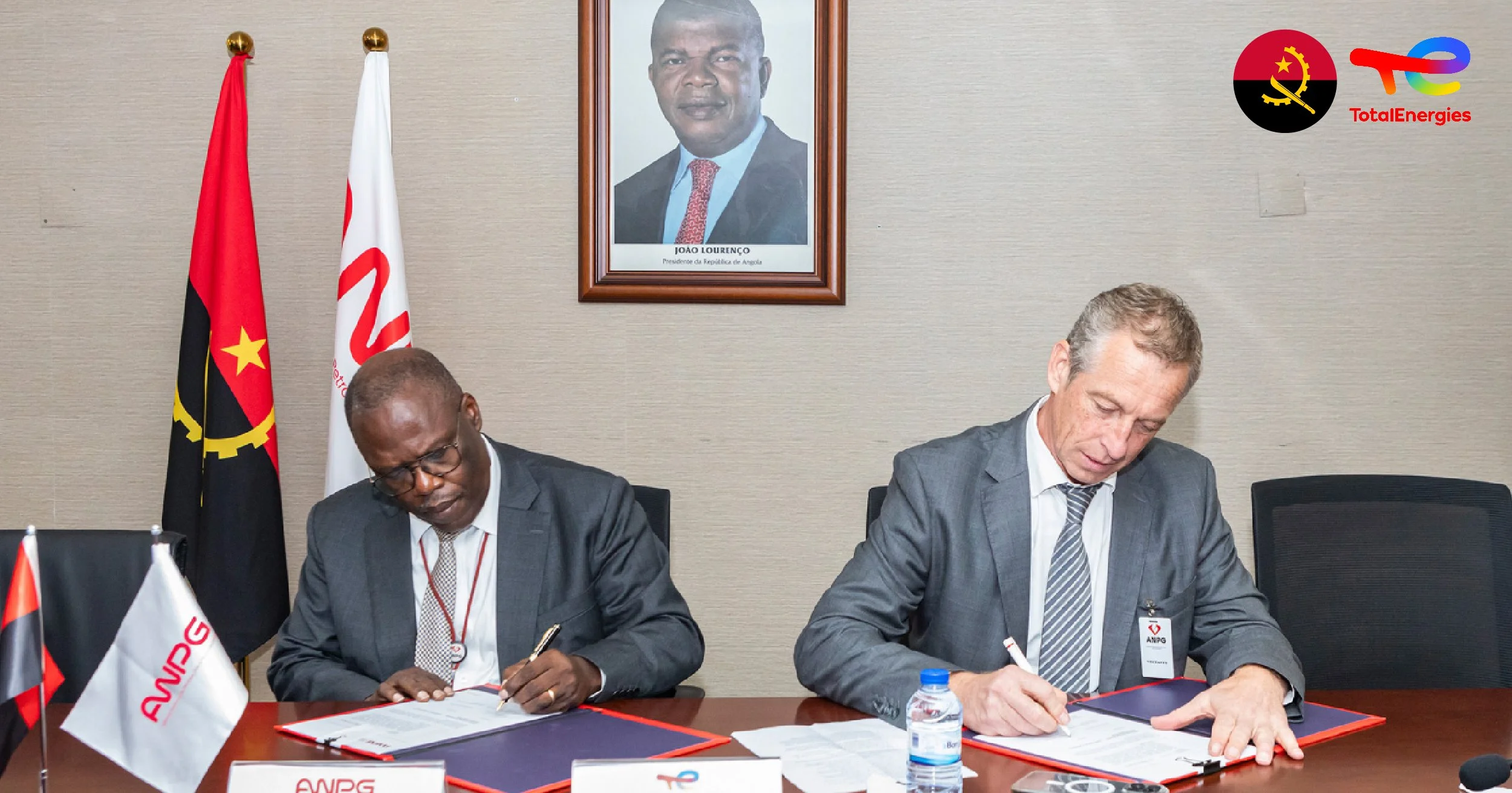
Luanda, Angola | May 13, 2026 - Angola has moved to extend the production horizon of one of its most important deepwater oil assets, after the National Agency for Petroleum, Gas and Biofuels and TotalEnergies signed an Agreement of Principles covering the continued development of Block 32 until 2043.
Signed in Luanda on 6 May 2026, the agreement gives TotalEnergies, acting on behalf of the Block 32 contractor group, the general terms for the continued development of the ultra-deepwater block. For Angola, it is more than a production-period extension. It is a test of whether recent fiscal and regulatory reforms can convert mature offshore acreage into fresh investment, new barrels and a longer runway for a petroleum sector trying to hold production steady against natural decline.
A Long-Life Bet on Block 32
The agreement covers the development areas of Cominhos, Alho, Cola, Manjericão, Colorau and Kaombo, and follows a negotiation process between Angola’s national concessionaire and TotalEnergies that ran through 2025. According to the National Agency for Petroleum, Gas and Biofuels, commonly known as ANPG, the document creates conditions for continued investment, greater operational and fiscal stability and the faster entry into production of new oil volumes.
The document was signed by Paulino Jerónimo, Chairman of ANPG’s Board of Directors, and Martin Deffontaines, General Director of TotalEnergies in Angola. Its immediate effect is to extend the production periods of Block 32’s development areas to 2043, giving the operator and partners a longer planning window for reinvestment, reservoir management and incremental development.
“Incremental production is today a concrete example of the joint effort between the National Concessionaire and the operators to create the necessary conditions for the continuity of investment and increased oil production,” Jerónimo said, adding that the understanding reached with TotalEnergies reflected “cooperation, dialogue and proactivity” between the parties.
That language matters. Angola has been trying to reposition its upstream sector after years of maturing production from legacy deepwater assets. The policy challenge is no longer simply to discover oil. It is to keep capital flowing into fields where the easiest barrels have already been produced, but where better fiscal terms, additional drilling and improved recovery can still sustain output.
From Discovery to Kaombo
Block 32 has long been one of the centrepieces of Angola’s deepwater portfolio. ExxonMobil’s current Angola deepwater-blocks profile lists the block as operated by TotalEnergies with a 30% interest, alongside Sonangol Exploração e Produção S.A. with 30%, SSI 32 with 20%, Esso Exploration and Production Angola (Overseas) Ltd. with 15% and SOMOIL Block 32 B.V. with 5%.
Located about 162 miles offshore Luanda and in water depths of 4,600 to 6,500 feet, Block 32 covers 5,090 square kilometres. Its first discovery was made in 2003. By the end of 2015, 13 discoveries had been announced, with total recoverable resources of approximately 1 billion oil-equivalent barrels.
The block’s production story is anchored by Kaombo, an ultra-deepwater project developed across six discoveries from two development areas. The northern area comprises Gengibre, Gindungo and Caril, while the southern area comprises Louro, Mostarda and Canela. The project is tied together through one of Angola’s largest offshore production systems, linking multiple reservoirs to two floating production, storage and offloading units.
The first FPSO, Kaombo Norte, started production in July 2018. The second, Kaombo Sul, followed in April 2019. TotalEnergies describes the project as an ultra-deepwater development with production capacity of 230,000 barrels per day, 59 wells and about 300 kilometres of subsea pipelines connecting the fields to the two FPSOs.
That chronology is central to the present deal. Block 32 is not an untested frontier play. It is a large, capital-intensive offshore system with existing infrastructure, established partners and a proven production base. The question now is whether Angola’s revised investment framework can make additional barrels commercially attractive enough to justify another cycle of spending.
The Reform Behind the Deal
The Block 32 agreement explicitly recognises the possible application of Angola’s Incremental Production regime, subject to eligibility criteria and approval by ANPG. That regime was introduced under Presidential Legislative Decree No. 8/24 of 20 November 2024, which created a special legal and fiscal framework for offshore mature blocks and projects in undeveloped development areas.
The reform is designed to solve a familiar upstream problem. Mature offshore fields often still contain recoverable oil, but additional projects can become uneconomic under fiscal terms designed for earlier, higher-return phases of development. Angola’s decree seeks to change that by offering a more accommodating regime for qualifying incremental production.
The decree introduced tax and commercial adjustments intended to improve the viability of incremental barrels in mature or undeveloped areas. These include reductions in petroleum production tax and petroleum income tax for association agreements, as well as improved recovery terms under production-sharing agreements, subject to eligibility thresholds and approval.
In practical terms, Angola is trying to make the next barrel investable. The state wants to protect long-term production and revenue. Operators want fiscal terms that recognise rising technical difficulty and lower marginal returns. The Block 32 extension sits directly at that intersection.
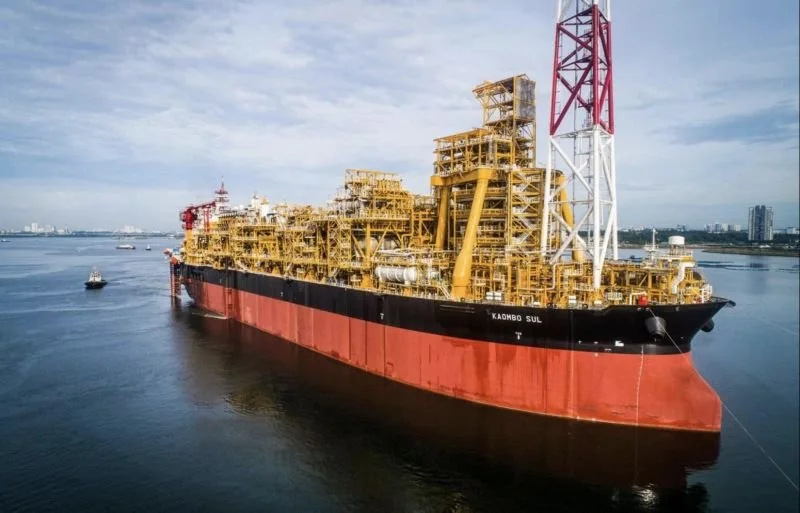
Photo Credit: DV Offshore
TotalEnergies Deepens Its Angola Position
For TotalEnergies, the agreement extends a position built over decades. In the Block 32 statement, Deffontaines said the incremental production regime would allow the company to invest more in the block with a long-term view, noting that since 2022 TotalEnergies had entered into structuring agreements in Angola representing investments of around US$9 billion.
“TotalEnergies is committed to continuing to invest, produce and maintain its position as Leading Operator in the country, contributing to the development of the energy sector, the enhancement of national resources and the creation of lasting value for Angola,” he added.
That commitment is not confined to Block 32. In May 2024, TotalEnergies reached a final investment decision on the US$6 billion Kaminho deepwater project in Block 20/11, involving the Cameia and Golfinho fields in the Kwanza Basin. The project is expected to add a new production stream from one of Angola’s key offshore basins, with first oil targeted for 2028 and plateau production expected at about 70,000 barrels per day.
The connection between Kaminho and Block 32 is strategic rather than operational. Together, they show Angola trying to run two tracks at once: bring new deepwater projects into production, while extracting more value from established offshore systems. That dual approach is important for a country whose oilfields face natural decline and whose fiscal position remains tied to petroleum performance.
Angola’s Wider Production Imperative
Angola’s upstream reforms have been shaped by a hard production reality. Mature fields decline, and the economics of late-life drilling can weaken without policy adjustment. The country has therefore been mounting a sustained campaign to attract investors, maintain production and bring on new reserves.
The Block 32 extension lands squarely in that context. It is not merely an administrative extension for an existing asset. It is part of Angola’s attempt to persuade major operators that its offshore acreage still offers scale, policy stability and commercial upside.
The African Energy Chamber framed the agreement in those terms, calling it a signal of growing confidence in Angola’s long-term upstream framework and linking it to the country’s 2024 incremental production reforms. The chamber also pointed to ExxonMobil’s Likember-01 discovery in Block 15 as an early example of the framework’s potential to unlock new activity in long-producing acreage.
The stronger claim, however, is the one supported by the Block 32 deal itself: Angola has created a framework that gives operators a reason to revisit mature assets with fresh capital. Whether that produces a sustained national output recovery will depend on project approvals, drilling performance, reservoir results and the consistency of the fiscal bargain over time.
A Supply-Security Signal Beyond Angola
Separately, Angola’s relevance is being amplified by a wider security-of-supply moment. Japan has been seeking alternative crude sources that reduce exposure to the Strait of Hormuz, with official and market reporting pointing to Africa among the regions expected to support June procurement.
The Block 32 agreement should not be overstated as a Japan-linked supply deal. It is not. But it reinforces why long-life Angolan offshore barrels matter in a market increasingly focused on diversified crude routes. For crude-importing economies, dependable supply has become more urgent. For producers such as Angola, offshore output carries value beyond domestic revenue, sitting inside a wider global conversation about resilience, route diversification and security of supply.
Angola’s challenge is to turn that external interest into durable investment. Block 32 gives it one of the clearest tests. With the production periods of its development areas extended to 2043 and the incremental production regime now part of the investment conversation, the country is asking operators to take a long view on assets that still have more to give.
The next measure of success will not be the signing ceremony. It will be whether the new terms translate into approved work programmes, additional wells, faster tie-backs and sustained production from one of Angola’s most complex offshore systems. For now, the message from Luanda is clear: Angola is not treating mature deepwater acreage as yesterday’s portfolio. It is trying to make it the bridge to its next production cycle.
