
President Hichilema Launches Zambia’s Largest Hybrid Renewable Energy Project
Zambia has moved one of its most ambitious clean-energy bets into sharper focus, with President Hakainde Hichilema launching the Leopards Hill Solar and Battery Storage Project near Lusaka. Backed by Globeleq and anchored by a 250 MWp solar plant and 150 MW/600 MWh battery system, the project is being positioned as a major test of how Zambia can diversify beyond hydropower, stabilise its grid and power industrial growth through privately backed renewable infrastructure.
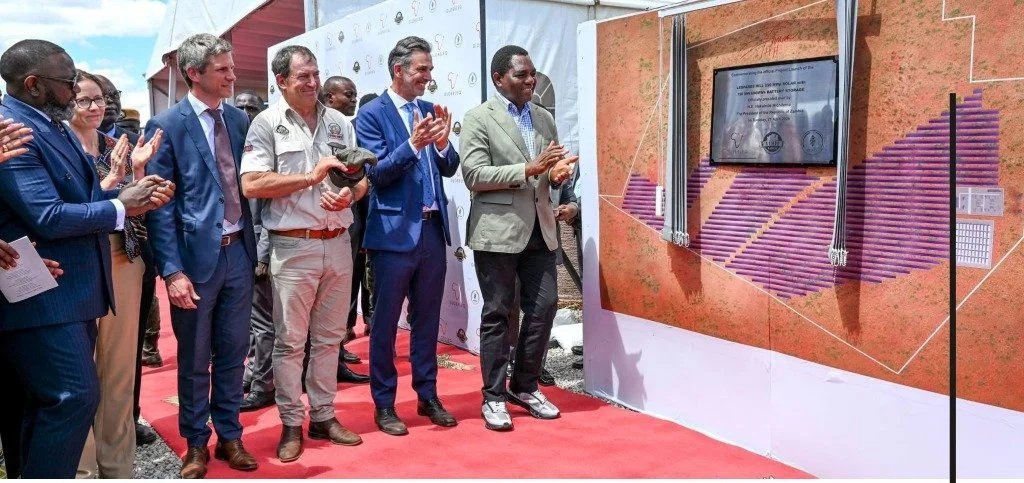
Lusaka, Zambia | May 12, 2026 - Zambia’s push to diversify its power system has taken a decisive step beyond policy language and into project execution, after President Hakainde Hichilema officiated at the launch of the Leopards Hill Solar and Battery Storage Project near Kyindu Ranch in Lusaka Province.
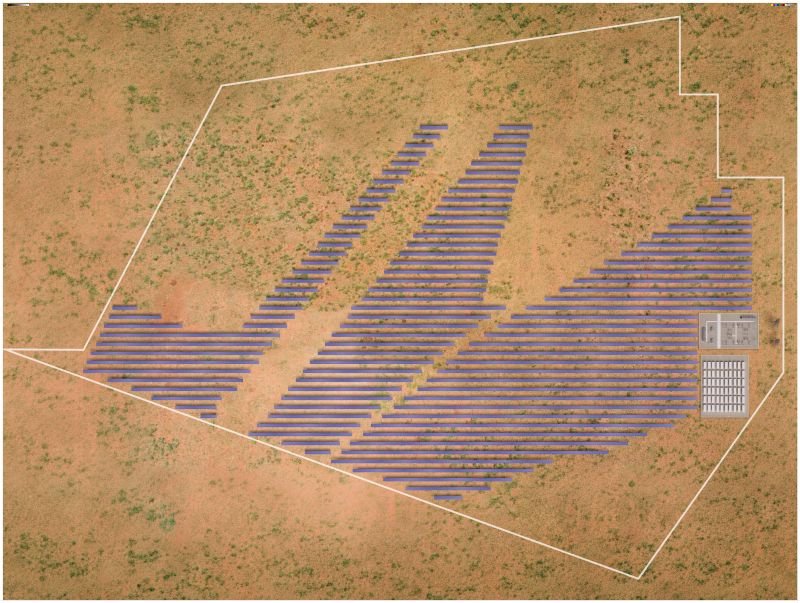
The project, being developed by Globeleq in partnership with Leopard Investment Company, is designed as a 250 MWp solar photovoltaic plant paired with a 150 MW/600 MWh battery energy storage system. Once delivered, it will stand as Zambia’s largest hybrid renewable energy development, combining daytime solar generation with four-hour storage capacity intended to support peak demand, strengthen grid stability and provide electricity equivalent to the annual consumption of about 150,000 households.
The launch ceremony, held on 21 April 2026 about 25 kilometres southeast of Lusaka, drew senior government, diplomatic, utility and community representation. Among those present were British High Commissioner Rebecca Terzeon and Tourism Minister Rodney Sikumba, who attended as acting Minister of Energy.
For Zambia, the project lands at a moment when the country is seeking to broaden its power mix beyond its historic reliance on hydropower. ZESCO, the national utility, owns and operates hydropower stations with a combined capacity of more than 2,900 MW and has set out an ambition to increase its generation mix with at least 1,800 MW of renewable energy over the next decade. Leopards Hill is therefore not only a solar project. It is a test of whether Zambia can add variable renewable power while also building the storage backbone needed to keep the grid steady.
From Land Partnership to Grid Agreement
The chronology matters. Globeleq, founded in 2002 and focused solely on Africa since 2015, has spent the past decade building itself into a utility-scale private power platform across the continent. The company says it currently generates 1,604 MW from 17 power plants across Cameroon, Côte d’Ivoire, Egypt, Kenya, Mozambique, Zambia and South Africa, with 665 MW under construction and more than 2,000 MW in development.
Its Zambia build-out has gathered pace. Globeleq opened its Lusaka office in 2025 and is developing a portfolio that includes a 51% stake in Lunsemfwa Hydro Power Company, which gives it access to the Southern African Power Pool, and the 56 MWp Kafue Solar project, which is nearing financial close under the GET FiT Zambia programme.
Leopards Hill is the next, larger step in that progression. The project is being developed with Leopard Investment Company, described as one of Zambia’s oldest agricultural companies and a long-standing host of essential energy infrastructure, including the Leopards Hill Substation. That land and infrastructure history gives the project a strategic location, close enough to Lusaka to matter for demand and close enough to existing grid infrastructure to matter for dispatch.
On the sidelines of the launch, Globeleq and ZESCO signed a Grid Connection Agreement for the project. That agreement is a critical milestone because it secures export capacity and formalises the terms under which the project will connect to the national grid. In practical terms, a grid connection agreement governs the technical specifications, connection requirements, cost responsibilities, timelines and operating obligations that allow a generator to inject power safely and reliably into a utility network.
Financial close is targeted for the end of 2026. During peak construction, the project is expected to create between 200 and 250 jobs for local Zambians, with further employment opportunities once operational.

Why the Battery Matters
The strategic centre of Leopards Hill is not only its size, but its architecture. A solar plant without storage adds clean electrons. A solar plant with a four-hour battery adds dispatch flexibility.
Battery energy storage systems store electricity when generation is abundant or demand is low, then release it when demand rises or supply tightens. For solar-heavy systems, this matters because solar output is strongest during daylight hours, while demand often peaks later in the day. IRENA has noted that battery storage can help close renewable supply-demand gaps by storing excess electricity for later use, allowing power grids to accommodate higher shares of renewables while balancing supply and demand in real time.
That is the system logic behind Leopards Hill. Its 150 MW/600 MWh battery is structured as a four-hour system, giving it the ability to support evening peak demand, smooth fluctuations in solar generation and assist with voltage and frequency stability. Technical explanations of BESS describe the technology as central to stabilising electricity grids, integrating renewables and improving energy efficiency, particularly by storing excess renewable output and releasing it when generation is low or demand is high.
For Zambia, where ZESCO’s generation base remains heavily associated with hydropower, the appeal is clear: solar offers diversification, while storage makes that diversification more useful to the grid.
A Private-Power Signal for Major Customers and Mining Demand
The project also sits inside a wider economic calculation. Globeleq is positioning Leopards Hill around Zambia’s large-customer market, including mining, where reliable electricity remains central to operational growth.
Speaking at the launch, President Hichilema reaffirmed the government’s commitment to accelerating investment in clean and reliable energy infrastructure, noting that projects of this scale are critical to unlocking economic growth, supporting industrialisation and improving the quality of life for Zambians.
Globeleq Chief Executive Officer Jonathan Hoffman tied the project directly to the company’s wider Zambian platform. “Combined with our investment in LHPC, the Leopards Hill project strengthens our ability to offer tailored power solutions to major customers in the country and the region,” he said. “Globeleq is building a balanced and flexible platform that supports the country’s long-term energy strategy and enables sustained growth in the local mining sector. The Leopards Hill project strengthens Zambia’s energy system and expands the opportunities for private sector offtake in a rapidly growing market.”
That statement points to the deeper commercial thesis. Leopards Hill is not merely being built to add megawatts to a national balance sheet. It is being positioned as part of a flexible power platform that can serve domestic demand, industrial growth and the wider Southern African Power Pool market.
UK-Linked Capital and a Regional Energy Play
Globeleq’s ownership also gives the project a diplomatic and development-finance dimension. The company is backed by British International Investment, the United Kingdom’s development finance institution, and Norfund, Norway’s development finance institution. In Zambia, that ownership structure turns Leopards Hill into a visible example of UK- and Norway-linked capital moving into African renewable infrastructure at utility scale.
British High Commissioner Rebecca Terzeon framed the project in those terms. “The United Kingdom is proud to support Zambia’s vision for a cleaner, more resilient energy system,” she said. “Projects like Leopards Hill demonstrate how strong partnerships between government and responsible UK-linked investors can unlock sustainable growth and expand access to reliable power. The UK remains committed to working with Zambia to mobilise climate-smart investment, strengthen energy security, and advance a just and inclusive transition.”
For Leopard Investment Company, the project also carries a local continuity story. Carl Irwin, the company’s chairman, described the land partnership as a new use of a long-held agricultural asset. “As Zambians, we are proud to play a role in bringing a world-class renewable energy project to our country,” he said. “Having farmed this land for generations, we are now privileged to harvest the power of the sun, contributing to clean energy and supporting Zambia’s economic growth.”
The Test Now Moves to Financial Close
The launch gives Leopards Hill political visibility. The grid agreement gives it technical and commercial traction. The next test is financial close, targeted for the end of 2026.
If delivered as planned, Leopards Hill would strengthen Zambia’s case for treating renewable procurement not only as a generation exercise, but as a system-stability exercise. That distinction is important. The first wave of solar projects across the continent was judged mainly by installed capacity and tariff. The next wave will be judged by whether it can keep grids stable, support industrial load, reduce overreliance on any single generation source and attract private capital without overburdening public utilities.
For Zambia, Leopards Hill is now the project carrying that argument. It is a solar plant, a battery project, a grid-stability tool and a private-power signal bundled into one development. The ceremony has been held. The export capacity has been secured. What remains is execution.
