
NPA Launches 24-Hour Downstream Pilot as Ghana Tests Fuel Backbone for Round-the-Clock Economy
Ghana’s 24-hour economy agenda has entered its first hard downstream test. With 268 fuel stations, eight depots and two refineries selected for a phased pilot across four regions, the National Petroleum Authority and the 24-Hour Economy Authority are moving the policy from political promise into operating reality, testing whether the country’s fuel supply chain can sustain round-the-clock commerce without compromising safety, product integrity or service reliability.
Accra, Ghana | May 15, 2026 - The National Petroleum Authority (NPA), in collaboration with the 24-Hour Economy Authority, JP Trustees Limited and industry players, on Tuesday, May 12, 2026, launched the pilot phase of the 24-Hour Economy Programme in Ghana’s downstream petroleum sector, moving one of the government’s flagship economic transformation programmes from policy coordination into operational testing.
The launch, held under the theme “Powering Ghana’s 24-Hour Economy Through an Efficient Petroleum Downstream Sector,” follows the March 31, 2026 signing of a Memorandum of Understanding between the NPA and the 24-Hour Economy Authority to coordinate the expansion of round-the-clock operations across the downstream petroleum value chain. Under that agreement, the NPA is to develop and enforce readiness standards covering lighting, security, staffing protocols, digital fuel monitoring and fire safety across fuel stations, refineries, bulk storage depots and bulk road vehicle operations.
The pilot will be rolled out in phases across Greater Accra, Ashanti, Western and Northern Regions, covering 268 fuel stations, eight depots and two refineries. Industry notes from the Chamber of Oil Marketing Companies (COMAC) identify the two refineries as the Tema Oil Refinery and the Sentuo Oil Refinery.
From Campaign Promise to Operating Model
For Ghana’s 24-hour economy agenda, the downstream petroleum sector has emerged as one of the earliest operational tests. The government frames the wider 24H+ programme as a restructuring of Ghana’s productive economy, aimed at lifting productivity, increasing capital utilisation and moving key sectors into multiple-shift operations across day and night. Its official architecture includes eight key programmes spanning agriculture, manufacturing, infrastructure, the creative economy and tourism, supply chain and logistics integration, inclusive finance, digital skills and youth readiness, and institutional alignment.
But the economics of continuous production quickly runs into a practical question: who keeps the country fuelled after the conventional business day ends?
That is why the downstream petroleum sector has become a frontline proving ground. Round-the-clock agro-processing, cold-chain logistics, industrial parks, transport fleets and export operations all depend on reliable petroleum supply, secure depots, responsive fuel retailing, and the ability to move product safely through the system after dark.
The May 12 launch, therefore, did more than inaugurate extended operating hours. It opened a controlled national test of whether Ghana’s downstream infrastructure, regulatory systems, security architecture, labour arrangements and technology platforms can sustain continuous service without compromising safety, product integrity or commercial discipline.

March MoU Set the Regulatory Spine
The pilot’s immediate roots lie in the March 31 MoU between the NPA and the 24-Hour Economy Authority. That agreement established the institutional frame for the downstream sector’s participation in the national productivity agenda. It also placed operational readiness under formal regulatory scrutiny, rather than leaving extended-hour operations to informal discretion by individual operators.
The sequencing has been deliberate. Before the launch, the NPA had convened high-level engagements with COMAC, the Chamber of Bulk Oil Distributors (CBOD), BOSTEnergies, refineries, tanker unions and security agencies. Those engagements signalled that Ghana’s 24-hour downstream model would not be limited to fuel stations at the retail end, but would require coordination across depots, bulk road vehicles, security agencies, regulators and refineries.
By April, the NPA had also moved to align the MoU with longer-term capacity building, including work around a downstream Centre of Excellence. That placed the policy on two tracks: immediate operational readiness for the pilot, and a broader institutional effort to strengthen skills, standards and technical competence across the petroleum downstream sector.
NPA Frames Pilot as a Controlled Transition
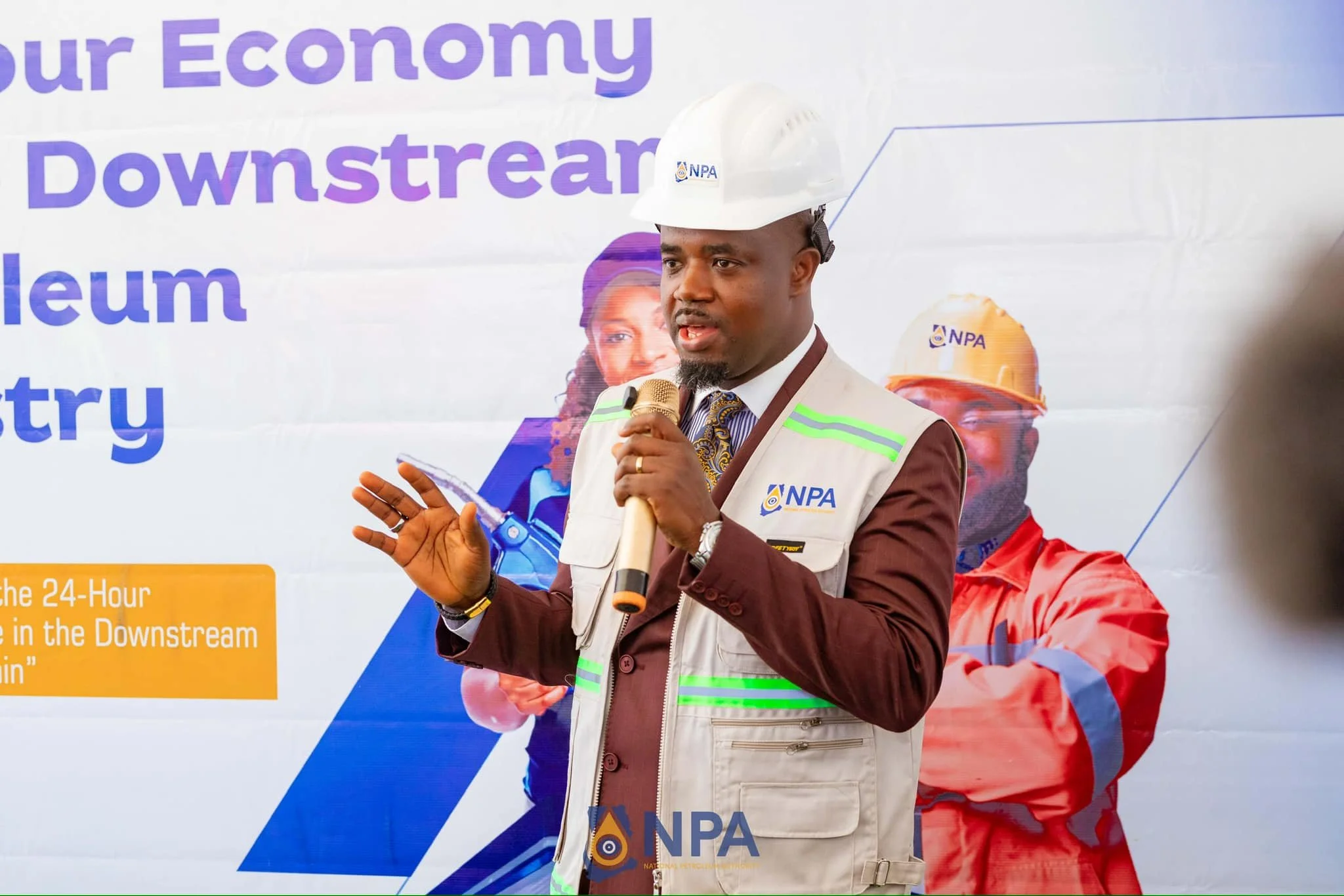
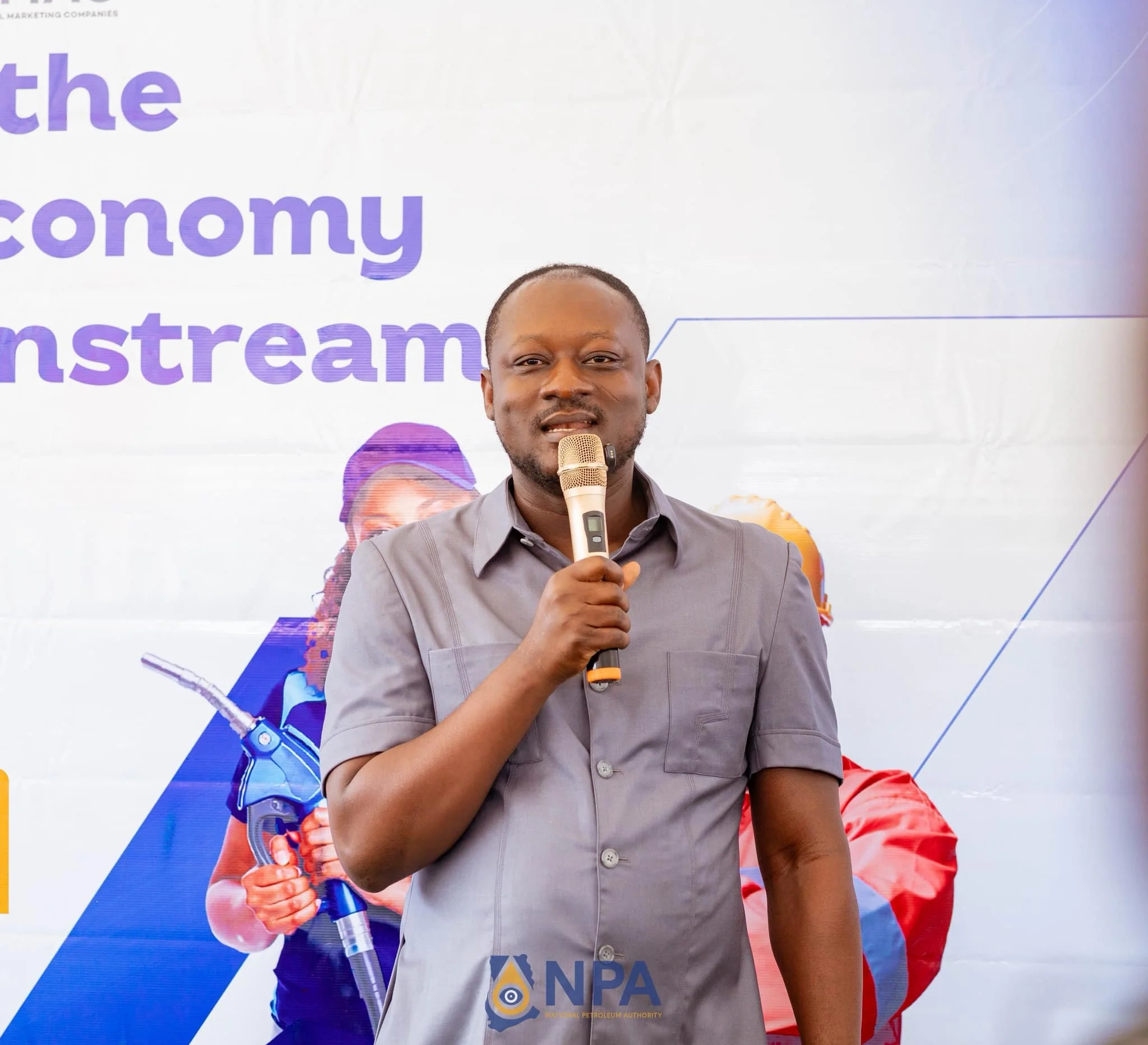
Opening the May 12 launch, NPA Chief Executive Officer Godwin Kudzo Tameklo described the pilot as the start of a major shift in how Ghana’s downstream petroleum industry works and serves the economy.
“This event marks the beginning of a transformative journey, one that seeks to unlock the full potential of how the downstream petroleum industry operates, contributes to national development and serves the people of Ghana,” Mr Tameklo said.
He said the phased rollout would allow the Authority and industry operators to test the systems required before any wider national scale-up.
“This programme will be rolled out in phases beginning with selected facilities across four regions of Ghana, namely, Greater Accra, Ashanti, Western and Northern regions. We are looking at covering 268 fuel stations, eight depots and operating in two oil refineries,” he said.
For the regulator, that test-and-refine approach is central. A 24-hour downstream sector is not simply a matter of longer opening hours. It involves lighting and security standards, worker safety, night-shift arrangements, emergency preparedness, digital monitoring, depot scheduling, product traceability and coordination with security agencies.
“This will enable us to test systems, refine operational models and ensure that the transition is sufficient, safe and sustainable,” Mr Tameklo said. “On behalf of the National Petroleum Authority, I reaffirm our unwavering commitment to the successful implementation of this pilot programme.”

Tanoh Casts 24-Hour Economy as Productivity Reform
Augustus Goosie Tanoh, Presidential Adviser on the 24-Hour Economy, placed the downstream pilot within the government’s wider productivity argument. The first phase of the pilot, he said, will run for six months and is expected to support higher output by helping Ghana move from a one-shift economy toward a more continuous production model.
“The 24-Hour Economy at its heart is a productivity program, we are running the economy on a single shift in a world that runs on 3 shifts and closing that gap is what the 24-hour economy is built to do, to raise output per worker, to lift incomes and to generate the kind of paid productive work that begins to absorb 310,000 young Ghanaians who enter the labour market every year,” Mr Tanoh said.
That framing is politically ambitious but operationally unforgiving. If the programme is to create work beyond the traditional business day, the basic inputs of economic activity must also be available beyond the traditional business day. In the downstream petroleum sector, that means fuel stations that can operate safely at night, depots that can load and dispatch product continuously, and refineries that can feed a more demanding supply chain.
Ministry Backs Wider Sector Rollout
Deputy Minister for Energy and Green Transition Richard Gyan-Mensah commended the NPA and the 24-Hour Economy Secretariat for moving the policy from concept to execution in the downstream sector.
“I want to take this opportunity to commend the Chief Executive of NPA and the 24-hour secretariat, for making sure that what we envisaged has become a reality,” Mr Gyan-Mensah said.
He said the pilot would generate lessons for a broader rollout, both within energy and across the wider economy.
“This pilot programme will help us learn and strengthen the framework for wider implementation across the energy sector and the broader economy,” he said.
The Deputy Minister for Energy and Green Transition also acknowledged the operational difficulties that could come with a reform of this scale, while restating the Ministry’s commitment to working with the NPA and other stakeholders.
“As a ministry, I want to reemphasise our commitment to working closely with all our agencies and stakeholders to ensure successful implementation. We know there will be challenges because every major reform comes with operational difficulties, but we are determined to identify those obstacles early and address them decisively,” he said.



Industry Readiness Moves to the Fore
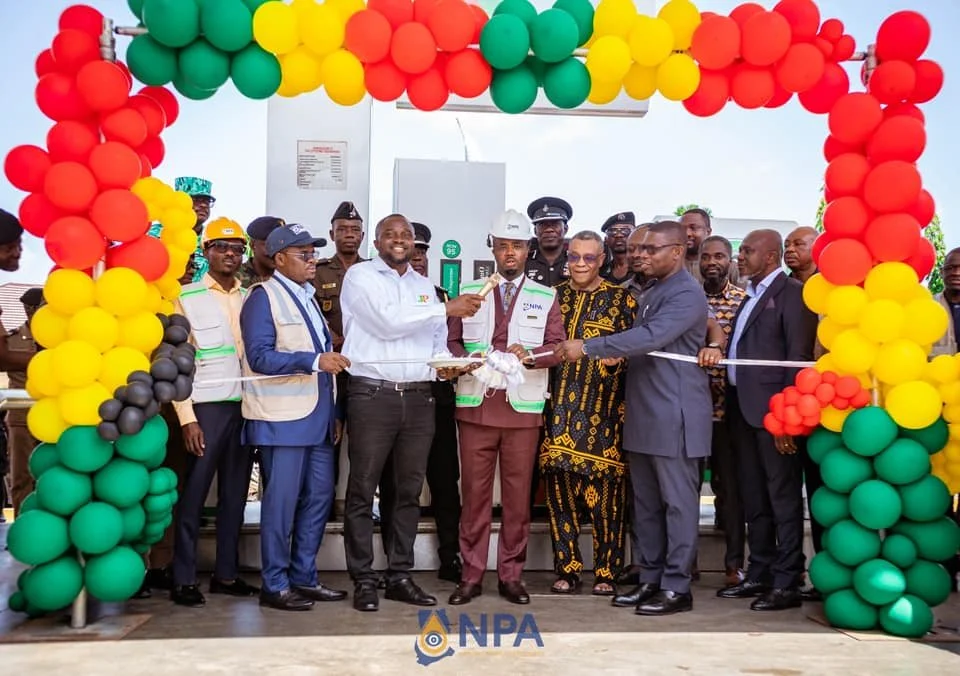
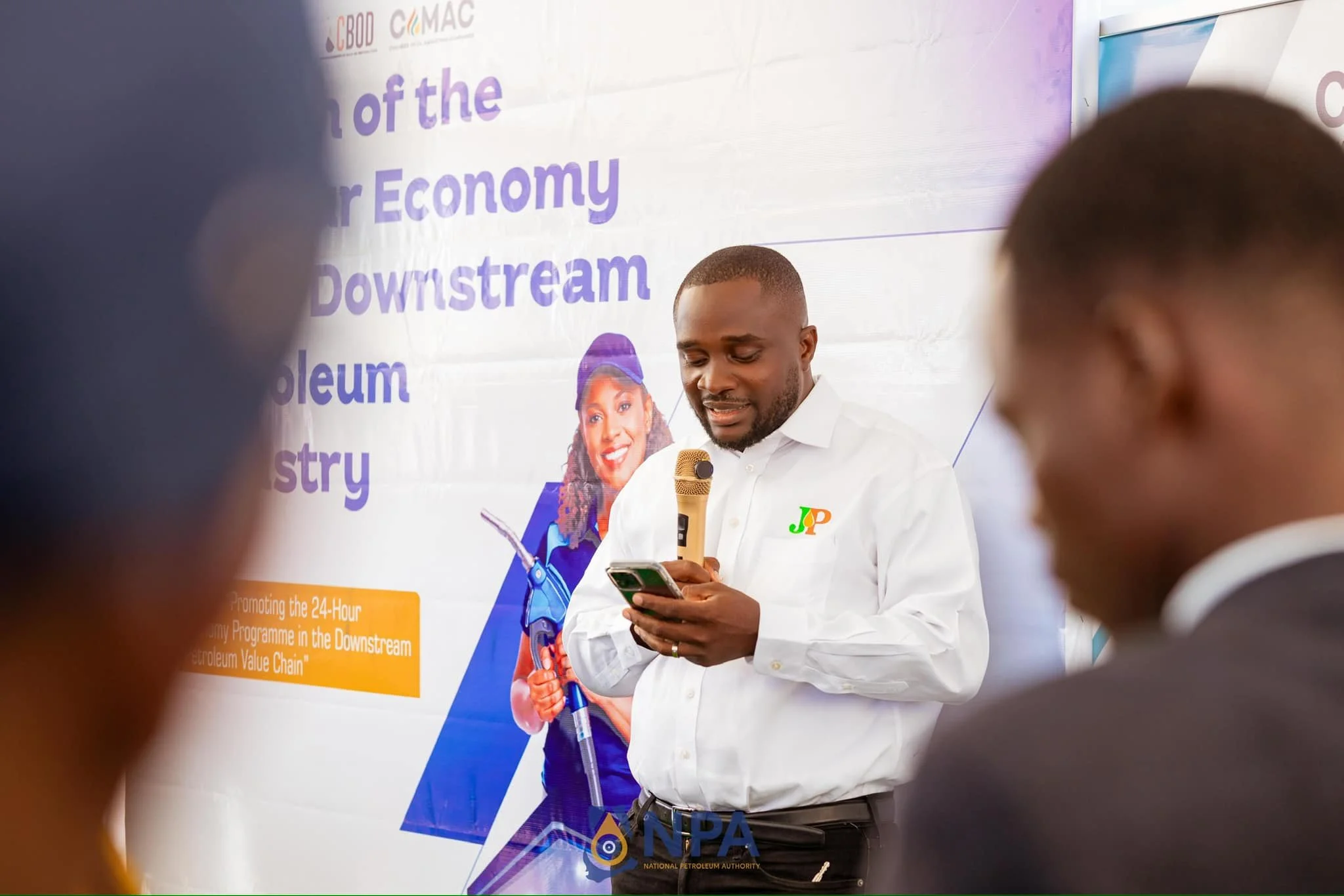
After the stakeholder launch, the pilot was symbolically marked with a ribbon-cutting ceremony at the JP fuel station at Spintex in Accra, where the NPA boss was joined by the Presidential Adviser on the 24-Hour Economy and industry leaders.
The choice of JP also gave the pilot a retail-market anchor with both operational and symbolic value. JP Trustees Limited is an NPA-licensed Oil Marketing Company that supplies petroleum products to the public through retail stations and reselling outlets, supported by fuel retail, fuel delivery, commercial services, forecourt convenience offerings, car wash services and health, safety, environment and quality protocols. The company also says its fuel is infused with GAT 3000 additives and that it leverages a strategic relationship with sister company Juwel Energy, which it describes as Ghana’s second-largest Bulk Oil Distribution Company. In the NPA’s Oil Marketing Company performance statistics for January to March 2026, JP Trustees held a 1.54% share of the OMC market, placing it within the top 15 OMCs by market share for the period. That gives the Spintex launch site added significance: it was not merely a ceremonial forecourt, but a participating operator with measurable market presence in the retail network now being tested for round-the-clock service.
JP later described its selection as a participant in the initiative as part of a broader effort to keep businesses active, productive and accessible around the clock.
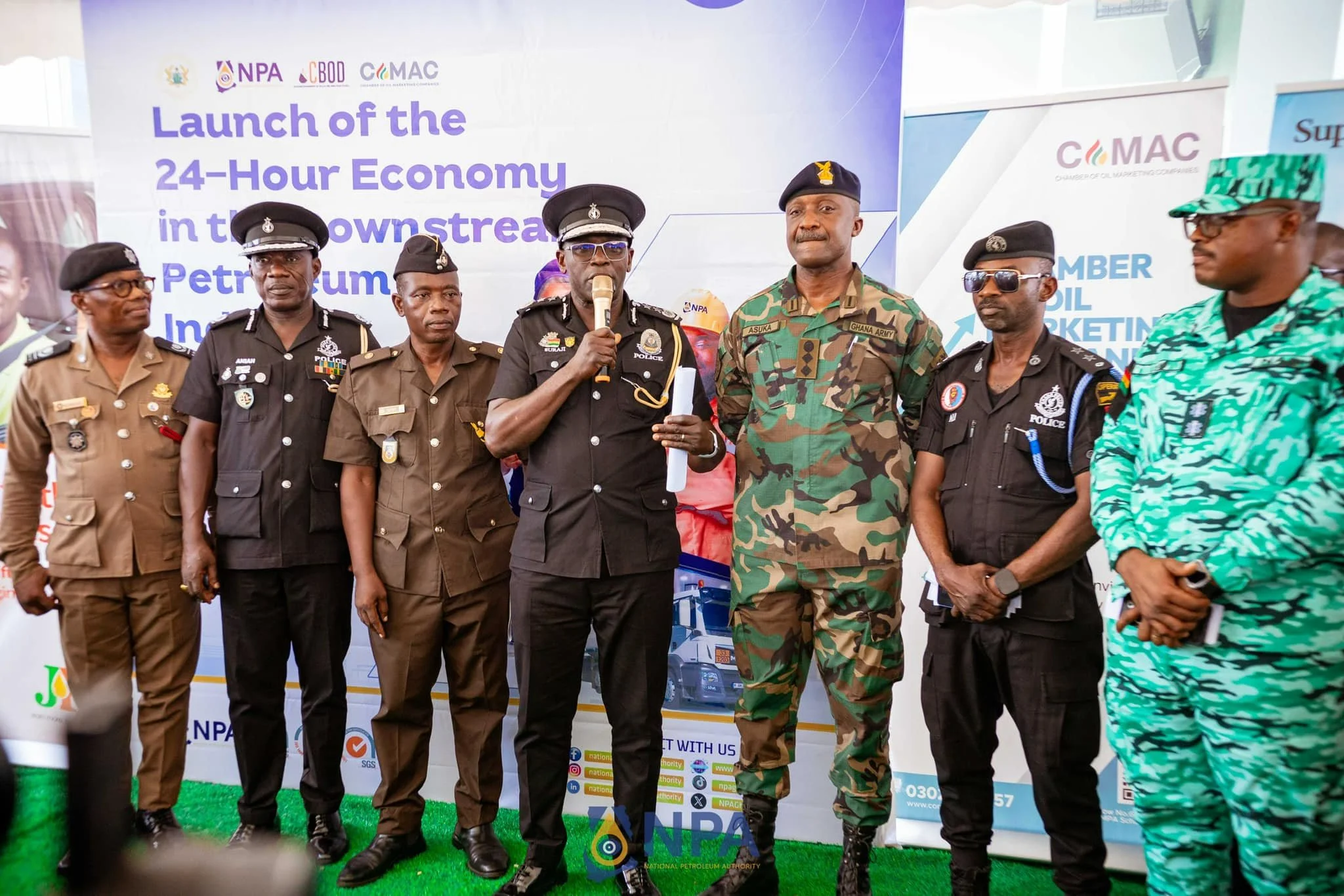
COP Mohammed Suraj said extensive preparations had already been completed after several high-level stakeholder engagements. His comments underscored one of the most sensitive elements of the pilot: a downstream sector that operates deeper into the night will require security planning not only around stations, but also around depots, tanker routes, refineries and strategic petroleum infrastructure.
For COMAC Chief Executive Officer Dr Riverson Oppong, the launch showed that collaboration and integrity would determine whether the policy succeeds.
“The launch of the 24-Hour programme is a sign of two things, first collaboration, because for this to work and to get maximum output, we need full collaboration, the next thing is integrity and technological advancement, thank you to the NPA and the 24-hour secretariat for making this work,” Dr Oppong said.
COMAC has also pointed to technology as a critical enabler, calling for stronger automatic tank gauging systems and consideration of inline marking technology at the depot level to improve product traceability, fight adulteration and strengthen confidence in petroleum products. It has further emphasised the need to protect petroleum infrastructure through manned security systems, closed-circuit television surveillance and remote sensors.
BOSTEnergies and Refineries Enter the Supply Chain Test
The pilot is also pulling bulk distribution and refining into the centre of the 24-hour economy conversation. BOSTEnergies, which sits between coastal receipt points and inland demand centres, has framed its role as a structural enabler of continuous downstream operations.
At the launch, BOSTEnergies said its transition to 24-hour operations would help close the gap between daytime-only loading windows and the continuous demand of the downstream market. The company has selected the Accra Plains Depot-to-Kumasi corridor as the pilot phase for its own 24H+ operational transformation, describing it as a strategic petroleum corridor serving Ashanti, Bono, Bono East, Ahafo and Western North.
That corridor matters because the economics of 24-hour fuel retailing depends on the reliability of the upstream logistics chain. A filling station can only remain meaningfully open at night if depots, loading systems, haulage arrangements and supply documentation can keep pace.
Tema Oil Refinery Managing Director Edmond Kombat also signalled TOR’s readiness to support the programme, positioning the refinery as part of the broader national test of downstream reliability.
“This is perhaps the biggest and most important policy in Ghana’s downstream industry and we at the Tema Oil Refinery, will do our best to make sure that we are significantly part of the story to make sure that we can deliver petroleum products 24/7,” Mr Kombat said.
The Real Test Starts After the Ribbon Cutting
The launch of the pilot phase gives Ghana’s 24-hour economy agenda its first hard downstream operating trial. The programme now has a defined geography, a set of participating facilities, a regulatory anchor, security involvement, industry buy-in and a six-month window to test the model.
Its success will depend on whether the pilot can answer the practical questions that sit beneath the political promise: whether fuel stations can operate safely after hours; whether depots can extend loading windows without creating new risk; whether product quality and traceability can be protected; whether worker incentives and shift systems can hold; whether security agencies can support critical infrastructure; and whether the economics of continuous operations makes commercial sense for operators.
For the NPA, the 24-Hour Economy Authority and industry players, May 12 marked the formal start of that experiment. For Ghana’s wider economy, it marked something larger: an early test of whether the country’s ambition to work beyond daylight can be matched by the systems that keep production, transport and commerce moving when the lights would ordinarily go o
