African Atlantic Gas Pipeline: West Africa’s $25bn Gas Corridor Moves From Vision to Treaty Politics
The African Atlantic Gas Pipeline is moving from diplomatic ambition to treaty politics. Nearly a decade after Nigeria and Morocco first sketched out a gas corridor linking West Africa to North Africa and Europe, the $25bn project is being recast as an Atlantic energy compact, with ECOWAS states, development financiers and global powers now watching whether one of Africa’s boldest infrastructure bets can become a bankable reality.
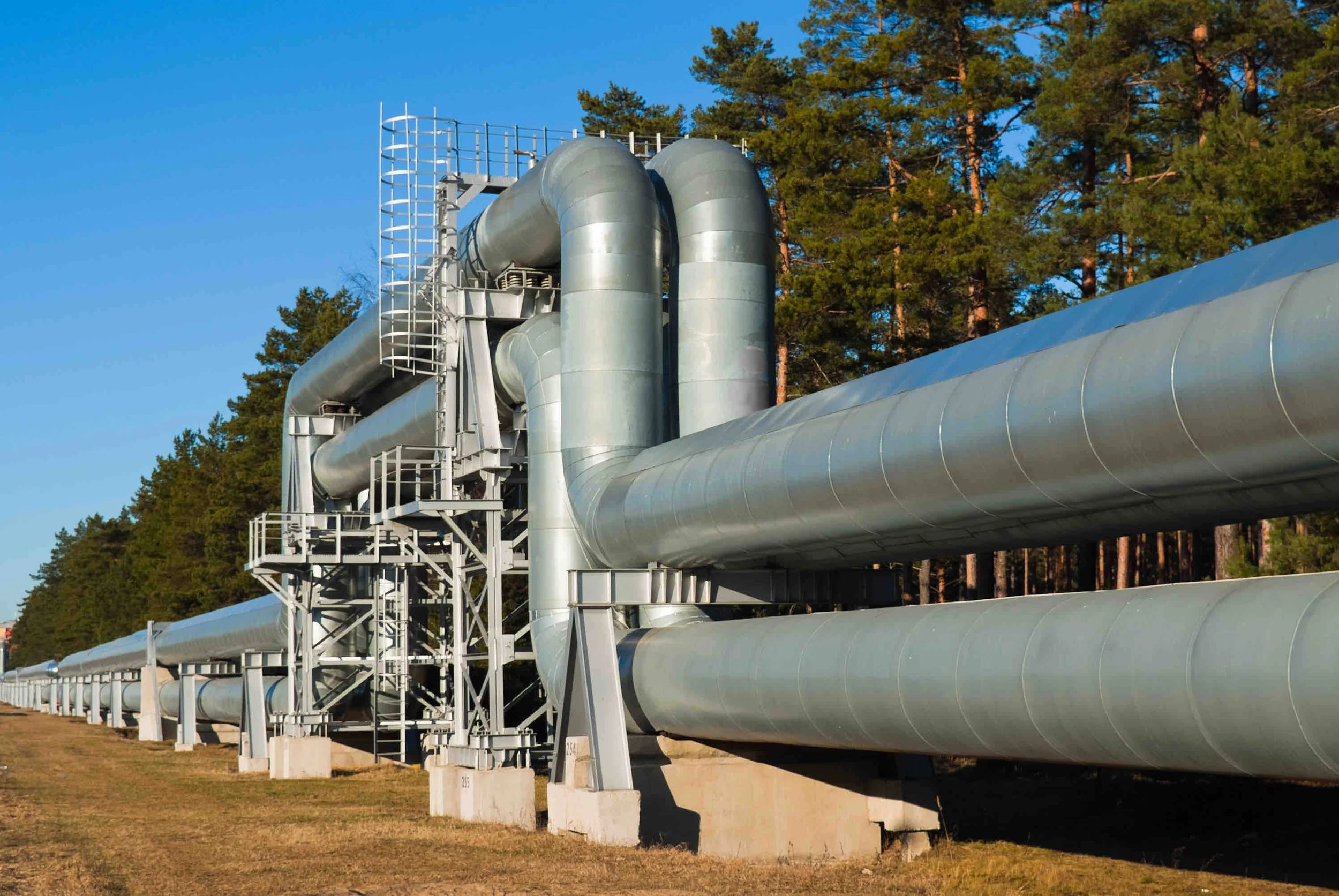
Photo Credit: Marine Link
Nigeria/Morocco | May 15, 2026 - The African Atlantic Gas Pipeline, long carried as the Nigeria-Morocco Gas Pipeline, is edging into its most consequential phase yet, with an intergovernmental agreement expected this year, a project company planned in Morocco, a high-level political authority to be established in Nigeria, and fresh diplomatic interest from Washington sharpening the geopolitical profile of one of Africa’s most ambitious energy infrastructure bets.
What began in 2017 as a bilateral Nigeria-Morocco gas corridor has been steadily recast into a continental Atlantic project: a roughly 6,800–6,900-kilometre hybrid offshore and onshore pipeline intended to move Nigerian and West African gas northwards through the Atlantic seaboard, serve coastal ECOWAS states and Mauritania, connect Morocco to new supply, and potentially open another African export route into Europe. Reuters, citing Office National des Hydrocarbures et des Mines (ONHYM) Director General Amina Benkhadra, reports a maximum capacity of 30 billion cubic metres a year, including 15 bcm to supply Morocco and support exports to Europe. The Economic Community of West African States (ECOWAS) has framed the scheme as a regional and integrative project linking Nigeria to Morocco, servicing ECOWAS member states and Mauritania, with possible extension to Europe.
From Nigeria-Morocco Pipeline to African Atlantic Gas Pipeline
The project’s origin lies in a 2017 agreement between Nigeria and Morocco to develop a pipeline linking Nigerian gas resources to Morocco and onward markets. Since then, the corridor has moved through feasibility work, front-end engineering and design, survey procurement, ministerial-level approvals and regional institutional structuring.
The early architecture was clear. NNPC Limited and Morocco’s Office National des Hydrocarbures et des Mines, ONHYM, stood at the centre as lead project sponsors, backed by the governments of Nigeria and Morocco. But the logic of the scheme was never only bilateral. Its route, economics and politics required a regional compact, because the pipeline would pass through or serve a chain of West African states before reaching Morocco.
That regionalisation accelerated in 2022. An MoU was signed with ECOWAS on September 15, followed by agreements with Mauritania and Senegal on October 15, then The Gambia, Guinea-Bissau, Sierra Leone and Ghana on December 5. By June 2023, the project had drawn in four more national hydrocarbon institutions, with tripartite MoUs signed in Abuja among NNPC, ONHYM and Côte d’Ivoire’s PETROCI, Liberia’s NOCAL, Benin’s SNH-Benin and Guinea’s SONAP.
At that Abuja meeting, the project’s steering committee also convened, bringing together representatives from ECOWAS and the participating countries: Nigeria, Benin, Togo, Ghana, Côte d’Ivoire, Liberia, Sierra Leone, Guinea, Guinea-Bissau, The Gambia, Senegal, Mauritania and Morocco. The gathering marked the point at which the corridor was no longer merely a Nigeria-Morocco energy ambition but a prospective West African infrastructure compact.
The Institutional Turn
The most important change came in November 2024, when ECOWAS energy and hydrocarbons ministers, extended to include Morocco and Mauritania, adopted the revised intergovernmental agreement, the host government agreement and the single project title: African Atlantic Gas Pipeline, or AAGP. That naming shift mattered. It moved the project’s public identity away from a bilateral frame and towards a regional Atlantic corridor with ECOWAS at its political centre.
At the same meeting, ministers proposed that the ECOWAS Council of Ministers and the President of the ECOWAS Commission take steps to organise a formal signing ceremony for the intergovernmental agreement. ECOWAS said the targeted timing was either the December 2024 ECOWAS Summit or the first quarter of 2025, but the agreement has since slipped into the 2026 window.
Nigeria’s Minister of Petroleum Resources for Gas, Ekperikpe Ekpo, framed the institutional agreements as “an affirmation of our commitment to enhancing hydrocarbon and energy trade within ECOWAS and other African countries, facilitating access to natural gas across the region, and expanding our footprint in global gas markets.” The statement captured the project’s dual proposition: domestic and regional gas access for Africa, and strategic export optionality beyond it.
The project’s core Atlantic corridor involves 13 participating countries from Nigeria to Morocco. ECOWAS, however, has also framed the scheme more broadly as one that could supply Morocco, 13 ECOWAS countries and Europe, while passing through Atlantic coastal countries as well as Mauritania and serving three landlocked countries. That wider framing is central to the project’s political appeal, but the execution structure remains tied to the states along the corridor and their respective hydrocarbon institutions.
The Engineering and Funding Picture
The AAGP is still not a fully funded construction project. Its financing story is more precise than the headline numbers often suggest. The project is commonly described as a 6,800–6,900km hybrid offshore-onshore pipeline, with cost estimates ranging from about $25bn to $26bn. Reuters places the planned pipeline at $25bn and 6,900km, while ECOWAS has cited about $26bn and a 6,800km gas pipeline network. The confirmed financing so far relates mainly to studies, engineering and surveys, not full-scale construction.
The Islamic Development Bank has financed work connected to the project’s development. In June 2023, an IsDB procurement notice said NNPC had received financing for the Nigeria-Morocco Gas Pipeline and intended to apply part of the proceeds to survey contracts for the southern zone, covering the Nigeria-to-Senegal section. The survey packages included reconnaissance, metocean, topographical and geotechnical onshore surveys, geohazard interpretation, metocean results interpretation and shipping and fishing data collection.
The OPEC Fund has also been linked to the project’s study phase, with a $14.3 million contribution to co-finance preparatory work for the northern section of the corridor. The distinction matters: the AAGP has attracted preparatory financing, but no final funding commitments for construction have yet been secured. Reuters reported in April 2026 that the future project company is expected to mobilise a mix of equity and debt.
By November 2024, NNPC’s representative at the ECOWAS ministerial meeting said FEED Phase 2 had been completed, while work was ongoing on environmental and social impact assessments, land acquisition and the resettlement policy framework. Reuters later reported in April 2026 that the feasibility and FEED stages had been complete
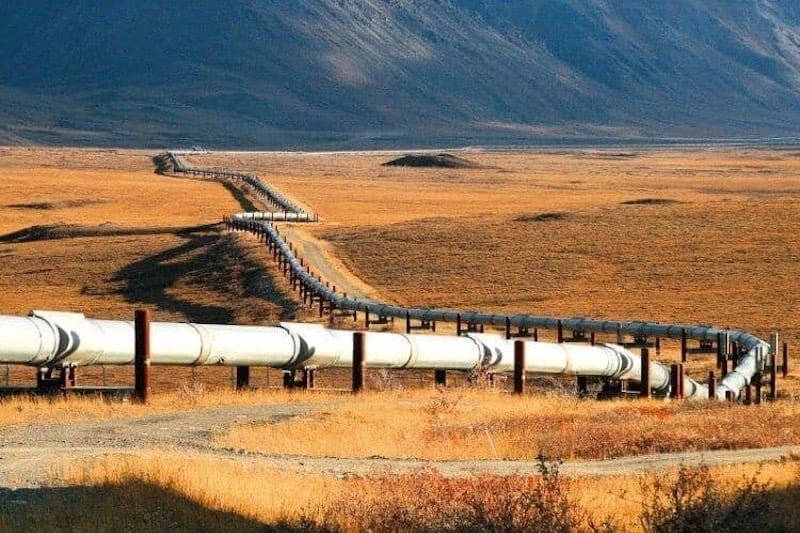
Photo Credit: HESPRESS ENGLISH
The 2026 Push
The project has now entered a treaty-and-structuring phase. Reuters reported in April 2026 that the intergovernmental agreement is expected to be signed this year. After that, a high authority for the pipeline is expected to be established in Nigeria, bringing together ministerial representatives from each of the 13 participating countries to provide political and regulatory coordination. A project company is also expected to be created in Morocco as a joint venture between ONHYM and NNPC to lead execution, financing and construction. The final equity structure for the entire project, however, has not yet been publicly settled.
The development model is being shaped around segments rather than a single all-or-nothing investment event. Amina Benkhadra, the Director General of the ONHYM told Reuters the project does not rely on one global final investment decision, with each segment designed as a standalone system that can build value early. Initial segments are expected to connect Morocco to gas fields in Mauritania and Senegal, and link Ghana to Côte d’Ivoire further south, before a final segment connects Ghana to Nigeria’s gas fields. First gas from the initial phases is targeted for 2031.
That phased design is politically useful and commercially pragmatic. It lowers the pressure of delivering a single mega-project across more than a dozen jurisdictions at once. It also allows early sections to be justified against local or sub-regional gas demand, rather than waiting for the entire Atlantic chain to be built from Nigeria to Morocco.
But the financing risk remains substantial. Benkhadra told Reuters that no final funding commitments had yet been secured, and that the financing structure would be led by the project company, which would mobilise a mix of equity and debt. That is the hard hinge on which the AAGP now turns: political alignment has advanced faster than bankable capital.
Washington Enters the Conversation
The latest development is diplomatic rather than financial. In May 2026, Morocco’s Foreign Minister Nasser Bourita held a call with Nigeria’s Foreign Minister Bianca Odumegwu-Ojukwu, with the pipeline among the bilateral projects discussed. Around the same period, ONHYM Director General Amina Benkhadra led a Moroccan delegation to Washington for meetings with institutions including the US Department of Energy, the State Department, the National Security Council, the World Bank Group, the US International Development Finance Corporation, the Center for Strategic and International Studies (CSIS), the Stimson Center and the Atlantic Council’s Global Energy Center. No US funding commitment has been announced.
Morocco’s ambassador to the United States, Youssef Amrani, said in an X post, that he was “pleased to note genuine U.S. interest in the Africa-Atlantic Gas Pipeline and critical minerals,” describing them as “real opportunities for energy security and regional development.” The formulation is notable because it places the pipeline inside a wider strategic frame: energy security, critical minerals, supply-chain positioning and Africa-Europe connectivity.
For Morocco, the AAGP strengthens its bid to position itself as an energy bridge between Africa and Europe. For Nigeria, it offers another route to monetise gas reserves, deepen regional energy trade and support industrialisation. For ECOWAS states along the Atlantic corridor, the promise is access to gas for power generation, industry, agriculture and clean cooking transitions. For Europe and the United States, the project now sits within a broader search for diversified energy corridors and strategic supply-chain partnerships, even if no formal American financing has yet been announced.
A Corridor Still Awaiting Its Hardest Test
The AAGP has progressed further than many cross-border African infrastructure projects. It has a political sponsor in ECOWAS, bilateral anchors in Nigeria and Morocco, participation by national oil companies along the route, completed feasibility and FEED stages, survey financing, and a treaty framework awaiting signature.
Yet the distance between a signed intergovernmental agreement and gas flowing through a multi-country offshore-onshore system remains formidable. The project must still navigate final investment decisions, debt and equity mobilisation, tariff structures, transit arrangements, host-state obligations, environmental approvals, land and resettlement issues, security risks, and the commercial challenge of proving that enough buyers exist along the corridor to underwrite the infrastructure.
That is why 2026 matters. The African Atlantic Gas Pipeline is no longer simply a grand map line from Nigeria to Morocco. It is becoming a test of whether West Africa can convert gas diplomacy into bankable infrastructure, and whether an Atlantic energy corridor can be built not as a slogan of integration, but as a working system of markets, treaties, capital and pipes.
