Baleine’s Capital Signal: Africa’s Upstream Cycle Moves From Discovery Fever to Development Discipline
Eni’s sanctioning of Baleine Phase 3 has shifted Africa’s upstream story from discovery excitement to development discipline. As Côte d’Ivoire’s flagship offshore field moves into its next growth phase, fresh seismic work in Angola, junior capital in Namibia’s Orange Basin, restructuring around Venus and a major Egyptian discovery point to an E&P cycle gathering weight across the continent.
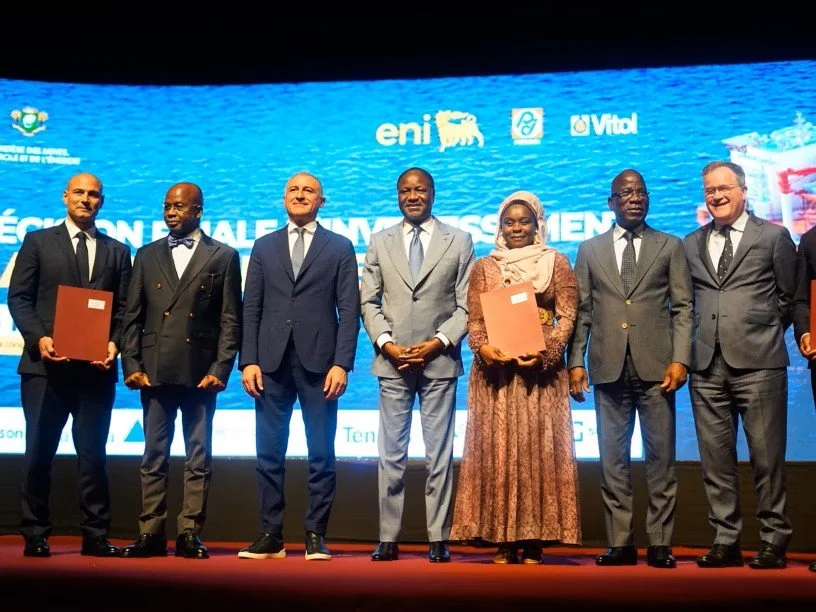
Abidjan, Côte d'Ivoire | June 1, 2026 - Eni’s decision to sanction the third phase of Côte d’Ivoire’s Baleine field has given Africa’s upstream revival something more valuable than exploration excitement: a bankable development marker. In Abidjan on May 25, Eni, Petroci and Vitol approved the final investment decision for Baleine Phase 3, a full-field development that Eni says will lift oil output from 60,000 barrels per day to 150,000 barrels per day and raise gas production from 80 million cubic feet per day to 200 million cubic feet per day.
For a continent where frontier discoveries have stirred investor attention but not always unlocked balance-sheet commitment, Baleine is the hard-money moment. It anchors a wider pattern now visible across Africa’s upstream map: seismic work offshore Angola, junior capital flowing into Namibia-linked exploration, corporate restructuring around the Venus project and a new Egyptian discovery in the Western Desert. The signals are not identical, but they rhyme. Africa’s exploration and production cycle is no longer being carried by headlines alone; it is being rebuilt through phased development, basin re-rating and pre-drill positioning.
Baleine Becomes the Anchor
Baleine’s significance begins with scale, but it does not end there. Eni describes the field as the largest hydrocarbon discovery ever made in Côte d’Ivoire and says the Phase 3 FID marks a significant milestone in its development.
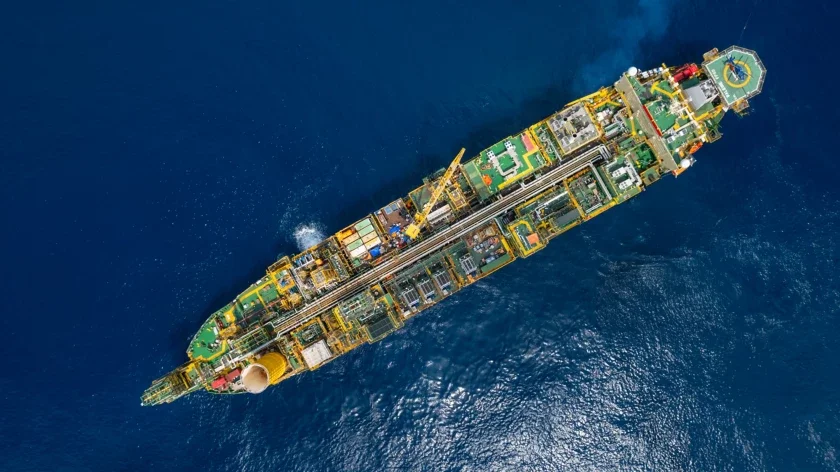
The chronology has been unusually compressed. Eni discovered Baleine in 2021, about 70 kilometres off Abidjan, in water depths of around 1,200 metres, making it Côte d’Ivoire’s first commercial discovery in 20 years. The company says the project is being developed through a fast-track model that runs design, permitting and execution in parallel, with existing floating units reused and upgraded for the first two phases. Phase 3 now extends that model with a new floating production, storage and offloading unit designed for operational efficiency, safety and environmental performance.
That is the operational story. The market story is that Baleine has moved Côte d’Ivoire from a promising offshore province to a bankable upstream host. Eni’s own project chronology shows the field moving from the 2021 NFW Baleine 1X well and 2022 Baleine East 1X appraisal, through the start of oil and gas production in 2023, Phase 2 launch in 2024, increased gas volumes in 2025, SOCAR’s agreed 10 percent entry in January 2026 and now the approval of Phase 3 in May 2026.
Eni framed the project as a test of its development model. “Baleine is a testament to Eni’s exploration and production model, built on excellence in exploration activities, the ability to develop projects through a fast-track and phased approach, and a consistent commitment to sustainability, in continuous dialogue with the host country,” Chief Executive Claudio Descalzi said in the company’s FID announcement.
The domestic gas angle also matters. Eni says all gas produced from Phase 3 will be allocated to Côte d’Ivoire’s domestic market, contributing to the country’s energy needs, expanding electricity generation and supporting industrial development. That gives Baleine a dual role: crude for upstream economics, gas for domestic energy security.
From Côte d’Ivoire to Angola, the Technical Groundwork Returns
If Baleine is the capital anchor, Angola is the technical leading indicator.
On May 27, TGS said it had been awarded a large, high-end 4D streamer contract offshore Angola. The programme is scheduled to begin acquisition in early July 2026 and run for approximately eight months, giving TGS vessel visibility well into the first quarter of 2027.
That kind of contract rarely attracts the public attention of a discovery or FID, but in upstream markets, it is often where the next cycle begins. It points to operators still spending on reservoir intelligence and technical preparation in West African deepwater, the work that often precedes incremental development, recovery optimisation or future drilling decisions.
It is also a reminder that Africa’s upstream revival is not only about new frontier basins. Mature deepwater provinces still matter. Angola’s offshore system remains one of the continent’s core upstream theatres, and the return of high-end seismic work points to continuing reservoir management and technical commitment rather than wholesale retreat.
Namibia’s Orange Basin Keeps Pulling Frontier Capital
The more speculative end of the cycle sits further south, in Namibia’s Orange Basin.
Sintana Energy’s May 2026 fundraise showed that junior upstream capital is still moving behind high-impact Atlantic-margin exposure, albeit through a broader portfolio programme rather than a single Orange Basin bet. The company said it conditionally raised gross proceeds of US$11.5 million through a fundraise priced at 22.5 pence per new common share on AIM and C$0.41 per new common share on the TSX Venture Exchange.
The company’s own framing is important. Sintana Chief Executive Robert Bose said the oversubscribed fundraise, together with existing cash balances and proceeds from an Exxon settlement in Colombia, would provide additional capital to pursue drilling on the Chevron-operated Nabba-1 exploration well in PEL 90, neighbouring Mopane, and the cash portion of consideration for acquisitions of interests in PEL 37 in Namibia’s Walvis Basin and KON-16 in Angola’s Kwanza Basin.
The significance is not the size of the cheque by itself. It is the timing. Namibia has moved from geological curiosity to one of the industry’s closely watched deepwater frontiers after recent light oil discoveries sharpened attention on the country’s offshore potential. NAMCOR says Namibia’s offshore comprises four basins, including the Orange Basin, and that recent light oil discoveries by Shell, TotalEnergies and Galp have opened a new deepwater play and increased exploration activity across the offshore margin.
Sintana’s raise therefore lands inside a basin re-rating already underway. It is not a project sanction, and it should not be read as proof of commercial development. But it is evidence that frontier-market capital is still moving towards Namibia-linked exploration, particularly where juniors can offer indirect or carried exposure to major-operated acreage.
Impact’s Restructuring Shows the Basin Is Moving Toward Development Discipline
The Orange Basin story is also becoming more corporate and less purely geological.
On May 26, Meren Energy announced a corporate restructuring of Impact Oil & Gas intended to create a pure-play Namibia-focused development and exploration business. Under the transaction described by Meren Energy, Impact will separate its South African exploration assets into a new entity while retaining its core Namibian interests, including its 9.5 percent participating interests in Blocks 2912 and 2913B, which contain the Venus light oil discovery.
That is a notable shift in posture. In the early frontier phase, companies assemble optionality across multiple basins. As projects move closer to development decisions, portfolios are often simplified, costs are stripped out and capital allocation tightens around assets most likely to support financing, farm-downs or development entry.
Meren said the transaction is expected to sharpen Impact’s strategic focus on the Venus project, reduce exposure to South African exploration costs and improve visibility over future capital allocation. It also treated the timing and advancement of Venus, including the potential for FID and first oil, as forward-looking information subject to the usual risks and uncertainties.
That caveat matters. But the strategic direction is clear: Namibia’s oil story is no longer just about whether the rocks work. It is about who holds exposure, how portfolios are financed and whether discovered resources can move into sanctioned development.
Egypt Adds a North African Discovery Thread
North Africa has also entered the frame.
Egypt’s State Information Service reported on May 21 that Agiba Oil Company had made its largest discovery in 15 years in Egypt’s Western Desert. Initial estimates cited by the Egyptian government indicated around 330 billion cubic feet of gas and 10 million barrels of condensate and crude oil, for a total of about 70 million barrels of oil equivalent.
The Egyptian discovery is different from Baleine or Namibia. It is not a deepwater frontier thesis. It is a mature-basin story in a long-established petroleum system. But that is precisely why it belongs in the wider picture. Upstream momentum on the continent is not confined to one basin type. Côte d’Ivoire is moving through phased offshore development, Angola is investing in deepwater technical work, Namibia is attracting frontier capital, and Egypt is extracting new value from established producing regions.
That diversity is what makes the current cycle more interesting than a single-basin boom. It is not one discovery narrative. It is a multi-basin investment pattern.
The Atlantic Context: Deepwater Is Back in the Allocation Conversation
Africa’s upstream momentum is also unfolding within a broader return of attention to deepwater barrels.
BP’s May 19 update on Thunder Horse in the US Gulf of Mexico adds useful global deepwater context. BP said it and Thunder Horse co-owner ExxonMobil had reached FID on the Thunder Horse subsea pump project, with first oil planned for 2028. Search-result text from bp’s own page identifies ExxonMobil’s 25 percent working interest and confirms the project as a subsea pump development.
That global context matters for Africa because capital allocation is comparative. Baleine does not compete only against other African fields. Namibia does not compete only against other frontier African basins. They compete against the US Gulf of Mexico, Brazil, Guyana, the Eastern Mediterranean and every other hydrocarbon province offering either short-cycle payback, advantaged barrels or material long-term resource depth.
Baleine’s advantage is speed and scale. Angola’s advantage is deepwater maturity and installed knowledge. Namibia’s advantage is frontier size. Egypt’s advantage is infrastructure proximity. Together, they show why Africa is re-entering the upstream conversation not as a uniform risk category, but as a collection of differentiated basins at different points in the investment curve.
A Cycle With Momentum, But Not Without Tests
The caution is that upstream cycles are not built by announcements alone. Baleine has crossed the FID threshold, which gives it a different evidentiary weight. TGS’ Angola contract is a technical-work signal, not a production guarantee. Sintana’s fundraise is a financing signal, not a discovery. Impact’s restructuring is a portfolio signal, not a sanctioned development. Agiba’s discovery still has to move through appraisal, development planning and production integration.
That hierarchy matters. It is the difference between sentiment and execution.
Still, the direction of travel is difficult to ignore. In less than two weeks of May 2026, Africa saw a major offshore FID in Côte d’Ivoire, a large 4D seismic award offshore Angola, fresh junior capital for Namibia-linked exploration, a Namibia-focused corporate restructuring around Venus and Egypt’s largest Agiba discovery in 15 years. Each development belongs to a different stage of the upstream chain. Together, they map an investment cycle that is broadening from discovery excitement into development discipline.
For Côte d’Ivoire, Baleine is the flagship. For West Africa, it is proof that deepwater capital can still be sanctioned when the project model is compelling. For the continent, it is the clearest marker yet that Africa’s E&P story in 2026 is not merely about what has been found beneath the seabed. It is about which barrels can now persuade companies, financiers and host governments to move from promise to commitment.
