
Republic of Congo’s Mature-Field Bet Puts Trident and Ammat at the Centre of a Quiet Upstream Reset
The Republic of Congo is staging a quiet upstream comeback, not through frontier exploration, but by squeezing new value from old fields. Trident Energy’s mature-asset playbook, Ammat’s Loango-Zatchi modernisation and Eni’s Congo LNG corridor to Italy are turning the country’s ageing offshore base into a test case for Africa’s next brownfield growth cycle: lower-risk barrels, faster-cycle capital and gas flows with geopolitical weight.
Brazaville, Congo | June 1, 2026 -The Republic of Congo is making a familiar but newly urgent wager: that ageing offshore assets, in the hands of focused independents, can still deliver fresh barrels, steadier gas flows and fiscal breathing room without waiting for the long cycle of frontier exploration. That thesis is now being tested on two fronts. Trident Energy has moved into Congo with the mature-field optimisation model it sharpened in Equatorial Guinea, while Ammat Global Resources is pushing a brownfield modernisation drive across the Loango and Zatchi fields. Together, they sketch a small-producer playbook with continental implications: acquire or inherit mature assets, sweat the infrastructure, lower unit costs, capture more gas and turn decline management into an investable growth story.
The Asset Recycling Moment
Congo’s latest upstream story did not begin with a frontier discovery. It began with portfolio reshuffling.
In April 2024, Trident Energy announced agreements to enter the Republic of Congo through a linked set of transactions with Chevron and TotalEnergies. Under the Chevron transaction, Trident was to acquire Chevron Overseas Congo Limited, which held a 31.5% non-operated working interest in Moho-Bilondo, Nkossa and Nsoko II, and a 15.75% operated interest in Lianzi. Through the TotalEnergies agreements, Trident was also to acquire an additional 53.5% working interest in Nkossa and Nsoko II, while divesting a 10% working interest in Moho-Bilondo to TotalEnergies. On completion, Trident was to hold 85% in Nkossa and Nsoko II, 15.75% in Lianzi and 21.5% in Moho-Bilondo.
That completion came in January 2025. Trident said the acquisition gave it an 85% working interest in Nkossa and Nsoko II, a 15.75% working interest in Lianzi and a 21.5% working interest in Moho-Bilondo, with Nkossa, Nsoko II and Lianzi becoming operated fields. Crucially, the company said the deal was expected to add around 30,000 barrels of oil per day, giving the transaction immediate production weight rather than merely optional acreage exposure.
That is the first layer of the story. Congo is not just adding a new operator. It is participating in a wider African trend in which majors optimise portfolios and independents move into mid-life assets whose economics depend less on headline discoveries than on operational discipline, cost control and technical follow-through.

Photo Credit: African Energy Chamber
Trident Brings the Equatorial Guinea Template
Trident’s Congo pitch is straightforward: apply the same mature-asset logic that has defined its work elsewhere. The African Energy Chamber (AEC) framed the move as the export of an “Equatorial Guinea playbook” into Congo’s mature oilfields, pointing to Trident’s experience in infrastructure upgrades, cost management, local workforce development and brownfield production optimisation.
The Chamber’s framing is useful because it captures the strategic logic of the transaction. Trident is not entering Congo as a frontier explorer chasing speculative upside. It is entering through producing assets whose value will be determined by how well decline curves are managed, how quickly bottlenecks are removed and how efficiently existing infrastructure is reworked.
That matters for Congo because mature fields are often treated as end-of-cycle liabilities when they can, under the right operator, become short-cycle cash-flow engines. The Trident proposition is that an independent with a narrower technical focus can make assets that once sat inside a major’s broader portfolio more productive, more efficient and more locally embedded.
Ammat’s Loango-Zatchi Proof Point
If Trident represents the incoming specialist, Ammat Global Resources represents the brownfield case study already being used to frame Congo’s offshore reset.
According to AEC reporting, Ammat’s modernisation of the Loango and Zatchi fields has centred on workover programmes, enhanced reservoir management and infrastructure upgrades designed to slow natural production decline. The intervention has included the replacement of outdated pumping systems with modern electrical submersible pumps and the modernisation of subsea infrastructure linking peripheral platforms to the main treatment hub. AEC says these upgrades delivered a reported 75% increase in production capacity, lifting combined output from about 4,000 bpd to 7,000 bpd.
Still, the industrial logic is compelling. Ammat’s story reinforces the central argument of Congo’s upstream moment: the cheapest barrel may not be the undiscovered barrel, but the stranded barrel inside ageing infrastructure whose economics have been weakened by bottlenecks, deferred maintenance and under-optimised lift systems.
The gas dimension also gives the Loango-Zatchi story a sharper edge. AEC says associated gas at the Loango hub is increasingly being redirected to onsite turbogenerators, reducing diesel reliance and mitigating routine flaring. That shifts the brownfield story from a narrow oil recovery narrative into a broader efficiency and emissions-reduction proposition.
Why Congo’s Barrels Matter More Than Their Size Suggests
Congo’s mature-field revival carries weight because hydrocarbons remain central to the country’s macroeconomic position. In a small producer, incremental barrels can carry outsized fiscal importance. Production stability supports export earnings, budget planning and the wider ecosystem of service companies, logistics providers and local technical labour.
That is why the Trident-Ammat moment should not be read as a routine upstream update. It is a financing and fiscal story as much as an operational one. Mature-field operators typically need a different capital stack from frontier developers: acquisition finance, reserves-based lending, trade finance, hedging facilities, working capital and equipment finance matter more than the giant, long-tenor project finance associated with greenfield megaprojects.
In the current African financing environment, that distinction is material. With concessional funding constrained and sovereign balance sheets under pressure, smaller-ticket brownfield capital can become a practical route to production resilience. Congo’s upstream reset therefore speaks to an underserved corner of the African energy finance market: assets too mature for the frontier narrative, but too important to be allowed to decline unmanaged.
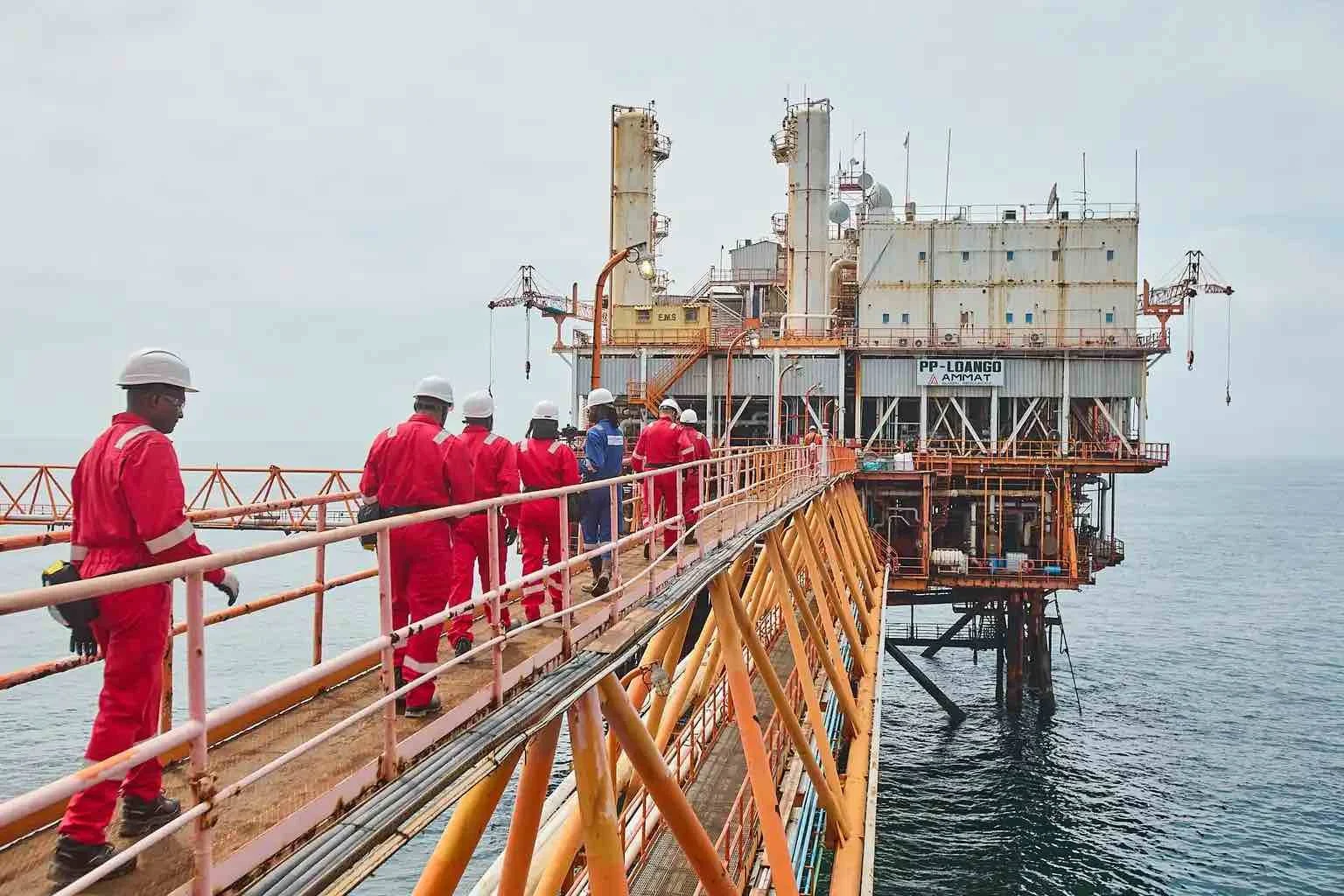
Photo Credit: African Energy Chamber
The Gas Corridor to Italy
The oil story is only one side of Congo’s hydrocarbon repositioning. The gas story has become more strategic since Europe began diversifying away from Russian pipeline supply.
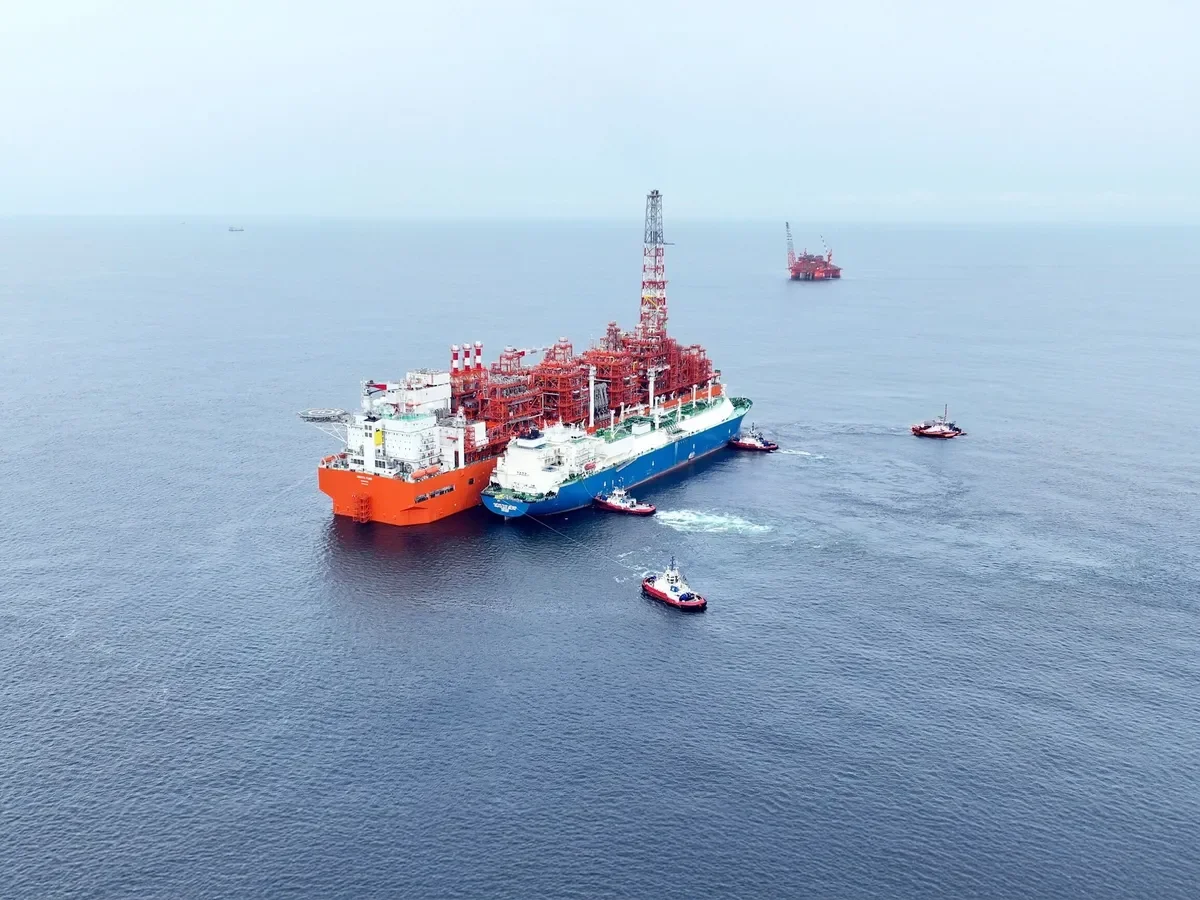
Eni’s Congo LNG project has turned the Republic of Congo into an LNG exporter using gas from the Marine XII licence. In February 2026, Eni said the first LNG cargo from Phase 2 had been produced from the Nguya floating LNG facility, raising total liquefaction capacity to 3 million tonnes per annum, equivalent to 4.5 billion cubic metres of gas per year.
NJ Ayuk has said in his commentary that the project supplies 15% of Italy’s gas needs. The safer analytical formulation is that Congo LNG strengthens Italy’s LNG diversification stack and adds a Central African supply line to Europe’s post-Russia gas map. Reuters reported that Italy’s natural gas consumption fell to 61.7 bcm in 2024, while LNG imports reached nearly 15 bcm that year, making LNG the country’s second-largest supply source after Algeria.
Read that way, Congo’s role is still strategically meaningful. At full nameplate capacity, Congo LNG’s 4.5 bcm/year would be material in LNG terms, but it should be described as part of Italy’s diversification portfolio rather than as a fixed share of national gas demand.
South-South Capital, Downstream Alignment and the Institutional Layer
The Congo story is also unfolding inside a wider African energy diplomacy moment. The African Energy Chamber’s engagement with Venezuelan leadership, positioned around South-South trade, investment and industrial collaboration, is not a Congo transaction and should not be treated as one. It is better understood as part of the broader diplomatic context in which African energy institutions are trying to build non-traditional partnerships around capital, technology and market access.
That context matters because mature-field renewal often falls between the cracks of mainstream energy finance. These assets are too operationally specific for broad infrastructure funds, too hydrocarbon-heavy for many transition-labelled pools and too small for the glamour of frontier exploration. Yet their economics can be attractive when the operator has control, the subsurface is understood, and the intervention cycle is short.
The downstream institutional picture is moving as well. ARDA describes itself as the first pan-African organisation dedicated to the downstream oil sector, with members spanning refiners, importers, terminal operators, marketers, distributors and regulators. Its membership platform is designed to support knowledge sharing, technical cooperation, energy security and investment across the downstream chain.
ARDA’s recent membership confirmations for OMH in Madagascar and ELTON Oil in Senegal point to a broader downstream alignment across African markets, even if outside Congo itself. ARDA’s own member list also includes Congo-linked entities such as CORAF and SNPC, reinforcing the point that upstream renewal is increasingly being read alongside refining, storage, distribution and regulatory coordination.
The New Congo Playbook
The Republic of Congo’s upstream renaissance is not a return to the old exploration romance. It is a harder, more technical story: ageing fields, asset transfers, pump replacements, workovers, subsea upgrades, gas capture, local capability and finance structures built around shorter-cycle returns.
Trident gives the story scale and cross-border repeatability. Ammat gives it a brownfield proof point. Eni’s Congo LNG project gives it geopolitical resonance. ARDA and the Chamber’s South-South diplomacy give it institutional texture.
For a producer that rarely commands the analytical spotlight, Congo is quietly becoming a test case for a question now facing much of Africa’s hydrocarbon sector: whether mature assets can be made investable again, not by pretending they are new, but by operating them better than they were operated before.
