
Dangote Goes Heavier: Nigeria’s Refining Pivot and the New Crude Trade Calculus
Africa’s largest refinery is learning the language of global trade. Dangote’s new appetite for heavier crude grades signals a decisive shift from national refining ambition to merchant-market strategy, where crude flexibility, blending economics and offtake discipline now matter as much as capacity. Across the Gulf of Guinea, TOR’s Bonga crude receipt, audited accounts and planned Ghanaian crude run point to a smaller but telling echo of the same regional turn: West Africa no longer wants merely to export crude and import fuel. It wants to capture the margin in between.
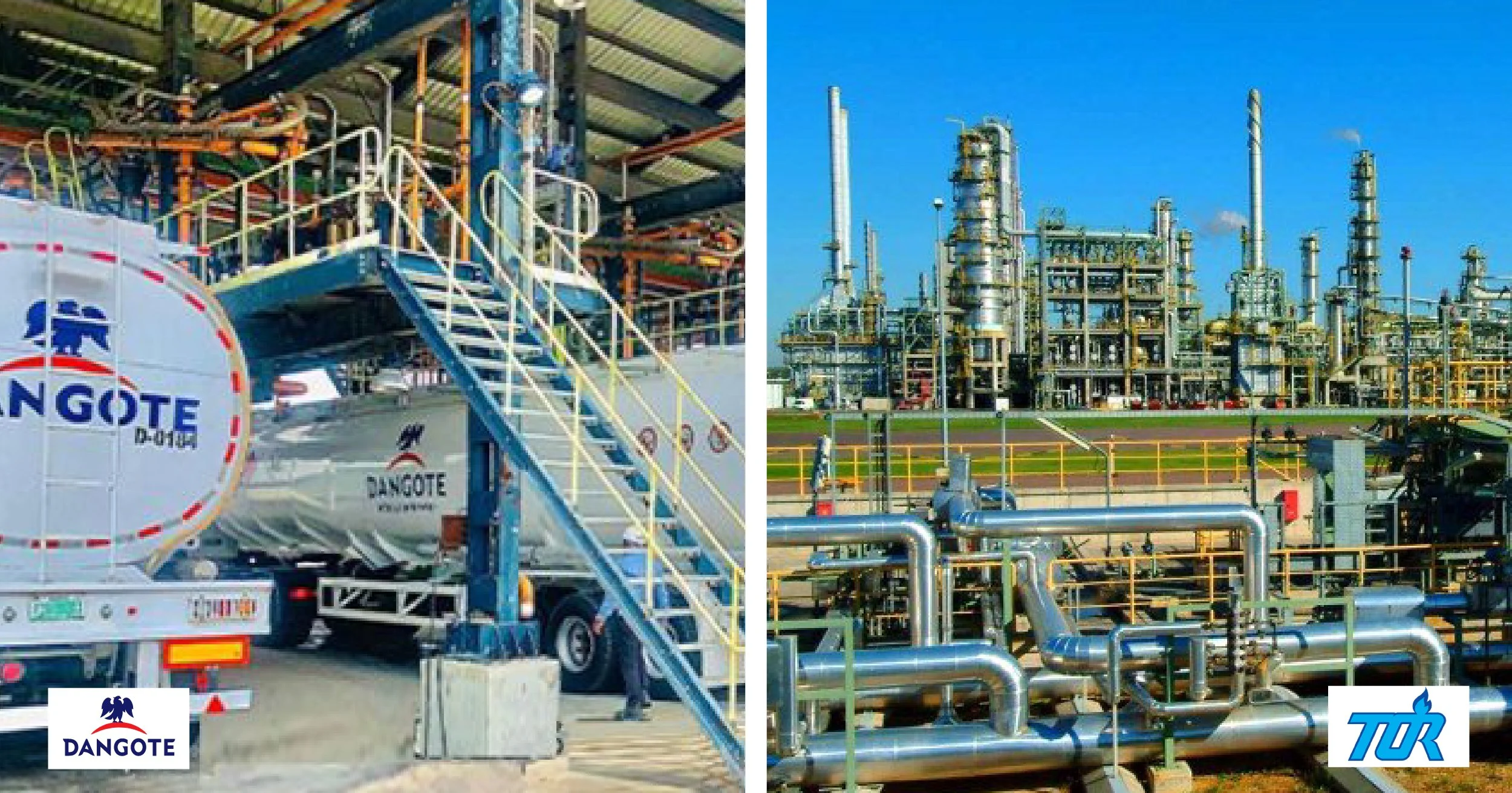
Lagos, Nigeria | June 1, 2026 - Africa’s largest refinery is beginning to behave less like a national industrial trophy and more like a global trading house with steel, tanks and distillation columns attached.
After reaching its 650,000 barrels-per-day nameplate capacity in February, the Dangote Refinery is moving beyond the early logic of processing mainly Nigeria’s light, sweet crude. Its new management is looking at heavier grades, residue blends, imported components, direct offtake contracts and expanded marine infrastructure, a shift that could redraw how crude and refined products move through West Africa. David Bird, Dangote Refinery’s chief executive, told S&P Global that the plant is not meant to be “a traditional refinery in an oil-producing country” sitting at the end of a crude pipeline, but “a fully merchant refining model” of the kind seen in Europe or Asia.
That distinction is the story. A refinery that depends narrowly on domestic crude supply behaves like a downstream extension of an oil-producing state. A refinery that can process multiple crude grades, import blending components, negotiate term supply, finance credit sales and export across jurisdictions becomes something far more consequential: a market-making participant in regional energy trade.
From National Refinery to Merchant Platform
The chronology matters. Dangote launched in 2024 and, according to S&P Global, transformed Nigeria’s fuel sector, though output was initially capped at around 450,000 barrels per day during a gradual ramp-up affected by repeated outages on its main gasoline-producing unit. Since reaching 650,000 barrels per day in February, the refinery has remained close to full capacity.
That scale quickly exposed the next bottleneck: trade sophistication. S&P Global reported that after supply disruptions linked to the Middle East conflict, Dangote shifted into “max jet mode”, becoming the world’s single largest exporter of aviation fuel in April, according to S&P Global Commodities at Sea data. The refinery is also producing above its gasoline design potential by importing blending components such as GTL naphtha and Bonny condensate, with Bird saying it could comfortably produce 75 million litres per day and potentially 100 million litres per day with better storage infrastructure.
The next phase is crude optionality. The Dangote model was designed around Nigeria’s light, sweet crude base, but the refinery says it has been challenged by insufficient local supply and weak terminal reliability. It can now refine 40 crude types, while Bird wants to move closer to the 130-crude flexibility of Singapore’s Pulau Bukom refinery, which he previously ran. Dangote’s planned $10 billion expansion would take the refinery to 1.4 million barrels per day, a scale S&P Global said would be equivalent to about 90% of Nigeria’s output and would force the company to seek new crude streams.
That is where the heavier-crude strategy becomes central. Dangote has already used US WTI Midland to supplement local supply. As it scales, Bird said it could incorporate heavier grades, Middle Eastern streams and South American residues. “We will be in the crude blending game,” he told S&P Global.
This is not a narrow feedstock adjustment. It is a new crude-trade calculus. A refiner with the ability to switch between grades, blend residues and optimise margins can arbitrage differentials instead of merely accepting whatever crude is locally available. For suppliers, Dangote becomes a new African demand centre. For traders, it becomes a larger working-capital and logistics counterparty. For Nigeria, it becomes both an industrial asset and a reminder that refining sovereignty still depends on a commercially reliable crude supply.
The Price Signal Behind the Pivot
Dangote’s move is also arriving in a crude market where price signals are no longer behaving neatly across regions. Argus Media’s April Asia-Pacific Monthly Crude Insights described sharp shifts in crude pricing and supply dynamics across Australasia, China and the Middle East Gulf. It pointed to a sustained squeeze on condensate availability supporting Australian values, with heavy Ichthys condensate reaching a fresh record high as a June-loading cargo traded at a premium of more than $20 per barrel to North Sea Dated. At the same time, Argus said Dubai backwardation narrowed sharply in April, averaging $13.77 per barrel, down from record levels seen in March.
For Dangote, those signals matter even though the Argus note is Asia-Pacific-focused. They show a fragmented crude market in which regional differentials, condensate availability and benchmark relationships are moving unevenly. In that environment, crude-slate flexibility is not a luxury. It is a margin defence system. A refinery locked into one domestic crude basket is exposed to supply unreliability and local pricing distortions. A refinery able to play WTI Midland, Middle Eastern grades, West African streams and residues has more room to protect economics when benchmark spreads shift.
Argus frames its crude market work around global benchmark prices, daily differentials to regional benchmarks including WTI Midland, WTI Houston, Urals, TMX, Argus Brent Sour, ESPO and Tupi, as well as commentary designed to identify arbitrage opportunities. That is the market language Dangote is now learning: not simply barrels in and products out, but relative value, freight, blending economics, offtake risk and timing.
Nigeria’s Three-Year Reform Backdrop
Dangote’s maturing commercial posture is unfolding against a broader Nigerian reform story. Nigeria’s 2023–2026 Energy Sector Wrap-up Report, published through the Office of the Special Adviser to the President on Energy, frames the Tinubu administration’s energy-sector programme as a reset designed to restore financial stability, rebuild confidence and position the sector for sustainable growth.
That backdrop matters because Dangote is not operating in a vacuum. Nigeria’s reform programme has tried to move the energy economy away from subsidy-heavy distortion and towards investment-led supply. The official reform architecture includes oil and gas sector reforms, power-sector reforms, a power-sector bond, policy directives, deep offshore incentives, VAT modifications and cost-efficiency incentives. Dangote is the most visible downstream proof point of that ambition. But the refinery’s heavier-crude strategy also shows the limits of reform by proclamation. If domestic crude supply is inconsistent, terminal reliability remains weak or regulated arrangements do not match refinery economics, the plant will behave rationally as a merchant buyer. It will source where the barrels, prices and logistics work.
The official reform narrative and Dangote’s commercial pivot therefore belong in the same frame. The government wants local refining to reduce import dependence and foreign-exchange pressure. Reuters, reporting on President Bola Tinubu’s May 29, 2026 anniversary address, said Tinubu argued that reforms since 2023 had stabilised the economy, improved investor confidence and attracted fresh oil and gas investment, while also noting the hardship created by subsidy removal, electricity tariff reforms and naira devaluation. Dangote wants feedstock flexibility, long-term buyers and better logistics. The overlap is powerful, but not automatic. Refining capacity alone does not create downstream sovereignty. The system around it must be bankable.
From Spot Sales to Term Relationships
The S&P Global interview makes clear that Dangote’s next struggle is not only crude supply but product evacuation and credit architecture. The refinery currently ships half its production overseas and plans to export all additional product from its expansion to international markets. But its limited storage capacity leaves little room for operational error, with Bird describing the daily product flow as “a tsunami of product coming down the pipe every day.”
That is forcing a change in sales strategy. Dangote is moving away from a largely spot model managed through international trading companies and towards longer-term purchasing commitments from governments, distributors and national oil companies. Bird said the company wants direct offtake relationships and does not want to be treated as “the supplier of last resort.”
This is where the financing angle sharpens. A refinery with spot sales needs traders. A refinery with term contracts needs receivables discipline, credit insurance, structured finance and counterparty management. If Dangote succeeds, it will not just sell fuel into African markets. It will extend commercial influence across them through pricing, payment terms, logistics and storage.
The company is already thinking geographically. S&P Global reported that Dangote is finalising approvals for a Namibian tank farm that it plans to connect to Zambia by pipeline, while also discussing a Djibouti oil link and storage in Cameroon. That is not the footprint of a refinery content to serve one domestic market. It is the outline of a regional fuel-distribution system.
Ghana’s Governance Signal
Across the Gulf of Guinea, Ghana is trying to build its own refining-revival narrative, though on a far smaller scale.
On May 27, Tema Oil Refinery said it had received approximately one million barrels of Bonga crude aboard the MT Cap Felix as part of its ongoing refinery revitalisation and crude-processing programme. The official release, also shared by TOR Managing Director Edmond Kombat, said the crude was purchased from Shell and supplied through TOR’s tolling partner, Fujeirah/Triangle Commodities Trading.
That operational milestone sits on top of an earlier restart sequence. TOR’s own website announced in December 2025 that the refinery had resumed refining operations after completing major turnaround maintenance and securing the necessary regulatory clearances. PetroPulse has also tracked that recovery arc, reporting that TOR’s December 2025 return followed major turnaround maintenance on the Crude Distillation Unit from August to October, with the National Petroleum Authority clearing operations on December 19 and initial operations at about 28,000 barrels per stream day as part of a phased return to capacity.
The Bonga cargo was therefore not an isolated delivery. It was the next physical test of whether TOR’s recovery could move from maintenance milestone to crude-processing continuity.
The institutional test is just as important. TOR said it had audited and submitted six years of outstanding accounts to the State Interests and Governance Authority (SIGA), noting that since 2018 the refinery had not produced audited accounts.
In a June 1 press statement, SIGA commended TOR’s Board, Management and staff for completing and submitting outstanding audited financial statements for 2019, 2020, 2021, 2022, 2023 and 2024, after a period in which the refinery had not produced audited accounts. SIGA framed the submission as a major milestone in TOR’s governance, compliance and accountability journey.
The numbers gave the commendation its commercial bite. According to the audited accounts presented to SIGA, TOR recorded Profit Before Tax of GHS 1.24 billion in 2025, described by SIGA as the refinery’s first profit in ten years and a significant indicator of renewed institutional recovery. SIGA also cited strong revenue growth, its best financial performance since 2019, a foreign-exchange gain of GHS 1.3 billion from prudent financial and forex management strategies, associate profit growth to GHS 155 million, a reduction in trade and other payables from GHS 7.1 billion in 2024 to GHS 5 billion in 2025, improved receivables management, with receivable days falling from 1,099 to 652 days, a notable decline in total debt levels between 2024 and 2025, and the successful completion of Turnaround Maintenance activities alongside the refining of approximately 600,000 barrels of crude oil.
That is not just a compliance clean-up. For a refinery trying to re-enter crude-processing, tolling and trade-finance conversations, audited accounts begin to repair the informational gap that kept counterparties guessing about TOR’s financial position. SIGA’s statement still carried caution, noting that liquidity pressures, retained deficits and long-term balance-sheet restructuring remain live challenges. But it also said TOR’s recovery trajectory and improving 2025 financial indicators were encouraging, urging the refinery to sustain momentum, deepen operational efficiencies, strengthen corporate governance and accelerate efforts towards long-term profitability, competitiveness and national energy security.
In downstream finance, audited accounts are not administrative housekeeping. They are the paper infrastructure of trust. A refinery seeking crude supply, tolling partnerships, trade credit or investment must first be legible to financiers and counterparties. TOR’s Bonga cargo shows that Ghana’s refinery is moving molecules again. Its audited accounts suggest an attempt to rebuild the credibility required to keep those molecules moving under bankable commercial arrangements.
President John Dramani Mahama then added the policy layer. Speaking at a diaspora town hall meeting in London on May 31, 2026, in a speech streamed by Jubilee House, he said Tema Oil Refinery would begin processing Ghanaian crude oil in June 2026 as part of Ghana’s broader value-addition push. He said the government would deliver a parcel of crude from Ghana’s own offshore fields to TOR for processing, framing the move as part of a strategy to reduce dependence on imported refined petroleum products and retain more value locally.
West Africa’s Refine-at-Home Moment
The Ghana angle is smaller than Dangote’s in scale, but not separate from it. Together, the developments point to a West African refining moment in which crude-producing countries are becoming more explicit about value addition, import substitution and regional product security.
Nigeria has the mega-refinery, and Ghana has the rehabilitation case. Dangote is moving towards a merchant model that shops globally for crude and sells regionally and internationally. TOR is trying to move from dormancy and weak financial reporting towards operational recovery, crude-processing continuity and local crude utilisation. Both stories sit inside the same regional question: can West Africa capture more value after crude leaves the ground?
The answer will not be settled by refinery capacity alone. It will depend on crude availability, pricing discipline, audited books, storage, port infrastructure, product pipelines, offtake contracts and the willingness of lenders and traders to finance the cycle. Dangote’s heavier-crude pivot shows what happens when a refinery reaches scale and begins to behave like a sophisticated market actor. TOR’s audited accounts and Bonga cargo show the more basic but equally important groundwork of restoring confidence before scale can matter.
A New Crude Trade Calculus
The old West African oil map was simple enough: crude moved out, refined products came back in. Dangote is complicating that pattern. But it is not doing so through a sentimental version of resource nationalism. It is doing so through crude optionality, blending economics, direct offtake, logistics expansion and merchant discipline.
That is the real significance of the heavier-crude strategy. Africa’s largest refinery is no longer merely asking whether Nigeria can supply it. It is asking which crude grades, from which regions, at which prices, under which financing terms, can best sustain its margins and market reach.
For Nigeria, that is both a victory and a warning. The country has produced a refining asset large enough to shift regional trade flows. But if it wants that asset to deepen domestic energy security, the broader reform compact must deliver reliable crude supply and credible market rules. For Ghana, TOR’s return to crude processing, financial regularisation and planned Ghanaian crude run offer a smaller but telling echo: West Africa’s refine-at-home ambition is becoming practical, but only where governance, feedstock and finance meet.
The contest ahead is no longer simply over who produces the crude. It is over who controls the margin after the crude leaves the ground.
