
AfDB’s New Africa Playbook: Guarantees in Morocco, Reform Tables in Gabon
AfDB is sharpening a new transition-finance playbook for Africa: using its balance sheet to unlock green industrial capital in Morocco, while using reform tables in Gabon to turn high electricity access into a more reliable, investable power system. From OCP’s low-carbon fertiliser push to Gabon’s Mission 300 compact, the Bank’s message is clear: Africa’s energy transition will be built where finance, reform and infrastructure meet.
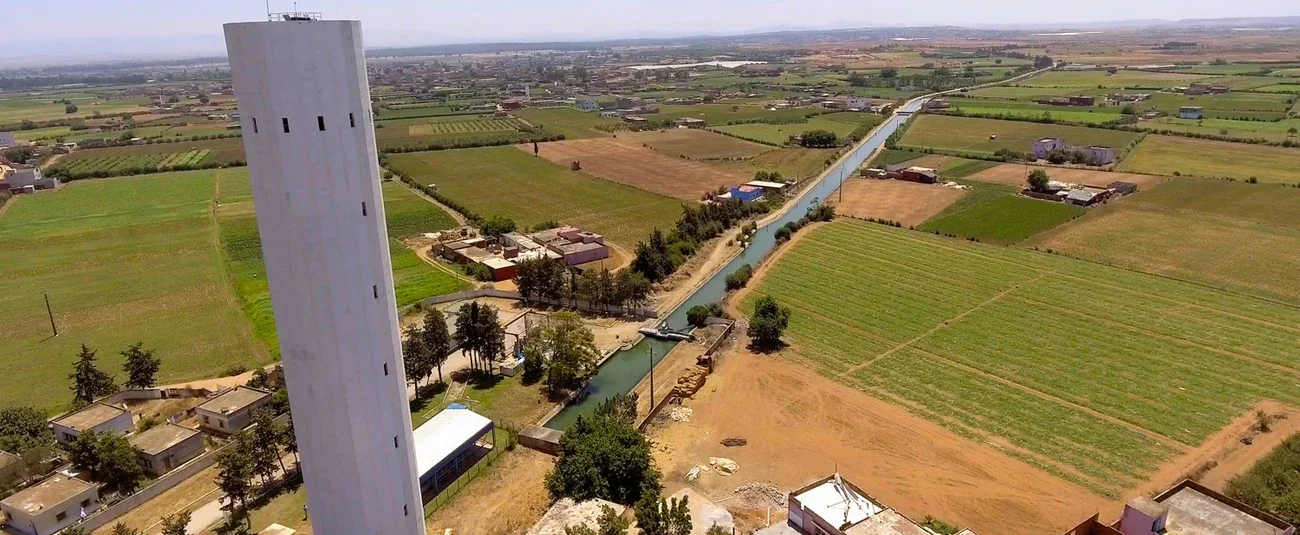
Rabat, Morocco | May 29, 2026 - The African Development Bank Group has put two different energy-transition instruments to work in the space of weeks: a €450 million guarantee to help Morocco’s OCP Group finance low-carbon industrial expansion, and a reform-and-investment compact in Gabon aimed at turning one of Africa’s better-connected power markets into a platform for universal access.
In Rabat, the Bank and OCP Group signed a partial credit guarantee agreement on 22 May 2026 to support OCP’s investment programme, with the instrument designed to unlock a €530 million green financing facility arranged by Société Générale and BNP Paribas. The transaction, described by the Bank as the first mechanism of its kind in Morocco, is not conventional project finance. It is a balance-sheet weapon: the AfDB is using its AAA credit standing to help crowd in long-tenor private capital for a company whose investment plan links expanded plant-nutrition production to food security, carbon neutrality, water-positive operations and green industrial inputs.
The agreement lands against a longer OCP chronology. After presenting its green investment programme in 2022, OCP moved into a $13 billion 2023–2027 investment plan built around expanded plant-nutrition production, carbon neutrality by 2040, water positivity, green hydrogen and green ammonia, and a wider green industrial ecosystem in Morocco. OCP’s current targets include 5.4GW of green energy by 2027 and 9.7GW by 2030, alongside plans to expand plant-nutrient production capacity from 15 million tonnes in 2025 to 20 million tonnes of fully sustainable products by 2027.
That makes the AfDB guarantee more than a financing footnote. It is a marker of how Africa’s development-finance architecture is shifting from sovereign lending and donor-backed projects toward structured instruments that can lower risk, stretch maturities and pull commercial banks into the continent’s green industrial build-out. The Bank framed the deal as aligned with its new Four Cardinal Points, particularly the agenda around capital mobilisation and climate-resilient, value-creating infrastructure.
“The signing of this agreement reaffirms our commitment to OCP Group’s investment program. Leveraging our AAA credit rating, we are mobilising international capital to accelerate the development of low-carbon fertiliser production, the deployment of renewable energy, and sustainable water management. These are strategic levers in support of food security across the continent,” said Achraf Tarsim, Country Manager of the African Development Bank Group in Morocco.
For OCP, the message was execution. The company has spent the past several years lining up the financial and industrial architecture for a lower-carbon fertiliser chain, including renewable energy, water efficiency and green inputs. In April 2026, OCP said it had successfully issued a $1.5 billion subordinated perpetual bond, a transaction it said was intended to enhance financial flexibility and diversify its long-term funding structure. Reuters separately reported that the issuance was OCP’s first international hybrid bond and the first US dollar-denominated hybrid bond by an African company in global markets.
“With this agreement, we are taking a decisive step toward a low-carbon, circular industrial model. The support of the African Development Bank Group strengthens our capacity to invest in solutions that preserve resources, protect soils, and support farmers. Together, we are contributing to sustainable growth for Morocco, Africa, and global food security,” said Younes Kchia, Chief Financial Officer of OCP Group.
The financing is expected to support projects aimed at cutting greenhouse gas emissions, expanding renewable energy, improving water and energy efficiency across OCP’s industrial facilities, and strengthening sustainable agricultural practices. In the politics of African transition finance, that matters because fertiliser is no longer merely an agricultural input. It is becoming an industrial test case for whether African resource economies can move up the value chain while reducing the carbon and water intensity of production.
From Rabat’s Balance Sheet to Libreville’s Reform Table
If Morocco shows the AfDB leaning on credit enhancement, Gabon shows the same institution working the other side of the transition equation: policy reform, utility governance and investable project pipelines.
In Libreville, the Bank and the Government of Gabon concluded the 10th Africa Energy Market Place, held on 8–9 April 2026, as a forum to align Gabon’s national energy priorities with Mission 300 and develop a National Energy Compact capable of mobilising investment, accelerating reforms and widening inclusive access.
Mission 300 is the joint World Bank Group and African Development Bank Group initiative to provide electricity access to at least 300 million people in Africa by 2030. Under the arrangement announced in April 2024, the World Bank Group would support access for 250 million people, while the African Development Bank Group would support an additional 50 million.
The Africa Energy Market Place has operated since 2018 as the Bank’s flagship energy-sector policy dialogue platform under the Africa Energy Sector Technical Assistance Programme. Before Gabon, the platform had onboarded 24 countries; Libreville made Gabon the 25th country engaged through the platform.
“Our experience has shown that consistent reforms are the foundation of sustainable power systems. Here in Gabon, we have seen exactly that — clear political ownership, a coherent Energy Compact, and a shared determination to translate plans into investable projects. Private sector participation is not an add-on to Mission 300; it is integral to its success,” said Dr Kevin Kariuki, Vice President for Power, Energy, Climate and Green Growth at the African Development Bank Group.
Gabon enters the Mission 300 track with stronger access numbers than much of the continent. The Bank puts electricity access at approximately 94% of the population and clean-cooking access at around 90%. Yet those headline figures conceal a structural problem familiar across resource-rich African markets: access and reliability remain uneven, with rural communities still lagging behind urban centres.
The deeper challenge is physical fragmentation. The forum identified Gabon’s four isolated grids as a critical bottleneck, with some parts of the country facing excess generation capacity while others endure persistent shortages. Connecting those systems into a national grid, and eventually linking Gabon more deeply into the Central African Power Pool, was cast as a route to better energy security, system efficiency and regional power trade. The Central African Power Pool is the specialised regional agency created within ECCAS to help develop a regional electricity market for Central Africa.
Mission 300’s Hard Centre: Reform Before Megawatts
The Gabon compact discussions were organised around five pillars: expanding generation capacity and modernising grid infrastructure; leveraging regional power integration through ECCAS, CEMAC and the Central African Power Pool; scaling distributed renewable energy and clean-cooking solutions; unlocking private-sector investment through innovative financing and public-private partnerships; and improving the financial viability and governance of the national utility, SEEG.
That architecture is revealing. Mission 300 is often presented as an access drive, but the Libreville meeting treated access as the end point of a more complicated chain: bankable projects, credible regulation, utility reform, grid investment and political ownership. Without those, generation targets remain stranded on paper.
“The aim of the Africa Energy Market Place is to create the enabling environment for private sector participation — putting in place the reforms needed to attract investment and mobilise financing from donor partners, development banks, and private sector developers. This AEMP has been instrumental in consulting stakeholders to strengthen the National Energy Compact and set the scene for rapid implementation. Government ownership is absolutely critical to success, and what we have seen here is exactly that,” said Wale Shonibare, Director for Energy Financial Solutions, Policy and Regulation at the African Development Bank Group.
The concrete outputs from Libreville included a Gabon Energy Access Investment Brief aligned with Mission 300, agreement on priority renewable-energy and grid-expansion projects, draft policy and regulatory reform recommendations with implementation timelines, and the establishment of a Compact Delivery and Monitoring Unit to track execution. The forum was jointly organised by the AfDB and Gabon’s government, with co-conveners including the World Bank, SEEG, ECCAS, the Central African Power Pool, Sustainable Energy for All, the Africa Minigrids Developers Association and the Africa Renewable Energy Initiative.
The Signal Beneath the Deals
Taken together, Rabat and Libreville show the AfDB testing a broader operating model for Africa’s energy transition. In Morocco, it is reducing financing risk for a strategic industrial champion whose fertiliser, water and renewable-energy investments carry continental food-security implications. In Gabon, it is using technical assistance and policy dialogue to convert high access rates into a more coherent national and regional power system.
The common thread is not simply green finance. It is execution discipline. The Bank is pushing capital where projects are mature enough to absorb it, and reform where systems are not yet ready to attract it. That is a quieter story than a single mega-project announcement, but it is arguably the more important one. Africa’s transition will not be built by finance alone, nor by policy workshops alone. It will be built where credit, reform and infrastructure meet.
