Africa’s Upstream Turn: Angola, Gabon and the Frontier Basins Pull Capital Back to the Drill Bit
Africa’s upstream map is stirring again, not through a single blockbuster discovery, but through a chain of calculated moves across Angola, Gabon, Libya, Cameroon and Somalia. From Afentra’s Angola drilling ambitions and BW Energy’s MaBoMo timetable in Gabon to Cameroon’s licensing push and TGS’s Somalia data play, the continent’s next oil-and-gas cycle is being rebuilt one licence, study, well and seismic library at a time.

Angola, Africa | May 28, 2026 - Africa’s upstream map is beginning to move again, not through one dramatic frontier strike, but through a chain of pragmatic, capital-seeking steps across producing basins and underexplored margins. In Angola, Afentra is pushing ahead with onshore and offshore exploration plans after ending talks with potential suitors, targeting exploration wells by 2027 and a final investment decision on up to three Block 3/24 discoveries by late 2026 or early 2027. In Gabon, BW Energy’s latest update places MaBoMo Phase 2 first oil in the first quarter of 2027, while confirming that the Dussafu Marin production licence has been extended by 20 years to 2048, with an option for another five years.
The timing matters. After years in which capital discipline, transition pressure and above-ground risk narrowed upstream appetites, a new African exploration and production cycle is forming around shorter-cycle barrels, brownfield extensions, modular developments and selective frontier exploration. Angola is trying to defend production through a blend of near-field redevelopment, deepwater investment and new basin testing; Gabon is leaning on phased offshore drilling to counter decline; Cameroon has moved from offering acreage to selecting counterparties for Production Sharing Contract negotiations; Libya is using technical studies with international oil companies to rebuild confidence around its oil and gas base; and Somalia remains at the data-marketing stage, with TGS extending its agreement to market and license offshore geophysical data covering the country’s offshore basins. (SNH)
Angola’s small-cap wager meets deepwater staying power
Afentra’s Angola plan has become one of the sharper signals of how independents are approaching African upstream growth. The company, which called off talks with potential suitors in May 2026, is pushing ahead with onshore and offshore exploration in Angola, with Chief Executive Paul McDade telling Reuters that stronger oil prices and geopolitical risk around the Strait of Hormuz supported the company’s position.
The immediate offshore prize is Block 3/24, where Afentra expects to reach a final investment decision by late 2026 or early 2027 on the development of up to three discoveries. McDade told Reuters the company’s aim is first oil towards the end of 2027. The block holds 10 oil and gas discoveries, including assets found by TotalEnergies more than two decades ago but never developed, and sits close to Afentra’s existing producing fields.
The chronology is important. Afentra first built its Angola position around producing and near-field assets, then moved towards operatorship and redevelopment upside. The company is preparing drilling at Block 3/05, starting with the Pacassa SW well, with a second nearby well, Impala, also in the plan. Results from Pacassa SW are expected by July, and McDade told Reuters that a discovery of around 50 million barrels of recoverable oil could lift Afentra’s current reserves by about 50%.
The next leg is onshore. Afentra is assessing the Kwanza Basin, where exploration activity last took place in the 1980s, and is targeting exploration wells there by 2027. That gives the company a dual-track Angola story: extract more value from known offshore discoveries while testing underexplored onshore potential that has long sat outside the centre of investor attention.
Afentra’s push sits beside the larger, deeper-pocketed Angola strategy being advanced by TotalEnergies. In May 2024, TotalEnergies, Petronas and Sonangol announced the final investment decision for Kaminho, the first large deepwater development in the Kwanza Basin. The project covers the Cameia and Golfinho fields, about 100 kilometres offshore Angola in 1,700 metres of water, and involves converting a very large crude carrier into an all-electric floating production, storage and offloading unit, with start-up expected in 2028 and plateau output targeted at 70,000 barrels per day.
TotalEnergies has also signed an Agreement of Principles with Angola’s National Oil, Gas and Biofuels Agency, acting on behalf of the Block 32 contractor group, to establish the general terms for the continued development of Block 32 and extend production periods for its development areas until 2043. The agreement, signed in Luanda on 6 May 2026 after negotiations through 2025, covers Cominhos, Alho, Cola, Manjericão, Colorau and Kaombo.
In July 2025, TotalEnergies announced the start of production from the Begonia and CLOV Phase 3 offshore projects, which together add 60,000 barrels per day of production offshore Angola by using available capacity on the Pazflor and CLOV FPSOs. The company described the projects as low-cost, low-emissions subsea tie-backs that leverage existing facilities.
The pattern is clear: Angola is not relying on a single basin, a single class of operator or a single development model. It is trying to layer brownfield optimisation, deepwater development, licence extensions and frontier exploration into one extended production defence.
Gabon turns MaBoMo into a decline-management machine
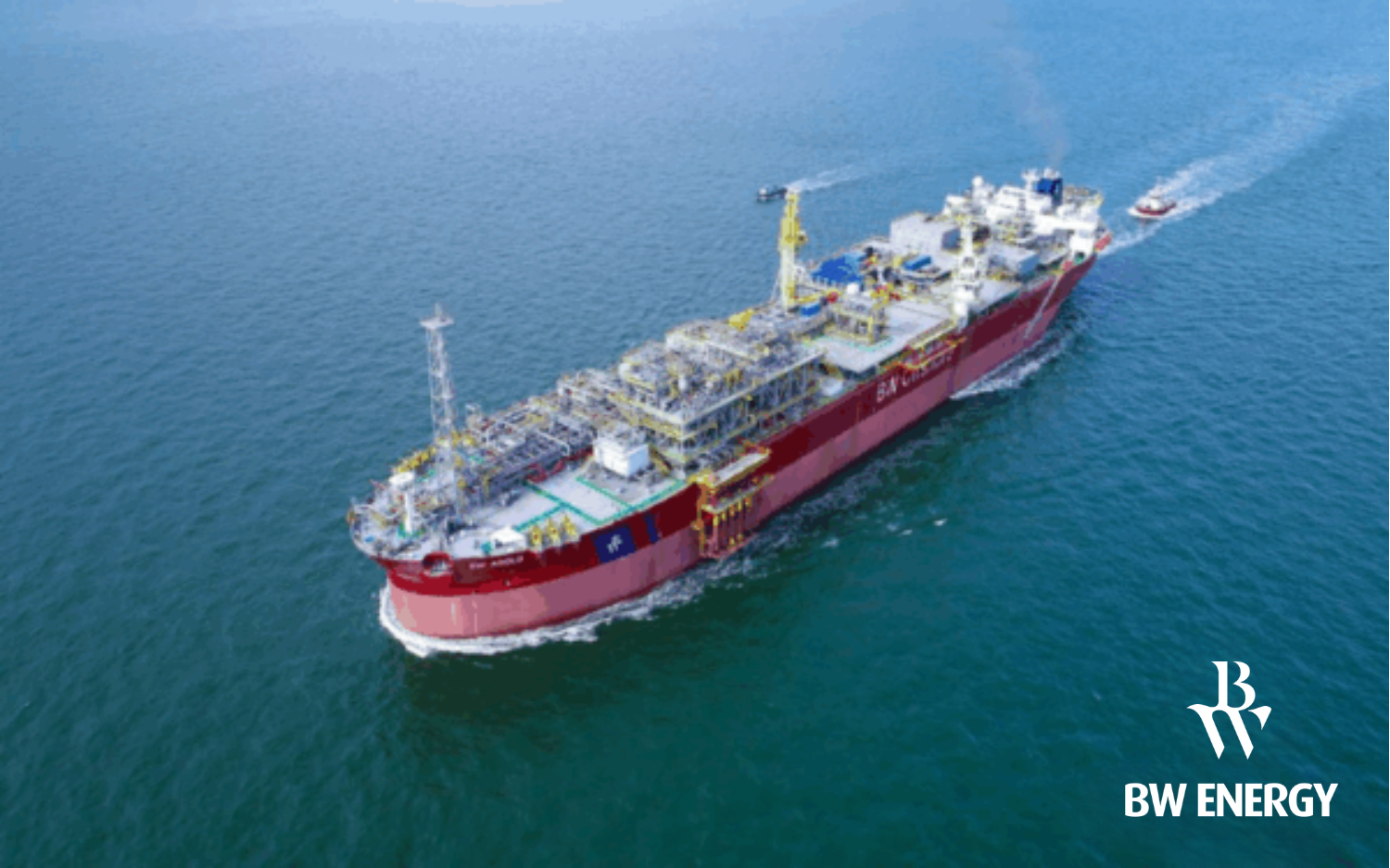
In Gabon, the centre of gravity is the Dussafu Marin licence, where BW Energy is preparing the next phase of the MaBoMo development. BW Energy had previously described MaBoMo Phase 2 as a four-production-well programme, with two additional appraisal wells under consideration, while its latest May 2026 update says MaBoMo Phase 2 is set to start with appraisal drilling and that first oil has moved to the first quarter of 2027.
The project is designed less as a speculative frontier bet than as a production-restoration exercise. BW Energy says production from the MaBoMo facility is transported to the BW Adolo FPSO through a 20-kilometre pipeline, making the development part of a broader infrastructure-led strategy at Dussafu.
Gabon’s Ministry of Petroleum and Gas has approved a 20-year extension of the Dussafu Marin production licence through 2048, with an option for a further five years. That extension is not just administrative housekeeping. It gives BW Energy a longer runway for development activity across Dussafu, including the MaBoMo Phase 2 programme and the company’s wider Gabon portfolio.
The Gabon story therefore mirrors a wider African upstream theme: the most investable barrels may be those tied to existing infrastructure, modular development concepts and incremental drilling that can be executed with a clearer line of sight to cash flow.
Libya’s majors return through the study room
Libya’s upstream reset is moving through a different route. Rather than immediate drilling announcements, the country is using memoranda of understanding and technical studies to reopen the door to international oil company participation after years of instability and interrupted activity.
In May 2026, Libya’s National Oil Corporation Chairman Masoud Suleiman met Shell officials, NOC technical department directors and the chairman of Arabian Gulf Oil Company to review cooperation under a 2025 memorandum of understanding. During the meeting, Shell presented interim results from a technical study covering several oil and gas fields, with the final report expected before the end of May 2026.
The Shell work fits into a broader pattern. Reuters reported in July 2025 that BP and Shell had agreed with Libya’s NOC to assess hydrocarbon exploration and development potential at Libyan oilfields, with BP studying Messla and Sarir and nearby exploration zones, while Shell would evaluate Atshan and other NOC-owned fields through a technical and economic feasibility study.
By April 2026, Chevron had also signed a preliminary agreement with Libya’s NOC to assess shale oil and gas resources in the country’s sedimentary basins. Reuters, citing NOC estimates, reported that those basins could hold roughly 123 trillion cubic feet of natural gas and around 18 billion barrels of oil.
Libya’s upstream proposition remains politically exposed, but the sequence shows how the country is trying to convert technical re-entry by majors into a production recovery platform. For now, the language should remain cautious: these are studies, assessments and preliminary agreements, not yet full-scale drilling commitments.
Cameroon reopens the licensing door
Cameroon’s move is more institutional. In August 2025, Société Nationale des Hydrocarbures (SNH) launched a licensing round for nine free blocks in the national oil and gas domain: Ndian River, Bolongo Exploration and Bakassi in the Rio Del Rey Basin, and Etinde Exploration, Bomono, Kombe-Nsepe, Tilapia, Ntem and Elombo in the Douala/Kribi-Campo Basin. SNH said the round was launched under its mandate to promote and valorise Cameroon’s hydrocarbon resources, with the aim of concluding petroleum contracts under the country’s Petroleum Code and its enabling regulations.
By 24 April 2026, SNH had published the results of the call for interest. Five blocks were awarded to bidders for negotiations over the related Production Sharing Contracts: Octavia Energy Corporation Limited received Bolongo Exploration, while Murphy West Africa Ltd received Etinde Exploration, Tilapia, Elombo and Ntem.
For Cameroon, the awards mark a measured attempt to reopen the upstream investment pipeline through contract negotiations rather than a completed development commitment. The stronger reading is therefore procedural but still material: the state has moved from offering acreage to selecting counterparties for PSC talks across two named petroleum basins. What remains to be watched is whether those negotiations turn into signed contracts, work programmes and, ultimately, drillable commitments.
Somalia stays at the frontier end of the cycle
Somalia sits at the other end of the investment curve, where the first task is not production renewal but data confidence. In November 2025, TGS extended its agreement with Somalia’s Ministry of Petroleum and Mineral Resources, giving the company continued rights to market and license geophysical data covering Somalia’s offshore basins.
The agreement allows TGS to continue offering more than 46,000 line kilometres of modern 2D seismic data and more than 50,000 kilometres of aeromagnetic data. TGS said the datasets are intended to help energy companies assess offshore blocks in what it described as one of the world’s most underexplored regions.
That places Somalia in the earliest stage of the same upstream sequence now visible elsewhere: data first, acreage next, capital later. For a frontier basin, the geological story must be made legible before the financial story can be made investable.
The African upstream cycle is no longer waiting for one big discovery
The thread running through Angola, Gabon, Libya, Cameroon and Somalia is not uniformity. It is sequencing. Angola is combining independent-led redevelopment with major-led deepwater investment. Gabon is using modular offshore drilling and licence-life extension to defend production. Libya is rebuilding its above-ground case through technical studies with majors. Cameroon is pushing acreage awards into PSC negotiations. Somalia is marketing the subsurface before it can market the barrel.
That is why the latest Afentra and MaBoMo updates matter beyond Angola and Gabon. They show a continental upstream cycle being rebuilt in layers, not headlines. The new African oil patch is less about the romance of frontier wildcats and more about the hard mechanics of investable acreage: licence extensions, production-sharing negotiations, seismic libraries, brownfield wells, phased developments and drilling campaigns close enough to infrastructure to matter. For governments trying to defend output and companies trying to keep capital disciplined, that may be exactly the kind of cycle that gets funded.
