
Trafigura’s Spain PPA Signals the New Renewable Playbook: Hybrid Assets, Bankable Revenues and Storage-Ready Grids
Trafigura’s 434MW hybrid PPA with Nadara in Spain and EBRD’s US$65 million backing for solar-plus-storage at Egypt’s Benban point to a new phase in the renewables race: capacity alone is no longer enough. From Europe’s hybrid offtake contracts to North Africa’s storage-backed climate finance, the market is moving towards clean power that can be financed, shaped and delivered with the discipline of conventional energy.
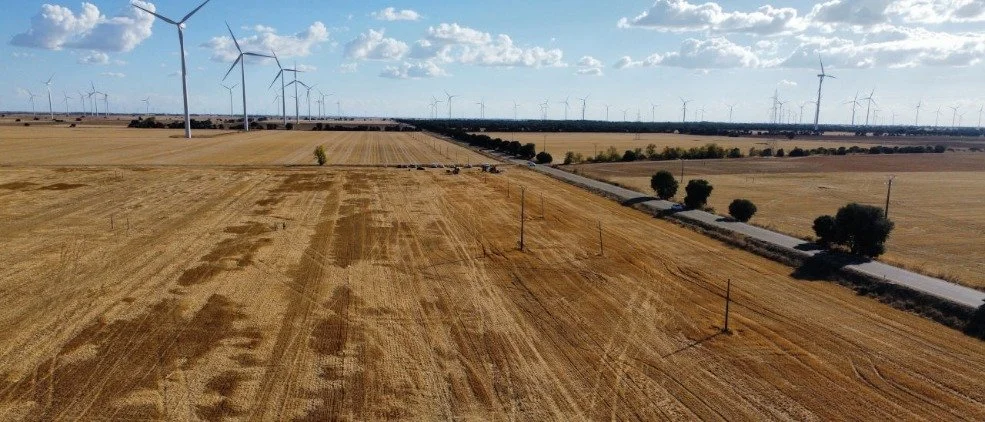
Geneva, Switzerland | May 28, 2025 - Trafigura has moved deeper into Europe’s renewable power trade with a 10-year hybrid power purchase agreement with Nadara in Spain, locking in 434MW of wind and solar capacity across 11 assets in a deal that captures a broader shift now reshaping clean-energy finance: renewable projects are increasingly being built, refinanced and expanded not merely on installed megawatts, but on the quality of the revenue contract sitting behind them.
The agreement, announced in Geneva on 20 May 2026, covers five solar PV farms and six wind farms, including output from Nadara’s hybrid sites at Esquileo, Dehesilla I, Dehesilla II, San Lorenzo C and San Lorenzo D, alongside the operational La Dehesica wind site. For Trafigura, a leading commodities group whose business spans oil and petroleum products, metals and minerals, gas and power, the deal expands its European renewable power footprint. For Nadara, a next-generation independent power producer with an installed portfolio of more than 4GW across roughly 200 onshore wind, solar, biomass and energy-storage assets, it converts a complex portfolio of renewable generation into a more bankable long-term cash-flow proposition.
That is the crux of the transaction. The deal points to a more demanding phase in Spain’s renewable market, where the structure of output and offtake is becoming as important as capacity additions. By pairing solar generation with existing wind sites, the Nadara portfolio is designed to benefit from a complementary production profile that stabilises output and supports additional investment in capacity.
Nicola Cagetti, Trafigura’s Head of European Power, described the deal as an extension of the company’s strategy to diversify its European renewable portfolio across key EU hubs, including Spain, where Trafigura says it already has a long-standing presence in the power market. Maria Mura, Nadara’s Head of Origination, framed the agreement as proof that disciplined structuring and risk management can still unlock new renewable capacity in a competitive market.
Why the PPA matters
The quiet power of the deal lies in the PPA itself. A power purchase agreement is typically the core revenue contract that underpins a power project, providing the structure through which the producer sells electricity and, crucially, through which lenders and investors assess whether capital can be recovered with an acceptable return. The World Bank’s PPP guidance describes the PPA as the central contract between an offtaker and a power producer, setting out the basis on which electricity is sold and revenues are secured.
That makes the Trafigura-Nadara agreement more than a standard offtake announcement. It is a signal of how renewable portfolios are being made financeable at scale. The agreement gives Nadara long-term revenue certainty for existing wind assets while enabling investment in new solar projects, turning hybridisation into both an operational and a financing strategy. For Trafigura, the arrangement adds renewable generation to a power trading book that is increasingly relevant as commodity merchants position themselves across electricity, gas, metals and transition fuels.
The transaction also reflects a maturing European renewables market. In the early phase of the sector, capacity growth was often driven by subsidies, feed-in tariffs and policy-backed procurement. The new phase is more commercial and more exacting. Developers must manage weather-driven intermittency, merchant-price exposure and grid congestion. Buyers, meanwhile, want clean power that can be shaped into tradable, reliable volumes. Hybrid PPAs answer part of that problem by combining technologies with different generation profiles under a single long-term commercial structure.
From Spain to Egypt, the same financing logic is emerging
A month before the Trafigura-Nadara announcement, another transaction pointed to the same global theme from a different geography. On 14 April 2026, the European Bank for Reconstruction and Development (EBRD) announced a US$65 million construction bridging loan to HAU Energy for a renewable energy project at Benban, near Aswan in Egypt. The project, co-developed by HAU Energy and Infinity Power, will support the construction of a 200MW solar photovoltaic plant and a 120MWh battery energy storage system.
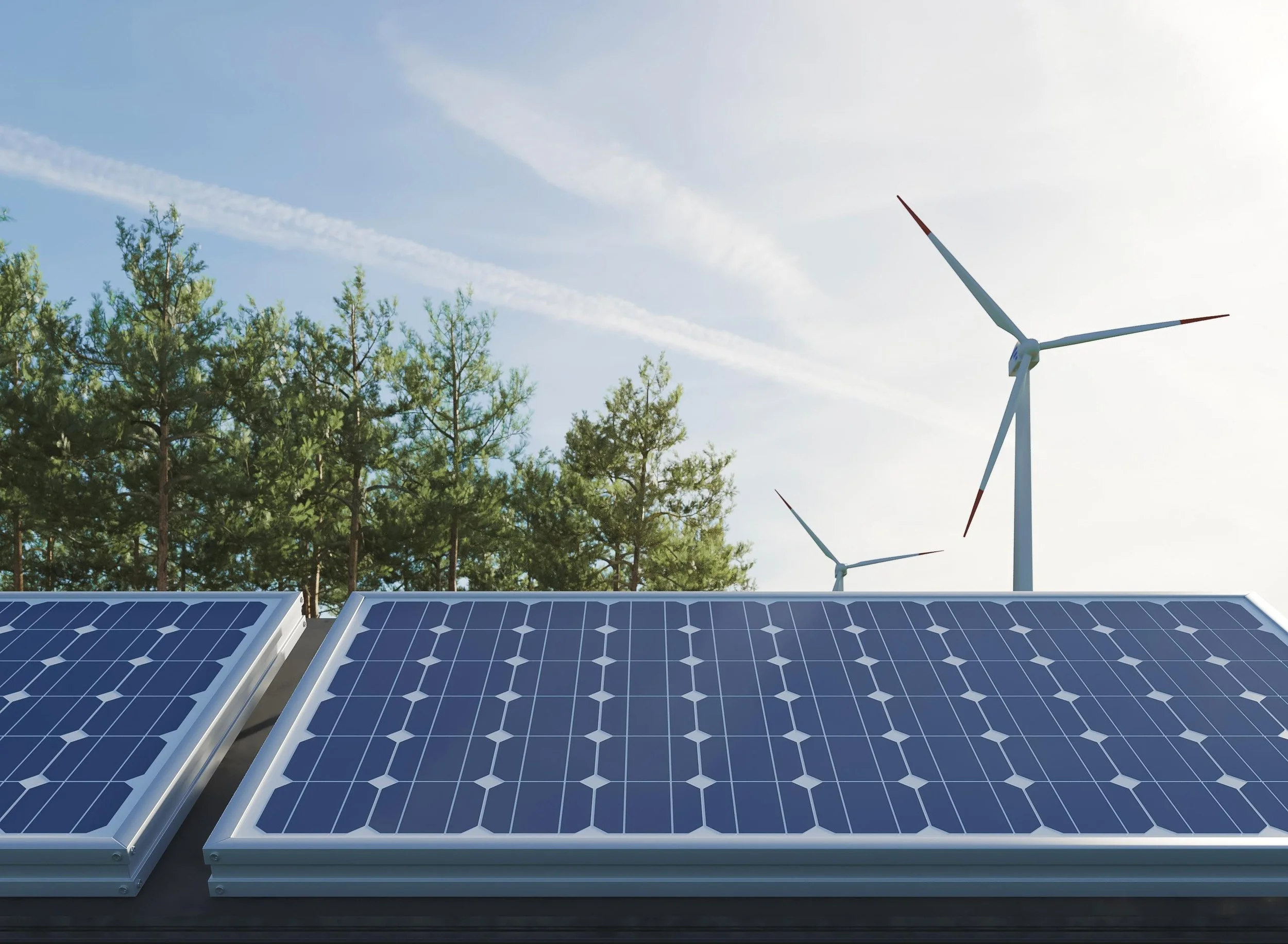
The Benban project is a different kind of transaction, but it belongs to the same investment logic. Renewable energy is moving into a phase where dispatchability, storage and contracted revenues matter as much as raw installed capacity. The EBRD says the facility is expected to reduce CO₂ emissions by up to 280,000 tonnes annually once operational, while strengthening the integration of intermittent solar power into Egypt’s national grid.
Infinity Power’s own project page identifies Nefer Benban as a 258.5MWp project in Aswan, with Infinity Power and Hassan Allam Utilities (HAU) as consortium partners. It says the project will build a 200MW solar power facility at the existing Benban Solar Park complex, alongside a 120MWh battery energy storage system providing two hours of energy shifting to the Egyptian grid.
That storage component is important. In markets with rising solar penetration, the value of a megawatt increasingly depends on when it is produced and whether it can be shifted to periods of system need. Benban’s battery element is therefore not an accessory; it is part of the project’s commercial and grid-stability architecture.
Benban’s place in Egypt’s climate-finance architecture
Egypt has spent the past several years trying to convert climate ambition into bankable projects. The government’s Nexus of Water, Food and Energy platform, known as NWFE, was launched in 2022 under Egypt’s COP27 Presidency as a blended-finance mechanism aligned with the country’s National Climate Change Strategy 2050 and updated nationally determined contributions. The programme is structured around water, food and energy, with the energy pillar coordinated by the EBRD.
Within that architecture, the Benban financing lands inside a wider policy push: crowding in capital, adding renewable capacity, improving system resilience and building a workforce around green skills. The EBRD loan includes a technical cooperation package under the bank’s Gender and Economic Inclusion Technical Cooperation Framework. According to the EBRD, that package will support two nationally accredited technical training programmes focused on green skills for young jobseekers and help HAU strengthen human resources practices around gender equality and women’s access to technical and leadership roles.
HAU Energy was established in 2024 to invest in renewable energy projects in Egypt and is owned by Meridiam, Hassan Allam Utilities and the EBRD. Hassan Allam Utilities says its broader energy platform is developing utility-scale renewables, including 1.5GW of solar PV integrated with 930MWh of battery storage. Infinity Power, meanwhile, describes itself as Africa’s largest renewable energy provider, with 1.3GW of operational solar and onshore wind across Egypt, South Africa and Senegal and a pipeline that includes battery storage and green hydrogen.
The new renewable contest
Taken together, the Spanish and Egyptian developments show the renewable sector entering a more financially disciplined phase. In Spain, Trafigura and Nadara are using a 10-year hybrid PPA to turn wind and solar output into a more stable contracted product. In Egypt, EBRD, HAU Energy and Infinity Power are pairing solar generation with battery storage at Benban to improve grid integration and support the country’s low-carbon transition. The common thread is bankability: long-term offtake in one market, and development-bank-backed solar-plus-storage in another.
Renewable energy investment is no longer only about securing land, turbines, panels and permits. It is about stitching together offtake, hybrid generation, storage, grid integration and development finance into structures that can withstand volatility and still move capital.
For Trafigura, whose own business spans oil and petroleum products, metals and minerals, gas and power, the agreement reinforces a broader push into electricity markets. For independent power producers such as Nadara, hybrid PPAs offer a route to monetise portfolios more efficiently and finance additional capacity. For Egypt’s renewable-energy platform, storage-backed solar projects supported by institutions such as the EBRD show how climate finance can be translated into assets that serve both decarbonisation and energy-security goals.
The message from Spain and Benban is clear: the renewable build-out is becoming less a race to install capacity and more a contest to structure it. In that contest, the winners will be those who can make clean power not only abundant, but financeable, flexible and fit for the grid.
