Eni’s West African Push: The Quiet Hunt for Africa’s Next Offshore Barrel
Africa’s Atlantic margin is drawing upstream capital again, not in a noisy return to the old exploration boom, but through a quieter hunt for acreage, seismic data and optionality. From Eni’s Gambia licence and reported Guinea reconnaissance permits to Petrobras’ Côte d’Ivoire push, TGS’ Angola seismic work and TotalEnergies’ Namibia reshuffle, the week’s developments point to a disciplined re-entry into the search for Africa’s next bankable barrel.
Banjul, The Gambia | June 10, 2026 - Africa’s Atlantic margin is drawing upstream capital again, not with the swagger of the last exploration boom, but with something more deliberate: acreage, seismic data, licence swaps and carefully staged optionality.
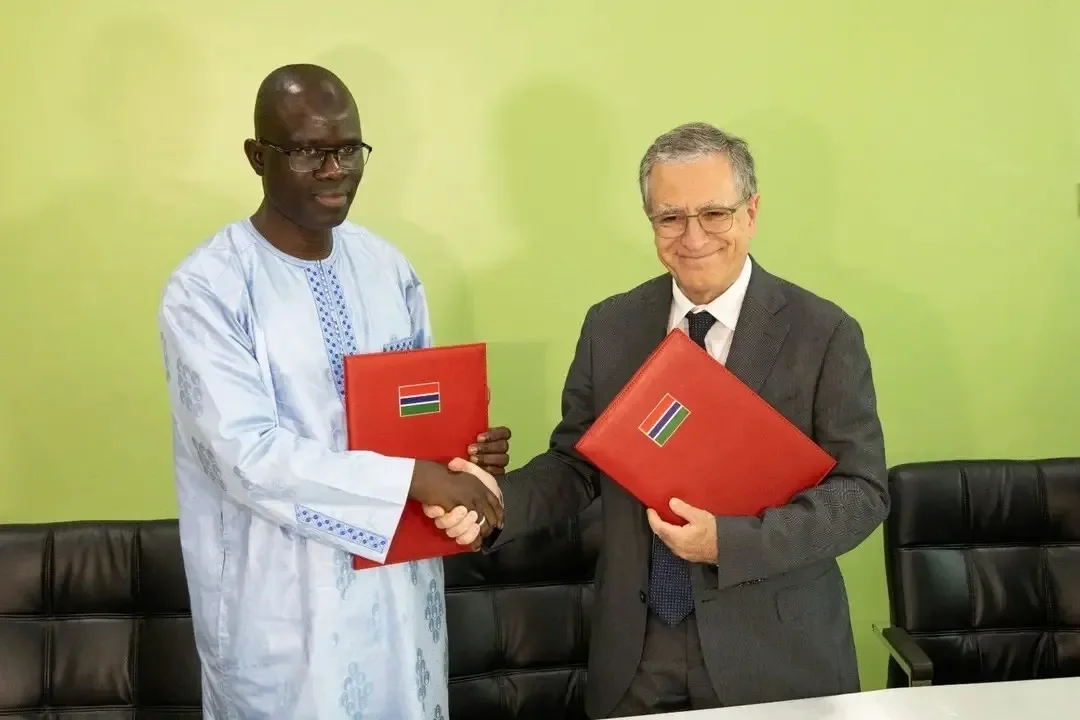
The sharpest signal came from Eni. On June 5, the Italian major signed into The Gambia’s offshore Block A1, while it was also reported to have secured reconnaissance permits for 15 offshore blocks in Guinea. Across the same run of upstream developments, Côte d’Ivoire moved toward eight production-sharing contracts with Petrobras, TGS secured a large 4D seismic contract offshore Angola, and Record Resources laid out the upside case for Gabon’s Loba discovery. Further south, TotalEnergies and Galp’s Namibia reshuffle, first announced by the companies and later approved without conditions by Namibia’s competition regulator, offered a different version of the same story: majors are not leaving Africa’s offshore. They are reorganising around the acreage they think can still matter.
The pattern is hard to miss. While the energy transition debate continues to dominate policy rooms, upstream companies are still paying for a future in which the next bankable African barrel matters.
Eni Moves on Two Fronts
The cleanest signal came from Eni.
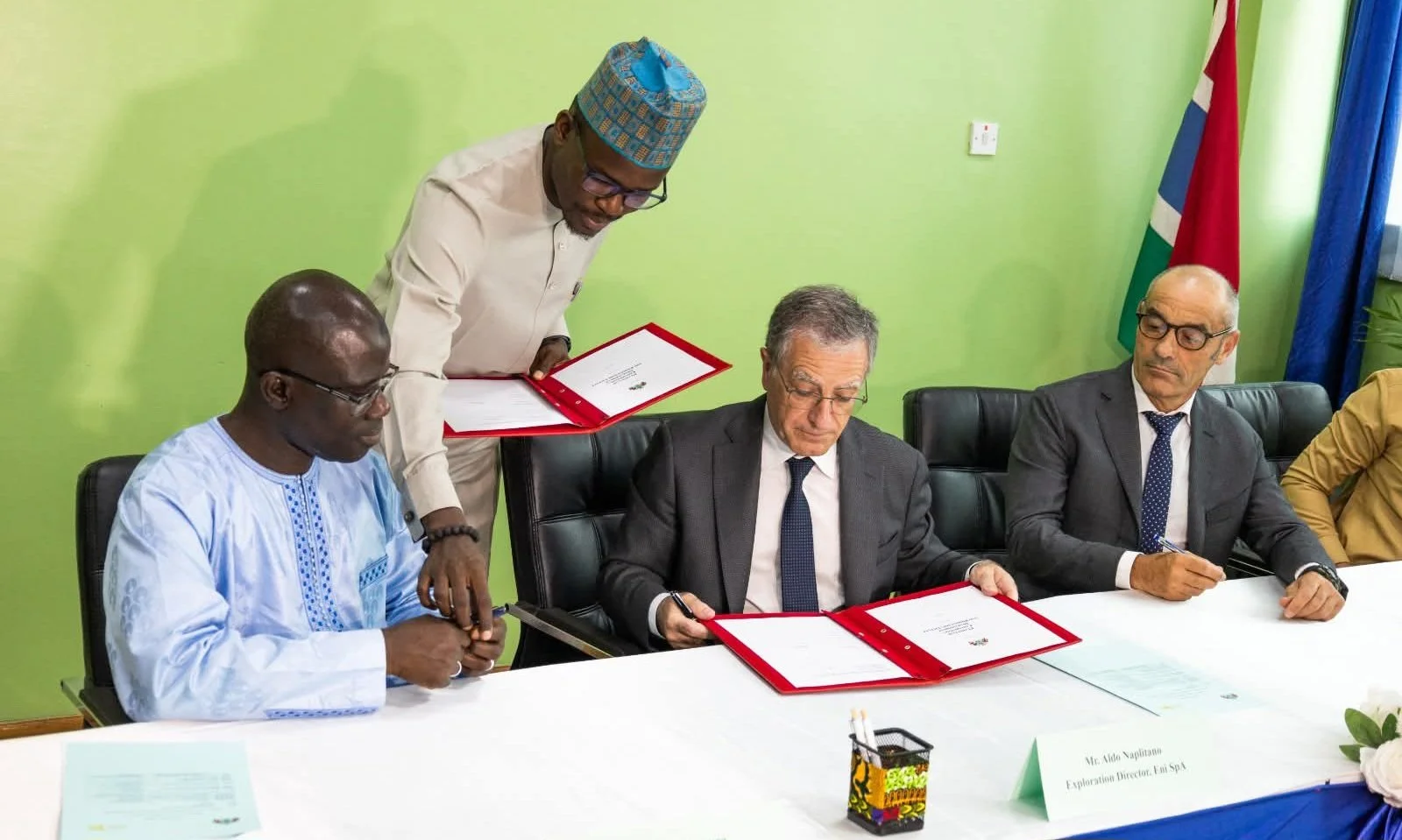
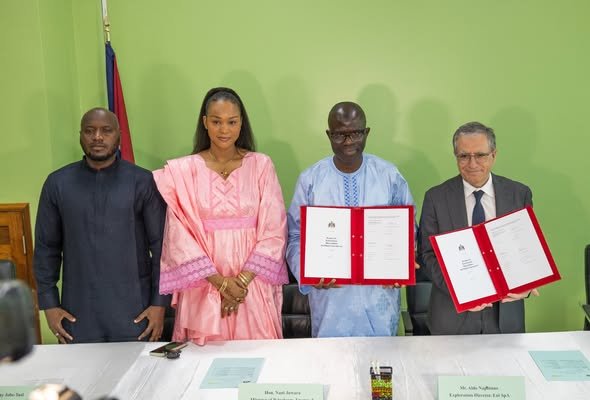
On June 5, Eni said it had signed a Petroleum Exploration, Development and Production Licence Agreement with the Government of The Gambia for offshore Block A1, a 1,300 sq km block in water depths of between 1,250 metres and 3,300 metres. The company said the entry fits its strategy of building a geographically diversified exploration portfolio across proven, underexplored, emerging and frontier areas.
The Gambia award is important not because it guarantees a discovery, but because it shows Eni adding frontier exposure in a basin corridor where companies are again prepared to spend early money for geological optionality. It also gives The Gambia a fresh upstream anchor after years in which its offshore promise has been overshadowed by larger regional stories in Senegal, Mauritania, Ghana and Côte d’Ivoire.
Guinea is the more delicate part of the Eni story and needs to be read precisely. Eni was reported to have secured reconnaissance permits for 15 offshore blocks in Guinea. The reported blocks are A4, A5, B4, B5, C3, C4, C5, D2, D3, D4, E2, E3, E4, F2 and F3, covering about 49,089 sq km.
That is not the same as a full exploration and production licence. It is earlier-stage positioning: a reconnaissance authorisation over a largely undrilled frontier. But that is precisely why it matters. Before the drilling rig comes the map, the model and the right to look. Eni’s Guinea move, paired with its signed Gambia licence, suggests a company quietly assembling optionality along West Africa’s Atlantic edge rather than making one isolated country bet.
For the wider MSGBC frontier, the Guinea move has been read as another sign that underexplored acreage is being re-examined rather than abandoned, while specialist trade reporting has tracked the company’s move into the undrilled acreage. But the strongest phrasing remains the most disciplined one: Gambia is an Eni-confirmed licence agreement; Guinea is a reported reconnaissance-permit award.
Petrobras Extends the Atlantic-Margin Contest
The story widens in Côte d’Ivoire.
After its June 3 Council of Ministers meeting, Côte d’Ivoire’s government said it had adopted a communication relating to production-sharing contracts on eight petroleum blocks with Petrobras. The blocks are CI.513, CI.600, CI.601, CI.602, CI.603, CI.605, CI.701 and CI.702. The government said the move would lift the occupancy rate of the country’s sedimentary basin to 75%, covering about 63,000 sq km of production, evaluation and exploration acreage.
That matters because Côte d’Ivoire is no longer merely a neighbouring comparator to Ghana’s Jubilee success or a spectator to Senegal and Mauritania’s gas-led rise. It is trying to fill its offshore basin with operators and acreage commitments. Petrobras’ entry gives the week a second major-company axis and turns what could have been a single-company Eni story into something broader: a renewed contest for Atlantic-margin acreage.
The Petrobras move was also cast as a major offshore exploration play, but the story’s factual weight sits with the Ivorian government’s own communication. That distinction matters for a development of this scale. Eight blocks, a named international operator and a 75% basin-occupancy claim all call for careful attribution.
The Money Is Moving Into Data
If licence awards are the visible part of an upstream cycle, seismic contracts are where the industry shows its seriousness.
On May 27, TGS said it had been awarded a large, high-end 4D streamer contract offshore Angola, with acquisition scheduled to begin in early July 2026 and run for about eight months. The company said the award reinforced its strategic position in Africa.
The Angola contract gives the broader story an industrial footing. Companies do not shoot expensive 4D seismic for theatre. They do it to refine reservoirs, improve recovery, de-risk drilling decisions and extend the productive life of assets. In other words, they pay to see better before they commit more.
That is why TGS’ announcement sits naturally beside Eni’s acreage moves and Petrobras’ Côte d’Ivoire push. The upstream reset is not only happening in ministerial communiqués and company announcements. It is also happening in subsurface work, where the next phase of African offshore competition will be won or lost.
From Gabon to Namibia, Optionality Is the Prize
The same optionality story is visible outside the Eni-Petrobras frame.
In Gabon, Record Resources said further geological and geophysical work on the Loba oil discovery and nearby analogue fields suggests a first oil well could produce 5,000 barrels per day, while the wider Loba field complex has potential for about 20,000 barrels per day under a multi-well development scenario.
The wording matters. This is not current production, and it should not be read as guaranteed output. It is a company’s projection of what the asset could deliver under a development scenario. Still, it is relevant because it shows that the Atlantic-margin cycle is not limited to supermajors. Smaller companies are also trying to turn old discoveries, geological reinterpretation and appraisal work into new production cases.
Further south, Namibia shows the same logic at a larger scale. TotalEnergies said it had signed an agreement with Galp under which TotalEnergies would acquire a 40% operated interest in PEL83, including the Mopane discovery, while Galp would acquire a 10% participating interest in PEL56, including Venus, and 9.39% in PEL91. TotalEnergies also said the companies had agreed to launch a three-well exploration and appraisal campaign over two years, with the first well planned in 2026.
The transaction then moved through Namibia’s competition review. The Commission approved without conditions the indivisible transfer of participating interests in the rights and obligations of PEL 0083 in exchange for non-controlling participating interests in PEL 56 and PEL 91. The March 25 filing lists TotalEnergies EP Namibia BV as the acquiring undertaking and identifies the target as participating interests in PEL 83, PEL 56 and PEL 91. It defines the relevant market as the exploration of crude oil and natural gas in Namibia.
That regulatory language is important. It confirms the transaction trail without overstating what the competition review assessed. The determination did not write the commercial thesis for Mopane and Venus. It found the proposed horizontal transaction unlikely to prevent or substantially lessen competition, unlikely to create or strengthen dominance, and not to raise public-interest concerns.
Namibia is not the centre of the West African story, but it is crucial context. It shows that majors are not simply entering fresh acreage. They are also reshuffling existing positions around the most prospective discoveries, consolidating operatorship and aligning portfolios for appraisal campaigns. This is not retreat. It is reallocation.
The Production Argument Returns
The week’s upstream signals were not confined to frontier exploration.
In South Sudan, the presidency said officials reported that GPOC had lifted crude production from 44,000 barrels per day to 60,000 barrels per day, the company’s highest level since it began operations in the country in 2005. The briefing to President Salva Kiir included senior petroleum officials, the managing director of Nilepet and the president of the Greater Pioneer Operating Company (GPOC).
That development sits outside the Atlantic-margin geography, but it adds an important counterpoint. In older, politically complex basins, the upstream story is less about new acreage and more about keeping barrels flowing, improving recovery and stabilising production. It is a different expression of the same market impulse: extract more value from existing hydrocarbon systems while the demand window remains open.
A similar producer-state appetite surfaced in North Africa. OQ Exploration and Production signed an MoU with the Libyan Investment Authority in Tripoli to explore investment partnership opportunities across oil and gas exploration and production. The framework covers opportunities in both countries and internationally and supports OQEP’s international expansion strategy.
These developments should not be collapsed into one geography. The Gambia is not Guinea, Côte d’Ivoire is not Namibia, and South Sudan is not Angola. But read together, they reveal an upstream sector that is not behaving like an industry in managed decline. It is behaving like one becoming more selective.
A Disciplined Hunt, Not an Old Boom
The politics around African hydrocarbons remains blunt. One producer-side argument this week was that Africa’s future requires more oil and gas production, not less. That position reflects a view that African countries should not be asked to strand resources that richer economies built their own industrial systems on.
But the more revealing signal is not rhetorical. It is operational.
Eni is taking a signed position in The Gambia and reportedly securing reconnaissance exposure in Guinea. Côte d’Ivoire is moving toward production-sharing contracts with Petrobras across eight offshore blocks. TGS is preparing to shoot 4D seismic in Angola. Record Resources is trying to convert Gabon’s Loba discovery into a development case. TotalEnergies and Galp are reshaping their Namibian portfolios around Mopane, Venus and further appraisal. South Sudan is pushing higher output from a mature operator.
This is not a return to the indiscriminate exploration frenzy of a previous era. Capital is more cautious now. Boards are more selective. Investors are less patient with frontier spending that cannot show a path to commerciality.
That is precisely why the week matters.
Africa’s Atlantic margin is being re-priced, re-mapped and re-entered by companies looking for the next investable barrel. The energy transition may be changing the language of the industry, but it has not ended the hunt. It has made the hunt more disciplined.
