GECF Marks 25 Years With Doha Board Meeting as Gas Producers Sharpen Their Case for a More LNG-Centred Future
The Gas Exporting Countries Forum’s 53rd Executive Board Meeting in Doha was more than a silver jubilee gathering. It was a strategic stocktake by the world’s major gas exporters at a time when geopolitical risk, LNG supply discipline and the economics of future production are converging into one central question: who will underwrite energy security in a more electrified, more volatile world?
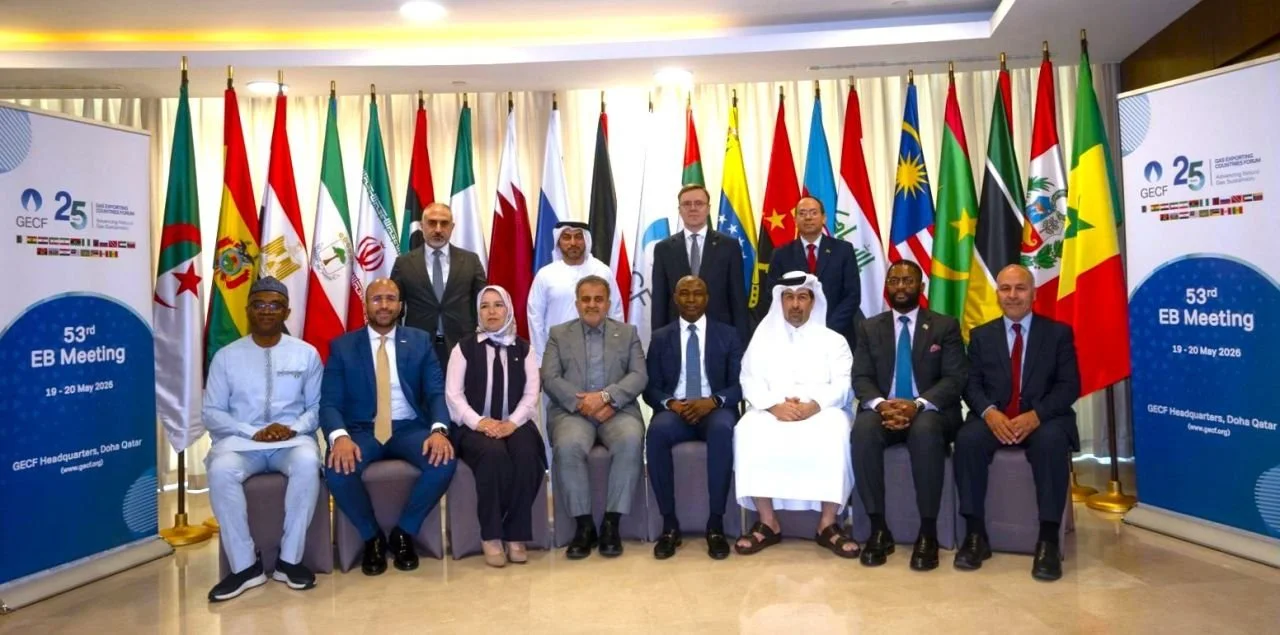
Doha, Qatar | May 25, 2026 - The Gas Exporting Countries Forum used its 53rd Executive Board Meeting in Doha to do more than clear institutional business. Convened on 19–20 May 2026 at the GECF Secretariat headquarters, the hybrid meeting brought together Executive Board members, observer representatives and senior officials from member countries at a moment when natural gas markets are being pulled between geopolitical risk, energy-security anxiety and a long investment cycle that cannot be switched on at short notice.
The meeting also carried symbolic weight. It fell in the Forum’s silver jubilee year, marking 25 years since the GECF began positioning itself as the collective voice of major gas-exporting countries. In his opening remarks, Secretary General Dr Philip Mshelbila framed 2026 as a milestone for the institution, linking the anniversary to the Forum’s unity and to its campaign to keep natural gas at the centre of energy security, economic development and sustainable development.
But the timing gave the meeting a sharper edge. The Secretariat tabled a special report on the impact of Middle East tensions on gas markets, while Mshelbila warned that violations of sovereignty carry risks not only for international peace and regional stability, but also for global energy security and economic prosperity. For a producer forum whose members sit across some of the world’s most consequential gas basins, the Doha discussions underscored how security of supply has moved from background concern to central diplomatic and commercial question.
A Silver Jubilee With Strategic Undertones
The GECF is an international intergovernmental organisation that provides a platform for member countries to exchange experience and information, while fostering dialogue between gas producers and consumers to support stability and security in global gas supply and demand. Its membership includes Algeria, Bolivia, Egypt, Equatorial Guinea, Iran, Libya, Nigeria, Qatar, Russia, Trinidad and Tobago, the United Arab Emirates and Venezuela. Its observer members include Angola, Azerbaijan, Iraq, Malaysia, Mauritania, Mozambique, Peru and Senegal.
That roster gives the Forum a material, not merely diplomatic, footprint. According to the GECF, its member countries collectively hold 70% of the world’s proven natural gas reserves, account for 38% of marketed production, contribute 42% of global gas exports and represent 47% of LNG exports. In an energy system increasingly defined by trade flows, shipping capacity, sanctions risk, power-system reliability and project execution, those numbers explain why a routine Executive Board meeting in Doha carries wider market meaning.
The institutional groundwork for this moment has been years in the making. The first edition of the GECF Long-Term Strategy was approved at the 19th Ministerial Meeting in Moscow on 4 October 2017. A second edition followed at the 24th Ministerial Meeting in Cairo on 25 October 2022, setting out a unified course of action for member countries and reaffirming the Forum’s vision of making natural gas a pivotal resource for inclusive and sustainable development.
That strategy is now being tested in a more volatile world. Gas is no longer being discussed by producer countries only as a transition fuel or as a lower-emissions hydrocarbon relative to coal and oil. It is increasingly being treated as a balancing fuel for power systems, a traded commodity exposed to chokepoint risk and a capital-intensive industry whose future supply depends on projects sanctioned years before demand materialises.
Doha Puts Market Intelligence at the Centre
Over the two-day meeting, the Executive Board reviewed strategic, industry, institutional and administrative matters. The most consequential work appeared to sit in the Forum’s analytical engine: the Annual Gas Market Report 2026, the 10th Global Gas Outlook 2055 and the 9th Annual Statistical Bulletin 2025 were all reviewed and discussed.
These are not ornamental publications. The Annual Gas Market Report tracks the short-term outlook for the industry, covering the global economy, consumption and production trends, pipeline gas and LNG trade, storage developments, energy prices and major risks. The Annual Statistical Bulletin, supported by the Data Exchange Mechanism among members and supplemented by statistical estimates from primary and secondary sources, provides a longer market memory, with datasets and charts across member and observer country indicators, gas prices, infrastructure and market trends.
The 10th Global Gas Outlook 2055 gives the Forum’s argument its strategic spine. According to the Outlook, electricity’s share in final energy demand is projected to rise from 22% in 2024 to 32% by 2055, as the energy system becomes more electrified, interconnected and demanding in terms of reliability, flexibility and resilience. In that system, GECF projects global natural gas demand to rise from 4,137 bcm in 2024 to 5,417 bcm by 2055, with gas increasing its share in the global energy mix from 23% to 26%.
The Forum argues that electrification does not necessarily displace gas. It can deepen the need for it. The Outlook identifies the power sector as the main engine of gas demand growth, accounting for more than half of incremental demand as gas provides balancing, flexibility and firm capacity in power systems with larger shares of variable renewables. It also projects demand growth to shift towards developing Asia Pacific, the Middle East, Eurasia and Africa, with Asia Pacific alone accounting for 43% of global net demand growth by 2055.
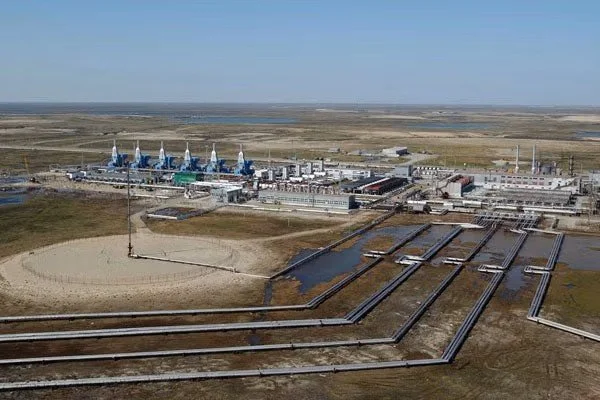
Photo Credit: Offshore Technology
The Investment Gap Behind the Diplomacy
The Doha discussions also come against a more uncomfortable arithmetic. The GECF Outlook projects that by 2055, 86% of global gas production will need to come from fields that are not producing today. That single statistic is the hard edge behind the Forum’s institutional advocacy: future gas security depends not just on reserves, but on exploration, project development, timely approvals, financing and delivery discipline.
The supply-side shift is equally important. GECF expects the world to move from shale-led expansion towards conventional growth led by the Middle East, Eurasia and Africa. That places many GECF members and observers in a stronger strategic position, but it also raises the execution burden on producers, regulators, financiers and infrastructure developers.
The capital bill is substantial. Meeting future gas demand, according to the Outlook, will require USD 11.6 trillion in upstream investment and about USD 735 billion in midstream investment by 2055. LNG will carry an increasing share of that burden. Total gas trade is projected to rise from 1,211 bcm to 1,767 bcm by 2055, while LNG’s share of traded gas is expected to increase from 46% to 65%.
That is why the GECF’s internal deliberations matter beyond the Secretariat in Doha. If LNG becomes the dominant channel for marginal gas trade, the balance of power in global gas markets will increasingly turn on liquefaction capacity, shipping, regasification infrastructure and the conversion of pre-final investment decision projects into sanctioned supply. The Outlook explicitly warns that timely conversion of today’s pre-FID LNG project portfolio will be essential to avoid structural tightening in global LNG supply after 2040.
Moscow Summit Moves Into View
The meeting also advanced the Forum’s summit calendar. The Executive Board reviewed preparations for the 8th GECF Summit and the 28th GECF Ministerial Meeting, both scheduled to take place in Moscow, Russian Federation, in October 2026, and expressed appreciation to the host country for ongoing arrangements.
That process began earlier in the year. On 16 February 2026, the GECF convened the first meeting of the High-Level Ad-Hoc Working Group for the preparation of the 8th Summit at the Secretariat in Doha. The meeting elected Roman Marshavin, Deputy Minister of Energy of the Russian Federation, as chairperson of the working group, giving him responsibility for leading and coordinating the preparatory process ahead of the Moscow summit.
The Moscow gathering will therefore arrive after months of preparatory work and at a time when gas exporters are attempting to reconcile three pressures at once: defending resource sovereignty, meeting rising demand in emerging markets and responding to a global policy environment that wants energy to be simultaneously cleaner, cheaper, more secure and more flexible.
Gas Producers Recast the Future, Not the Past
For the GECF, the 53rd Executive Board Meeting was a marker of institutional maturity. It reviewed reports, advanced summit preparations and took stock of administrative business. Yet its broader significance lies in how the Forum is trying to frame the next phase of global gas: not as a defensive industry seeking permission to remain relevant, but as a producer bloc arguing that reliability, flexibility and energy security will become more valuable as electrification deepens.
The Forum’s own Outlook puts the argument bluntly: “Natural gas is not just a bridge to the future. It is an integral part of the future itself.”
That line captures the strategic wager behind Doha. As GECF turns 25, its members are not merely celebrating a quarter-century of institutional cooperation. They are preparing for a market in which gas demand, LNG trade, geopolitical risk and capital discipline will increasingly determine who holds leverage in the energy system that comes next.
