
Mammoet Joins Beccs Stockholm Build as Europe’s Carbon-Removal Ambition Moves From Policy to Steel
Mammoet’s heavy-lift contract for Beccs Stockholm moves Europe’s carbon-removal ambitions from policy architecture to physical construction. At Stockholm Exergi’s Värtan energy plant, one of the continent’s most closely watched BECCS projects is taking shape, designed to capture up to 800,000 tonnes of biogenic CO₂ a year and store it permanently beneath the North Sea. With Saipem leading design, procurement and construction, and Mammoet preparing to deploy one of the world’s largest land-based cranes, the project is becoming a test case for whether negative emissions can be engineered at urban-industrial scale.
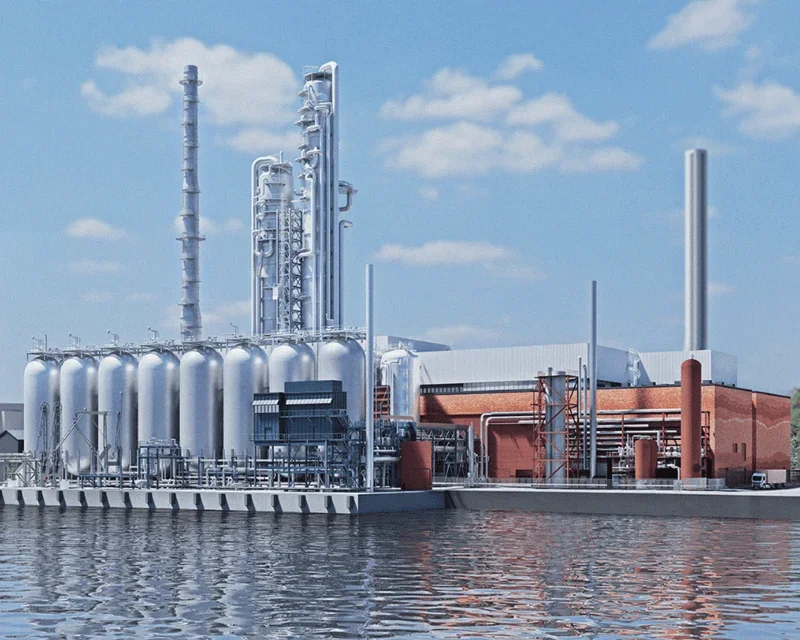
Stockholm, Sweden | May 21, 2026 - Mammoet, the global engineered heavy-lifting and transport specialist, has been awarded a contract by Saipem to carry out the heavy-lift scope for Beccs Stockholm, pushing one of Europe’s first large-scale carbon-removal projects deeper into its construction phase. The award places Mammoet’s specialist cranes and logistics at the centre of a facility that Stockholm Exergi is building at its Värtan combined heat and power plant, where carbon dioxide from biomass combustion will be captured, liquefied, transported and permanently stored underground rather than released into the atmosphere.
The project is more than another industrial retrofit. It is a test of whether Europe can convert its climate-neutrality ambition into a functioning carbon-management chain, linking urban energy systems, carbon capture technology, marine transport, geological storage and a market for certified removals. The Global CCS Institute has framed Europe as an increasingly active carbon capture and storage region, with policy, public funding and storage infrastructure beginning to converge around large-scale deployment.
The Carbon-Capture Logic Behind the Project
Carbon capture and storage, or CCS, is the broad industrial process of capturing carbon dioxide, transporting it by pipeline, ship, truck or rail, and storing it deep underground so that it does not enter the atmosphere. The Carbon Capture and Storage Association says carbon dioxide can be stored in geological formations typically 1–3 kilometres below the seabed or surface, with sites selected and monitored to ensure secure long-term storage.
That framework matters because Beccs Stockholm is not a conventional emissions-abatement project. It is a BECCS project, which stands for bioenergy with carbon capture and storage. In ordinary CCS, the technology can prevent carbon dioxide from entering the atmosphere. In BECCS, the carbon dioxide being captured is biogenic CO₂, released when biomass is used as fuel. Because the biomass had previously absorbed carbon dioxide from the atmosphere while growing, capturing and permanently storing the CO₂ after energy production can create negative emissions, meaning carbon is removed from the atmospheric cycle rather than merely prevented from rising further.
Stockholm Exergi describes BECCS as a technique for permanently removing biogenic CO₂ from the atmosphere. The company plans to combine CO₂ capture with heat recovery at Europe’s largest biomass-based combined heat and power plant in Stockholm, capturing and permanently storing large volumes of biogenic carbon dioxide while continuing to supply the city’s energy system.
This is why the project has assumed strategic weight. Beccs Stockholm is designed to capture up to 800,000 tonnes of biogenic CO₂ a year, a volume Stockholm Exergi says is more than the total annual emissions from road traffic in Stockholm. Over its first ten years of operation, the company says the facility is expected to remove 7.83 million tonnes of CO₂ equivalent from the atmosphere.
From EU Ambition to Stockholm’s Waterfront
The project sits inside Europe’s wider climate-neutrality agenda, where direct emissions cuts are increasingly being paired with carbon-removal strategies for the hardest residual emissions. Stockholm Exergi says BECCS is considered a vital step in reaching the EU objective of climate neutrality by 2050, while the European Strategic Energy Technology Plan has identified the technology as a priority action for accelerating the transformation of the energy system, provided it can become cost-effective, commercially developed and publicly accepted.
That policy logic has gradually moved into a project chronology. Stockholm Exergi initiated work to build a full-scale bio-CCS facility at the Värtan combined heat and power plant in Hjorthagen, positioning it as one of the first projects of its kind in Europe and as a key part of Sweden’s and the European Union’s climate targets. In February 2024, the project received the necessary environmental permit. In early 2025, Stockholm Exergi was awarded public funding through the Swedish Energy Agency’s reverse auction for bio-CCS, a milestone the company says helped move the project toward reality.
The project’s funding structure shows the challenge of moving carbon removal from climate theory to industrial finance. Stockholm Exergi says the financing rests on three pillars: government support, EU funding and revenue from companies purchasing carbon-removal credits. The Swedish Energy Agency’s approved support amounts to just over SEK20 billion, to be paid continuously for up to 15 years from the start of geological storage. The EU Innovation Fund has separately granted €180 million to the project, while voluntary buyers of negative emissions are expected to provide a large share of revenue through long-term demand for certified removals.
The construction timeline has since begun translating that financing into physical works. Stockholm Exergi’s project timeline records traffic changes and site preparations around Norra Hamnvägen from May 2025, demolition of existing process equipment between May and August 2025, quay reconstruction through summer and autumn/winter 2025, groundwork and foundations for the main building from summer 2025, and the construction of a pipeline bridge between Värtaverket and the BECCS facility from September 2025 to summer 2026.
What Is Being Built
Beccs Stockholm is being developed by Stockholm Exergi at the Värtan facility, described by the company as Europe’s largest biomass-based combined heat and power plant. Stockholm Exergi itself is Stockholm’s energy company, supplying heating, cooling, electricity and waste-management services across a fast-growing region. More than 800,000 Stockholmers and around 400 locations, including hospitals, data centres and other public and private sites, are connected to its district heating network.
The BECCS facility will be integrated into that existing energy system rather than built as a standalone climate plant. It will include capture technology to remove biogenic carbon dioxide from flue gases produced when biofuels are combusted, interim storage and cooling systems that convert the captured CO₂ into liquid form, and a loading station from which the liquefied CO₂ will be transported for permanent geological storage in accordance with international standards.
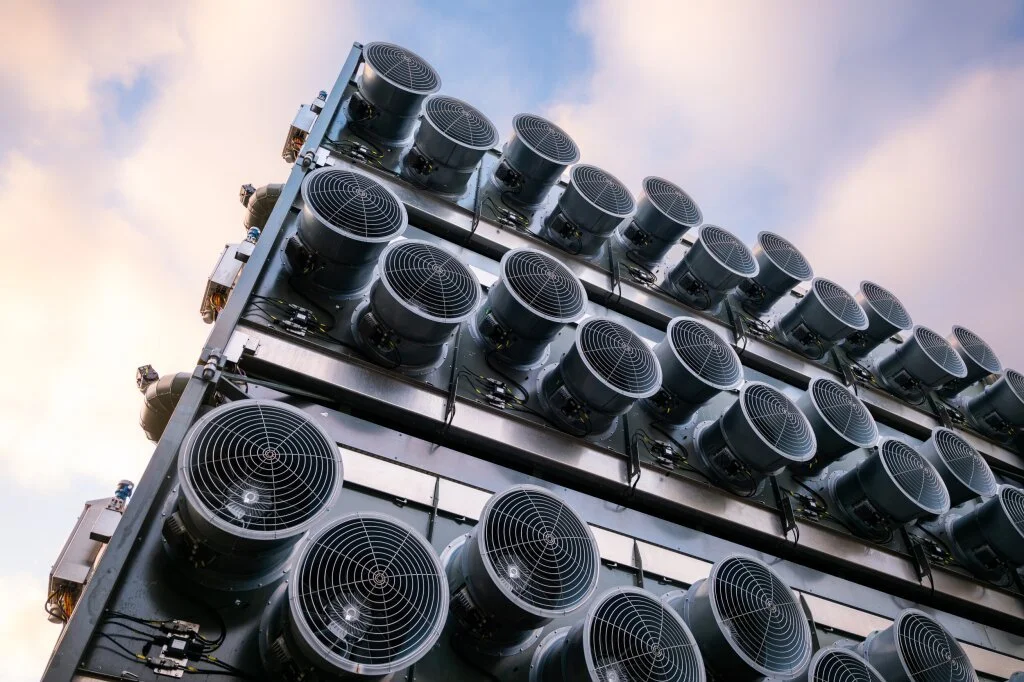
Photo Credit: Climeworks
The Carbon Capture and Storage Association describes Beccs Stockholm as a project designed to retrofit BECCS technology to a biomass-fuelled combined heat and power plant, capturing CO₂ from biogenic sources and preventing its release to the atmosphere. According to the association’s case study, the captured CO₂ will be compressed and liquefied on site, then transported by ship to permanent geological storage beneath the North Sea using offshore CO₂ transport and storage infrastructure, in collaboration with Northern Lights storage infrastructure.
That storage link is central to the project’s European significance. By moving captured CO₂ from an urban energy plant to permanent offshore storage, the project is intended to demonstrate the full CCS chain in Northern Europe, from capture and liquefaction to shipping and geological sequestration. Stockholm Exergi also says Beccs Stockholm could accelerate a market for net carbon removals by demonstrating a replicable model that can be used at other sites and scaled across other industries.
Saipem’s Design, Procurement and Construction Role
Saipem is responsible for design, procurement and construction of the facility, according to Stockholm Exergi. The company says the architectural design is being developed in close dialogue with the City of Stockholm to ensure the facility blends into the cityscape of Värtahamnen.
The role fits Saipem’s wider positioning in the energy transition supply chain. The company describes itself as a global leader in engineering services for the design, construction and operation of complex infrastructure and plants in the energy sector, both offshore and onshore. It says its corporate vision is “Engineering for a sustainable future”, with activities spanning asset-based services, drilling and Sonsub, energy carriers, offshore wind and sustainable infrastructure. Saipem operates in more than 50 countries with more than 30,000 employees of over 120 nationalities.
For Beccs Stockholm, Saipem’s mandate turns the decarbonisation concept into a buildable industrial system. Mammoet’s award from Saipem is therefore a downstream signal that the project has entered the stage where the most difficult objects must be moved, lifted, oriented and installed inside a constrained urban energy site.
Mammoet’s Heavy-Lift Role
Mammoet says it will lift around 23 components weighing between 50 tonnes and 280 tonnes, along with two larger components, the stripper and absorber, each weighing around 1,500 tonnes. These two heaviest units will be lifted by Mammoet’s PTC 140 DS, a 3,200-tonne class ring crane that the company says can lift weights of up to 5,000 tonnes and ranks among the world’s largest land-based cranes.
The installation sequence is a study in engineered choreography. The stripper and absorber will be delivered to the site horizontally on a barge, then rotated into vertical position using a 1,250-tonne crawler crane and the PTC crane before final installation. Several additional crawler cranes, ranging from 300 tonnes to 800 tonnes, will support the assembly of the main PTC crane and the lifting of smaller components.
The constraints are severe because the PTC must be assembled on an area reserved for the broader build. That means Mammoet has to assemble, operate and dismantle the crane within a compressed window so that construction of the rest of the plant can proceed.
“Timing and planning are essential for this build. We have just four weeks to assemble the PTC, which will be achieved with two teams working in two shifts,” said Pieter van der Weele, Senior Project Manager at Mammoet. “The installation stage is also a window of four weeks, and then we must break the crane down again in six, freeing up the area so that it can be used to build the remainder of the plant.”
Mammoet plans to take the PTC 140 to Stockholm in April 2027 and begin assembling the 150-metre-tall crane. With the project site close to Stockholm city centre, the company says residents will be able to watch its role in the construction of the decarbonisation project.
Why the Project Matters Beyond Sweden
The strategic importance of Beccs Stockholm lies in its attempt to prove that carbon removal can be attached to existing public energy infrastructure and then connected to a cross-border storage system. Stockholm Exergi’s own operations already combine district heating, cooling, electricity production and waste management, with facilities that recover residual heat and transform biofuels and non-recyclable waste into energy for customers and the wider community.
By adding BECCS to that system, the company is trying to move beyond lower-carbon energy supply into negative emissions. The project is designed to support Stockholm’s ambition of becoming a climate-positive capital while also contributing to Sweden’s climate policy, EU climate-neutrality objectives and the development of a commercial market for certified carbon removals.
The technology’s broader promise is replication. Stockholm Exergi argues that Beccs Stockholm can be copied at other sites, scaled into other industries and used to help establish the full CCS value chain in Northern Europe. In that sense, the project is not merely an energy-sector retrofit. It is a market-making intervention, one that seeks to show that capture, liquefaction, shipping, storage, public subsidy and private offtake can operate as a single carbon-removal economy.
The commercial timeline should be read with care. Stockholm Exergi says the facility is planned to be operational in 2028, and Mammoet says that when ready in 2028, the plant will capture and store 800,000 tonnes of CO₂ annually. The Carbon Capture and Storage Association’s case study, meanwhile, says the plant will be in commercial operation by January 2029. The direction is consistent even if the wording differs: the project is moving from permitting and financing into construction, with the heavy-lift phase scheduled to become visible in 2027.
For Europe’s carbon-removal ambitions, that visibility matters. Policy targets can define the destination, and funding can de-risk the journey, but the credibility of BECCS will be tested in equipment, logistics, storage integrity and delivered tonnes. In Stockholm, the next proof point will rise not as a policy paper, but as a 150-metre crane over the waterfront, lifting the hardware of a carbon-removal economy into place.
