Atlantic Africa’s Oil Frontier Draws Fresh Capital, From Guinea-Bissau’s Deepwater to Congo’s Mature Fields
Across Africa’s Atlantic flank, the upstream story is shifting from promise to execution. PetroGuin’s new deepwater partnership with Tender Oil and Gas is putting Guinea-Bissau back on the exploration map, while Perenco’s fresh production gains in Congo show how mature fields can still deliver new barrels. Together, the developments capture a more disciplined phase of African oil growth: de-risking frontier basins, extending legacy assets and proving that the next wave of value may come as much from patient technical work as from headline discoveries.
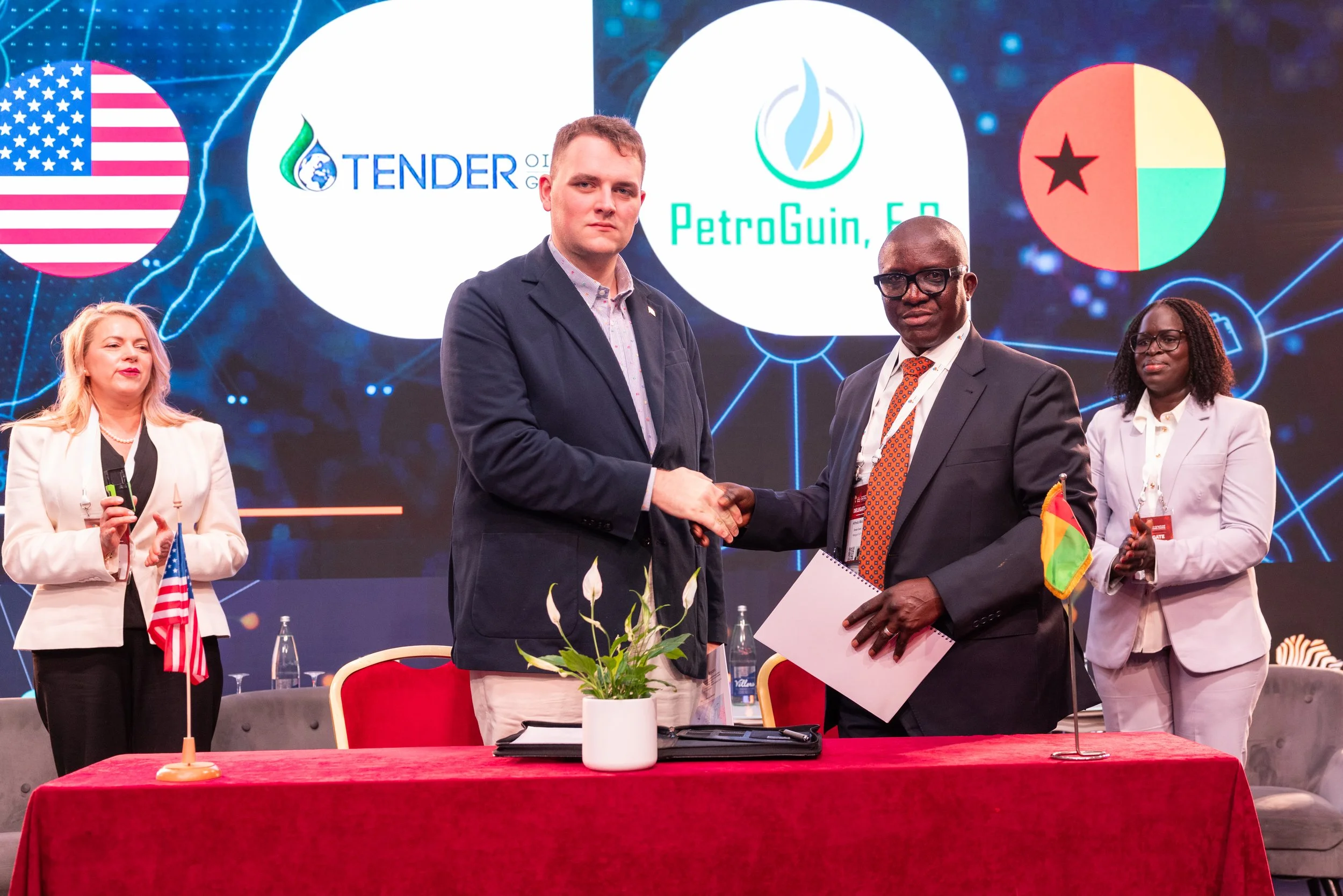
Guinea-Bissau/Congo | May 20, 2026 - Africa’s Atlantic oil belt is gathering a different kind of momentum: not the fanfare of a giant discovery, but the quieter, more consequential work of de-risking frontier acreage and squeezing new life from established fields. In Guinea-Bissau, PetroGuin and Tender Oil and Gas have signed a joint venture for deepwater Blocks 5C and 6C, signalling fresh appetite for a basin that has long sat in the shadow of Senegal and Mauritania. Further south, offshore the Republic of Congo, Perenco Congo says a five-well infill campaign at Tchibouela East has delivered an additional 6,000 barrels of oil per day, underscoring how mature assets remain central to Africa’s near-term upstream story.
The two developments sit at different ends of the upstream cycle. Guinea-Bissau is still trying to convert geological promise into drillable prospects. Congo, already a seasoned producer, is using targeted drilling and field redevelopment to defend production from ageing reservoirs. Together, they point to a more pragmatic phase in African oil: frontier basins are being worked back into investment conversations, while legacy producing provinces are being pushed harder for incremental barrels.
Guinea-Bissau Re-enters the Deepwater Conversation
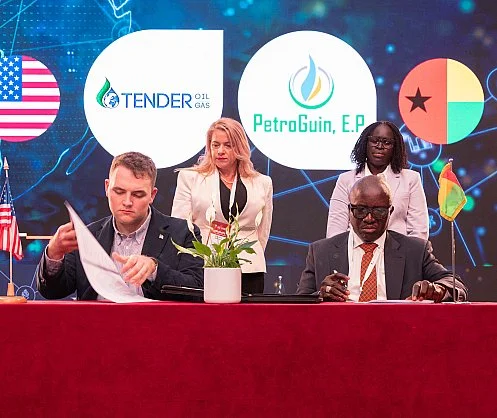
The Guinea-Bissau move was sealed on 22 April 2026 during the Invest in African Energy Forum in Paris, where PetroGuin Director General Alfredo Malú and Tender Oil and Gas Chairman and Chief Executive Teodor Ovidiu Tender signed the agreement covering Blocks 5C and 6C. The forum positions itself as a platform connecting African energy markets with global investors, and the timing gave the PetroGuin agreement a broader message: Guinea-Bissau is trying to move from overlooked frontier acreage to investable deepwater opportunity.
At the centre of the partnership is a seismic campaign covering the acquisition and interpretation of 2D and 3D data. That matters because Guinea-Bissau’s offshore story has rarely suffered from a complete absence of petroleum evidence. Its challenge has been commerciality, data depth and the capital intensity required to move from geological promise to drilling conviction. The new campaign is designed to sharpen the subsurface picture before any future exploration wells are committed.
“The discovery in Senegal and Chevron’s recent entry into the deepwater blocks in Guinea-Bissau have begun to have an impact, arousing interest in the deep offshore areas of Guinea-Bissau and the subregion,” Malú said in the announcement on the PetroGuin-Tender Oil and Gas joint venture.
That comment captures the changed regional backdrop. The wider Mauritania, Senegal, Gambia, Bissau and Conakry Basin has been remade over the past decade by discoveries and first production milestones north of Guinea-Bissau. Senegal’s Sangomar project achieved first oil in June 2024, while the Greater Tortue Ahmeyim liquefied natural gas project offshore Mauritania and Senegal loaded its first LNG cargo in April 2025.
From Underexplored to Repriced
Guinea-Bissau has not been a blank map. The wider southern MSGBC and AGC area has seen earlier exploration, including heavy oil discoveries at Dome Flore and Dome Gea in the late 1960s and early 1970s, while Premier’s Sinapa-2 discovery well in 2004 later carried estimated East Sinapa unrisked 2C contingent resources of 13.4 million barrels. Earlier campaigns provided evidence of hydrocarbons and petroleum-system potential, but did not establish a sustained commercial development pathway.
What has changed is the neighbourhood. In November 2025, Reuters reported that Chevron had struck a deal to explore offshore Guinea-Bissau, taking operatorship of Blocks 5B and 6B through its local unit with a 90% working interest, while PetroGuin retained the remaining 10%. The same report said Chevron would interpret 2D and 3D seismic over the deep to ultra-deepwater blocks, with the company describing West Africa as strategic to its exploration portfolio.
That makes PetroGuin’s new arrangement with Tender Oil and Gas more than an isolated licensing story. Blocks 5C and 6C sit in a basin now being reassessed in light of production in Senegal, gas monetisation offshore Mauritania and Senegal, and Chevron’s entry next door. For Guinea-Bissau, the immediate deliverable is not oil but information: seismic data, interpreted prospects and a clearer path towards future wells.
“The Partnership Agreement between Tender Oil and Gas and PetroGuin-EP will accelerate exploration work in our deep offshore areas, which previously did not attract much interest due to the heavy investment and advanced technologies required,” Malú said.
The language is telling. Guinea-Bissau is not presenting itself as a new province freshly discovered by capital. It is positioning itself as an underexplored province whose risk profile may now be improving because nearby successes have changed how investors view the basin. The wider MSGBC is no longer merely a frontier proposition: Sangomar has brought Senegal into oil production and Greater Tortue Ahmeyim has shipped LNG, even as Guinea-Bissau remains underexplored.
Congo Shows the Other Side of the Barrel Hunt
If Guinea-Bissau’s story is about returning capital to frontier acreage, Perenco Congo’s announcement is about the discipline of mature-field optimisation. On 6 May 2026, Perenco Congo announced the completion of a successful drilling campaign on the Tchibouela East field offshore Republic of Congo. The five-well infill campaign concluded at the end of 2025 and, according to the company, is now providing an additional 6,000 barrels of oil per day.
The campaign used advanced offshore drilling techniques, including horizontal and U-shaped wells, which Perenco said improved recovery while reducing operational risks. That is precisely the kind of incremental engineering play that rarely carries the glamour of a frontier licence signing but often has a more immediate effect on supply.
“We have seen a sustained uplift in production following the recent five well infill campaign on the Tchibouela East field,” said Gregoire de Courcelles, Managing Director of Perenco Congo. “This positive result clearly demonstrates our ability to extend field life and maximise the value of acreage for the benefit of all stakeholders. Tchibouela East has been in production for almost thirty years and we are pleased to help ensure that the field can produce for many more years to come.”
Perenco’s Congo strategy has been building through a sequence of brownfield and redevelopment moves. In February 2026, the company announced the installation of the Kombi 2 platform on the Kombi-Likalala-Libondo II field, more than 20 years after the last well was drilled there. The project, valued by Perenco at more than $200 million, is designed to support a six-well drilling campaign starting in 2026, improve water and effluent treatment, increase associated gas recovery and provide 8MW of electricity from two gas turbines for operational autonomy.
A Continuum, Not a Contradiction
The PetroGuin-Tender Oil and Gas agreement and Perenco’s Congo drilling result are not competing narratives. They are two points on the same upstream continuum. One is about creating the technical basis for new exploration. The other is about using technical execution to extend the productive life of existing assets.
For African producers and aspiring producers, that distinction matters. Frontier exploration needs patient risk capital, modern seismic, basin confidence and credible local partners. Mature-field redevelopment needs operating discipline, targeted drilling, infrastructure upgrades and the ability to extract value from fields that still have producible resources but require sharper technical intervention. Guinea-Bissau is seeking the former. Congo is demonstrating the latter.
Perenco says its two operational entities in Congo, Congorep and Perenco Congo, produced 72,500 barrels of oil and gas per day in 2025, with the company describing itself as a specialist in mature-field optimisation and marginal-field development. Following the Tchibouela East result, it has started another five-well campaign on the Masseko field, designed both to increase production and test a new geological horizon.
That continuing campaign gives the Congo story an important forward line. Tchibouela East is not being treated as a one-off production bump. It is part of an operating tempo built around maintaining output, proving new intervals and extending the economics of fields that still matter to national production.
Africa’s Atlantic Margin Gets a Second Look
The investment case for Africa’s Atlantic oil margin is no longer built only on giant frontier discoveries. It is increasingly built on a layered argument: proven regional momentum, recent first production in Senegal, LNG exports from Greater Tortue Ahmeyim, renewed major-company interest in Guinea-Bissau, and technically focused independents working mature assets in countries such as Congo.
For Guinea-Bissau, the PetroGuin-Tender Oil and Gas joint venture is an early-stage signal, not a production breakthrough. Its importance lies in whether it can move Blocks 5C and 6C from aspiration to drillable inventory. For Congo, Perenco’s Tchibouela East campaign is more immediate: five wells, additional production and a demonstration that older fields can still carry new barrels when matched with the right drilling strategy.
“It will enable greater dynamism in the country’s oil sector, with the short- and medium-term goal of advancing exploration drilling,” Malú said of the Guinea-Bissau partnership.
That is the thread connecting both stories. In one country, dynamism begins with seismic. In another, it comes through infill wells and platform-led redevelopment. Across the Atlantic flank of Africa, the upstream message is becoming clearer: the next wave of value may come not from a single spectacular find, but from a disciplined mix of frontier de-risking and mature-field renewal.
