Aliko Dangote Named African Energy Person of the Year 2026 as Refinery Bet Recasts Africa’s Fuel Security Debate
Aliko Dangote’s selection as African Energy Person of the Year 2026 is more than a personal honour. It is a statement about the scale of Africa’s energy ambitions at a moment of global supply anxiety. From the Lekki refinery’s rise from scepticism to strategic relevance, to its growing role in cushioning African fuel markets and pushing Nigerian refined products into global trade, Dangote’s refinery bet has become a test case for what African industrial execution can achieve. The award recognises not just a businessman, but a continental wager: that Africa can build the infrastructure, supply chains and processing capacity needed to turn energy security from a policy slogan into economic power.
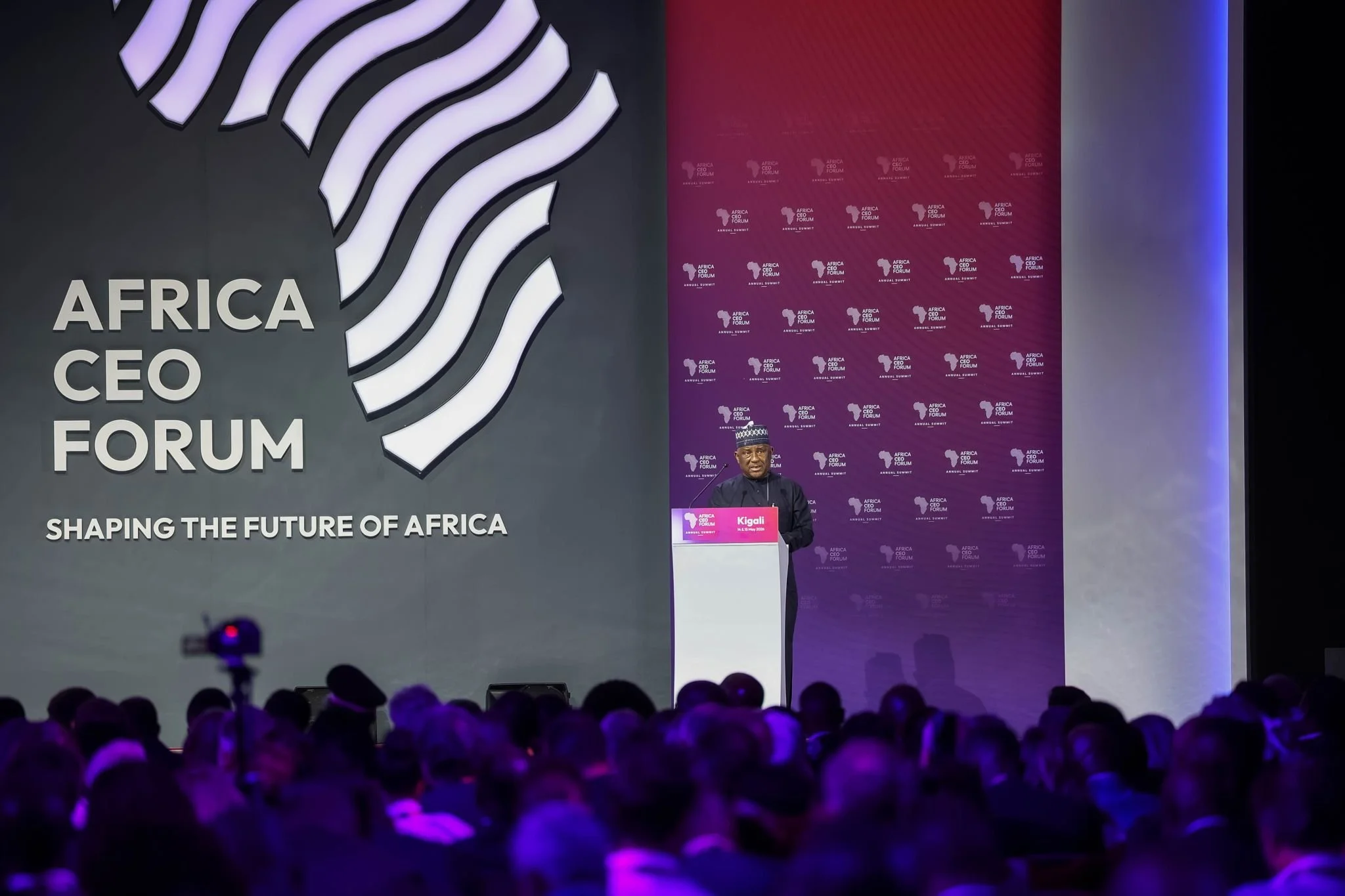
Lagos, Nigeria | May 20, 2026 - Aliko Dangote has been named the African Energy Chamber’s African Energy Person of the Year for 2026, a recognition that places the Nigerian industrialist’s long, costly and often contested refinery gamble at the centre of Africa’s energy-security conversation. The African Energy Chamber announced the award in May 2026, saying it was presenting the honour to Dangote for investments that have strengthened energy security, infrastructure, job creation, import substitution, regional development and African-led responses to energy poverty.
The award is not merely ceremonial. Each year, the Chamber uses the African Energy Person of the Year platform to recognise figures it says have positively influenced Africa’s energy sector by advancing energy security, energy additions, infrastructure development, local content, economic resilience and wider African prosperity. Dangote now joins a line of past recipients that includes Afreximbank President Benedict Oramah, the late Namibian President Hage Geingob, Woodside Energy Chief Executive Meg O’Neill, and Angolan President João Lourenço, all previously announced by the African Energy Chamber as awardees in 2022, 2023, 2024, and 2025, respectively.
For Dangote, the 2026 award lands at a decisive moment. The Dangote Refinery in Lekki, outside Lagos, has moved from one of Africa’s most scrutinised industrial promises into an operating asset with regional and global market consequences. The facility is Africa’s largest refinery, with a capacity of 650,000 barrels per day, and a project designed to reduce Nigeria’s long-standing dependence on imported petroleum products.
From Trader to Industrial Architect
Dangote’s story begins far from the refinery tanks of Lekki. After studying business at Al-Azhar University in Cairo, he built his early career through trading before expanding into cement, sugar, salt, flour and fertiliser, according to the African Energy Chamber’s award profile. Over time, the Dangote Group grew into one of Africa’s largest industrial conglomerates, anchored less in speculative commerce than in the hard infrastructure of production, logistics and supply chains.
That distinction matters. For decades, one of Africa’s most persistent economic weaknesses has been the export of raw materials and the import of finished goods. Dangote’s industrial model has sought to reverse that equation by investing in local manufacturing capacity, processing, transport systems and energy-linked infrastructure. The refinery is the most visible expression of that thesis, and the African Energy Chamber’s award statement frames it as part of a broader record of investment in African infrastructure, domestic supply chains and industrial capacity.
The Chamber’s 2026 recognition therefore reaches beyond a single plant. It speaks to a wider industrial philosophy: that Africa’s energy security will depend not only on producing crude, gas or power, but also on building the capacity to process, move and monetise those resources within African economies. In Dangote’s case, that philosophy has found its most consequential test in hydrocarbons.

The Refinery That Changed the Scale of the Argument
The centrepiece of the Chamber’s recognition is the Dangote Refinery, the 650,000-barrel-per-day complex near Lagos. The refinery began producing diesel and aviation fuel in January 2024 after years of construction delays, before starting gasoline processing in September 2024.
For Nigeria, the project landed in a market long defined by contradiction. The country is one of Africa’s major crude producers, yet for years it relied heavily on imported refined products because of underperforming state-owned refineries. The Dangote Refinery was expected to reduce that heavy import dependence, even as Nigeria’s downstream market remains exposed to supply, pricing and regulatory tensions.
Dangote’s refinery did not erase those structural problems overnight. It entered a complex market still shaped by crude-supply disputes, fuel pricing pressures, import licences and regulatory questions. But it changed the strategic baseline. Nigeria now has domestic refining capacity at a scale that previous downstream reform efforts did not deliver, and that shift has become central to how investors, regulators and ratings agencies read the country’s energy-security outlook.
By February 2025, a senior Dangote executive told Reuters that the refinery was operating at about 85% of capacity and could reach full capacity within 30 days, while also seeking new product markets, including jet fuel cargoes to Saudi Aramco. That update marked a sharp turn from the years when critics questioned whether the refinery would ever move from commissioning rhetoric to commercial relevance.
From Nigerian Asset to Regional Shock Absorber
The refinery’s significance has grown as global fuel markets have become more vulnerable to geopolitical disruption. In April 2026, Dangote’s refinery increased gasoline and urea exports to African markets to ease supply disruptions linked to the Iran war, describing the facility as the largest in Africa and noting its role in supplying markets across West, Central and East Africa.
That outward reach has become part of the refinery’s political economy. Ghana, Cameroon and Côte d’Ivoire were among African markets receiving refined products from Dangote, while the refinery also shipped 17 gasoline cargoes abroad in March 2026 and increased urea exports to African markets. Together, those accounts support the refinery’s emerging role as a new supply option for African markets facing external fuel and fertiliser shocks.
The refinery’s reach has also extended beyond the continent. S&P Global reported in May 2024 that Dangote had shipped its first jet fuel cargo to Europe. Reuters also reported in June 2025 that a 90,000-metric-ton gasoline cargo from Dangote was bound for Asia, marking its first gasoline shipment outside the region. In September 2025, Reuters reported that Vitol and Sunoco had taken the first Dangote gasoline cargo to the United States.
The symbolism is hard to miss. A refinery built in a country long dependent on imported fuel has begun positioning itself not only as a domestic-supply platform, but as a participant in inter-regional refined-products trade. For Africa’s downstream sector, that is the difference between importing volatility and building optionality.
A Bet Made Under Pressure
The refinery’s completion was never guaranteed. Dangote faced years of scepticism, financing strain, infrastructure bottlenecks, crude-supply uncertainty, currency volatility and political risk. The plant began production only after years of construction delays, while later coverage showed that crude supply, domestic fuel demand and import policy continued to shape its ramp-up.
Those tensions have not disappeared. In May 2026, the Dangote Petroleum Refinery filed a new lawsuit challenging fuel import licences granted to marketers and the Nigerian National Petroleum Company. The company argued that the licences undermined its operations and should be issued only when domestic supply was insufficient.
The lawsuit also drew a market response. The fuel marketers pushed back, with the Depot and Petroleum Products Marketers Association of Nigeria (DAPPMAN) arguing that import licences remain necessary for supply security, market stability and competition in the downstream sector. That dispute underscores the central tension now surrounding the refinery: Dangote’s project has expanded Nigeria’s refining base, but it has also raised hard questions about market power, import policy, domestic supply obligations and the balance between industrial policy and open-market safeguards.
For the African Energy Chamber, however, the larger point is that the refinery has already altered Africa’s energy-security map. S&P Global Ratings, in upgrading Nigeria’s long-term sovereign credit rating in May 2026, cited increased domestic refining capacity alongside higher oil production and exchange-rate liberalisation as part of the country’s improving macroeconomic profile. Reuters also reported that S&P viewed Nigeria as more resilient than peers because of its position as a net crude exporter and emerging refined-fuels producer.
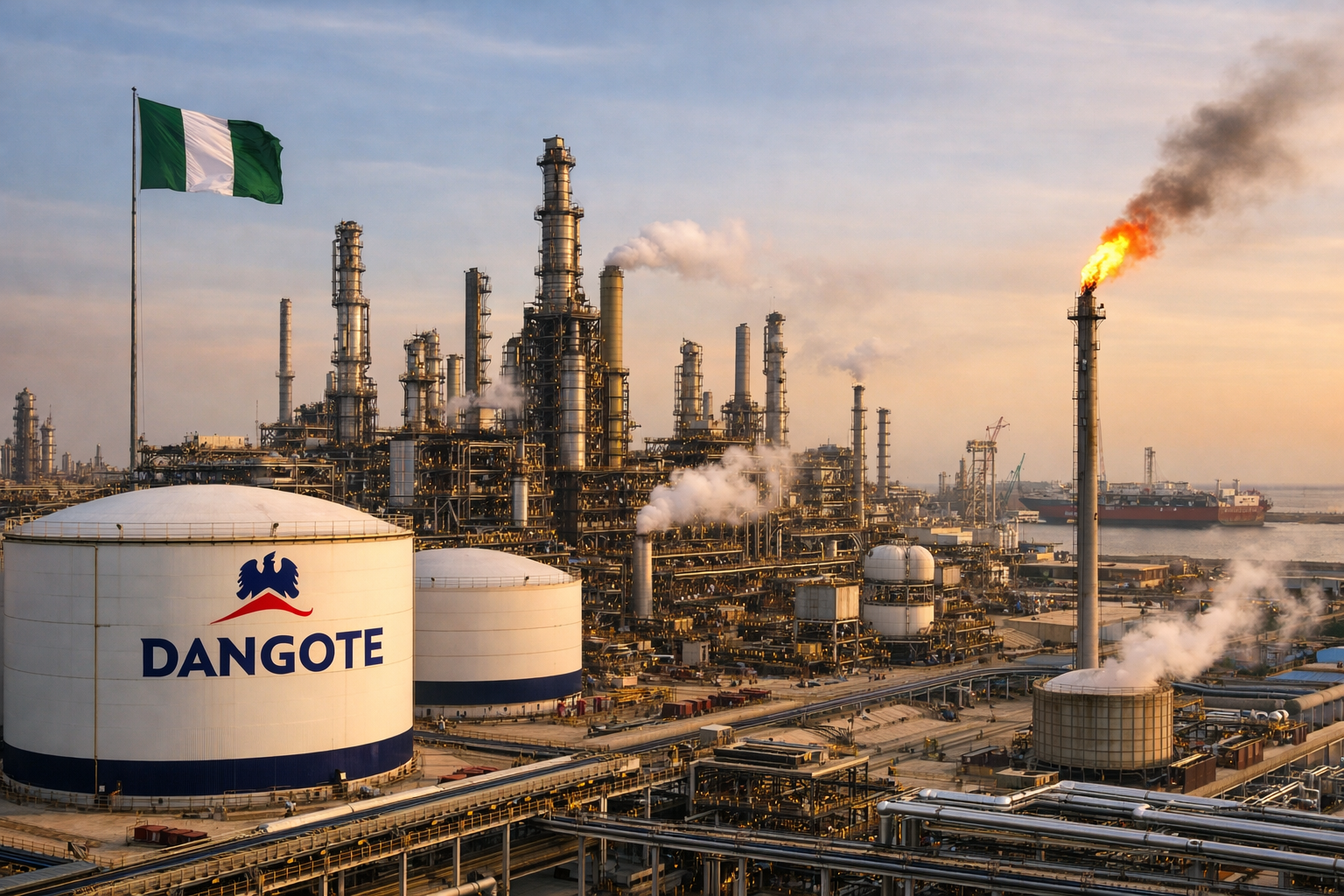
Photo Credit: Akwaibom times
The Next Expansion Frontier
Dangote’s downstream ambitions are still widening. In late 2025, Dangote planned to expand the Lagos refinery from 650,000 barrels per day to 1.4 million barrels per day, a move that would make the facility the world’s largest single-site refinery if completed.
Reuters later reported in February 2026 that Dangote Group had signed a $400 million equipment agreement with China’s Xuzhou Construction Machinery Group to accelerate the refinery expansion, with the plan targeting an increase in capacity to 1.4 million barrels per day within three years. The same Reuters report said the wider expansion programme included petrochemicals, agriculture and infrastructure machinery, reinforcing Dangote’s attempt to build an integrated industrial platform around refining.
The strategy is also expanding beyond fuels. In April 2026, Reuters reported that Dangote had tapped Honeywell to expand petrochemicals production at the Lekki complex, including technologies to produce 400,000 tonnes a year of linear alkylbenzene, a key ingredient in detergents and cleaning products. Honeywell separately said Dangote would use Honeywell UOP’s Oleflex technology to produce an additional 750,000 metric tonnes of propylene annually, supporting packaging, consumer goods and industrial-product manufacturing.
That move reinforces the refinery’s broader industrial logic. The plant is not only about replacing imported fuel. It is about building a petrochemical ecosystem around African demand, converting hydrocarbons into intermediate goods, and widening the manufacturing base tied to Nigeria’s largest private-sector energy investment.
Beyond the Balance Sheet
The Chamber’s recognition also reaches beyond Dangote’s refining and industrial footprint. Through the Aliko Dangote Foundation, his philanthropy has supported health, education, disaster relief, nutrition and poverty-reduction initiatives across Africa, according to the African Energy Chamber’s award profile.
The foundation became especially visible in public health through Nigeria’s polio-eradication effort. The Global Polio Eradication Initiative documented support from Bill Gates and Aliko Dangote for Nigeria’s polio-eradication, routine-immunisation and primary-healthcare efforts, while WHO and UNICEF congratulated Nigeria in August 2020 after the country was declared free of wild poliovirus.
Dangote’s philanthropic profile has also widened through education and nutrition. TIME reported in 2025 that the Aliko Dangote Foundation was endowed with $1.25 billion in 2014 and spends an average of $35 million annually on programmes across Africa, including health, education, economic empowerment, disaster relief and food. That record gives the Chamber’s award a broader development frame, linking energy infrastructure with social investment, public health and human-capital formation.
Why the Award Matters
The African Energy Person of the Year award has increasingly become a signal of the Chamber’s view of Africa’s energy priorities. In 2024, it recognised Woodside Energy Chief Executive Meg O’Neill. In 2025, it recognised Angolan President João Lourenço for reforms aimed at reviving investment, expanding upstream activity and supporting downstream fuel security. Dangote’s selection for 2026 shifts the spotlight from government-led reform to private industrial execution.
That shift is significant. It recognises a thesis that Africa’s energy security will not be built by policy alone, nor by resource extraction alone, but by the capital-intensive infrastructure that converts resources into usable products, creates jobs, anchors supply chains and gives African economies greater leverage in volatile global markets.
The refinery remains contested. Its market power, crude access, pricing model and litigation over import licences will continue to draw scrutiny. Those questions are legitimate, and they will shape how Nigeria’s downstream market evolves. The 2026 lawsuit and the marketers’ response show that the next phase of Dangote’s refinery story will be fought not only in tanks, pipelines and export markets, but also in courts, regulatory offices and competition debates.
But the larger fact is now difficult to ignore. Dangote took one of Africa’s most entrenched economic vulnerabilities, the dependence of a major crude producer on imported fuel, and built an industrial asset large enough to challenge it.
That is why the 2026 award matters. It is not simply a tribute to Africa’s richest businessman. It is a recognition of a bet that Africa can build at global scale, compete in refined-products trade and convert energy security from a slogan into infrastructure.
