
Africa’s Transition Is Leaving the Conference Hall
Africa’s energy transition is not waiting for a single grand bargain. From Ghana’s district-level e-motorbike rollout to South Africa’s coal-site solar buildout, Nigeria’s hydropower concession, Namibia’s hydrogen supplier push and AfDB-backed clean cooking finance, the continent’s shift is being assembled in practical increments. The story is no longer just policy ambition. It is fleets, rules, concessions, kitchens and balance sheets beginning to move.
Accra, Ghana | June 10, 2026 - The most revealing energy-transition story in Africa this week did not come from a billionaire-backed megaproject, a green hydrogen export pledge or another multilateral communiqué. It came from electric motorcycles moving into Ghana’s district architecture.
Through a partnership between the District Assemblies Common Fund and Wahu Mobility, Ghana is rolling out 5,000 smart electric motorcycles nationwide, beginning with a pilot of 280 eMotos across all 261 Metropolitan, Municipal and District Assemblies. On its own, that may look modest against the scale of Africa’s power and transport deficits. Read properly, it is more consequential: a public district-finance vehicle is being used to push electric mobility into the geography where citizens actually encounter the state.
That is the shape of Africa’s transition in practice. Not one grand pivot. Not a single continental switch. A build-out of working systems, one fleet, one district, one concession, one regulation and one balance sheet at a time.

From pilot language to operating systems
The Ghana e-mobility signal landed in the same cycle as a separate but complementary move by SPIRO, the pan-African electric motorcycle and battery-swapping company. Following its recent USD 215 million equity raise, SPIRO announced the appointment of Anant Badjatya as Group CEO, citing his previous leadership of IndoFast Energy, the IndianOil × SUN Mobility joint venture, and experience in building one of India’s largest battery-swapping networks, serving about 90,000 vehicles daily through more than 1,800 stations.
The appointment matters because battery swapping is not a vehicle story alone. It is an infrastructure story. It requires charging assets, working capital, route density, maintenance discipline, digital payment systems and enough utilisation to make the economics turn. SPIRO’s leadership choice suggests the company is not merely selling motorcycles into African cities; it is preparing to run a dense, asset-heavy energy infrastructure network.
Placed beside Wahu Mobility’s Ghana rollout, the signal is hard to miss. African electric two-wheeler mobility is moving out of the demonstration phase. The question is no longer whether the technology can be introduced. It is whether companies, public funds and regulators can build the operating systems around it.
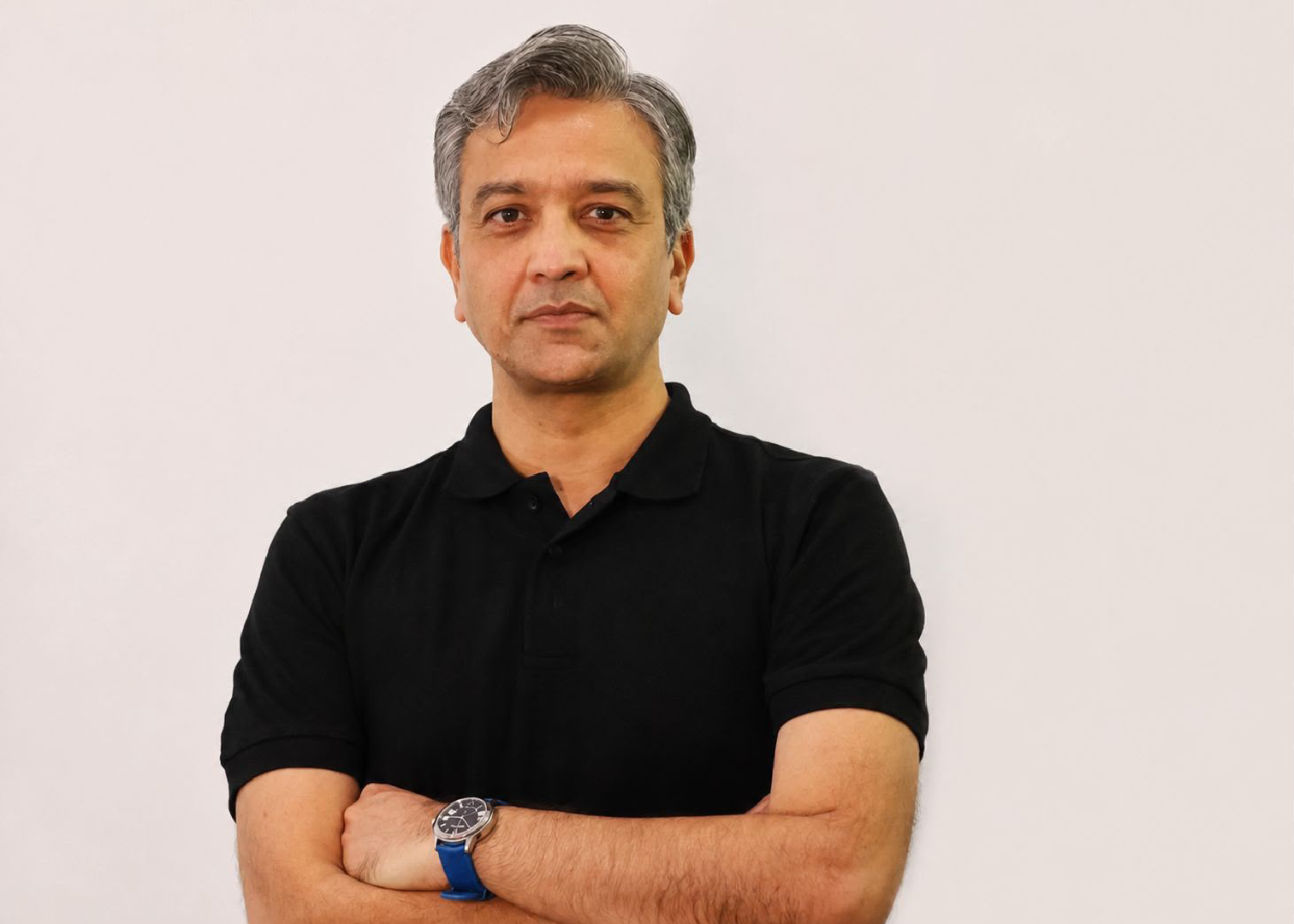
Anant Badjatya, SPIRO Group CEO
South Africa grafts solar onto coal country
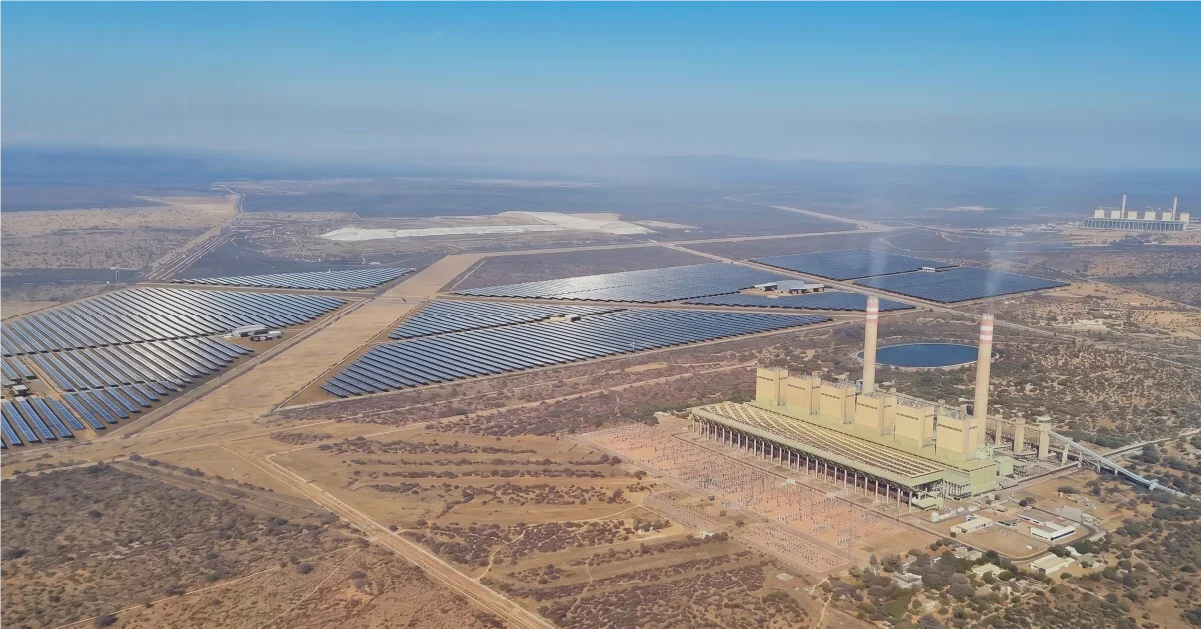
The same pattern is visible in South Africa, though on a different asset class and scale. Eskom Green has started construction of a R1.2 billion, 75MW solar power plant at Lethabo Power Station in the Free State, a project Eskom describes as the first step in integrating utility-scale renewable generation within its existing coal-fired power station fleet infrastructure.
This is not the clean rupture of activist imagination. It is more complex, and more useful analytically. South Africa’s transition is being built inside the old system, using coal-station land, grid connections and institutional capability to bring new renewable capacity online.
Eskom says the Lethabo project is part of a wider pipeline of renewable energy and storage initiatives across its coal-fired power station footprint, with 17 high-priority projects expected to be implemented across existing sites and roughly 6GW of new capacity targeted by 2030. For a utility still central to South Africa’s grid stability, the significance lies not only in the megawatts, but in the method: renewable integration is being treated as infrastructure redevelopment, not just procurement.
That is the more durable transition story. Legacy assets are not simply being abandoned. Some are being repurposed, hybridised and slowly made to carry the next system.
Solar becomes an asset market
South Africa’s private market is moving as well. SolarAfrica has entered into an agreement to acquire the Nyakallo solar project from Norsk Renewables, with the company describing Nyakallo as a utility-scale solar and battery storage project in Limpopo expected to deliver grid-connected renewable power to South African businesses from the second half of 2028.
The deal is important because it says something about market maturity. Africa’s renewable energy story is often told through capacity targets, but a functioning market is also built through project origination, acquisition, financial close, wheeling, trading and offtake structures. SolarAfrica says it will act as long-term owner and funding sponsor, while Norsk Renewables will continue supporting the project through development, financing preparation and commercialisation.
That is not a press-release economy. It is an asset market beginning to take shape.
Nyakallo also sits in a country where grid constraints have become a central barrier to renewable deployment. SolarAfrica says the project’s location within one of Eskom’s key transmission corridors positions it to connect directly into existing grid infrastructure, reducing reliance on long-lead transmission upgrades. That detail is not incidental. Across the continent, the transition will increasingly be decided not by resource quality alone, but by who can secure grid access, bankable offtake and the right balance between storage, wheeling and customer demand.
The old renewable backbone is still hydro
If electric motorcycles and solar acquisitions tell one side of the story, hydropower tells another. Africa’s oldest large-scale renewable technology remains central to the continent’s power ambitions, particularly where governments are trying to add firm capacity rather than intermittent generation alone.
In Nigeria, the Grand Katsina-Ala Hydropower Project has moved from approval into concession execution. The official project platform identifies it as a federally approved, concession-backed 460MW hydropower project in Benue State, developed under a Public-Private Partnership concession framework and structured as Design-Finance-Build-Operate-Transfer. Maverick Energy Partners’ records a sequence of milestones around the project: engagement with the Federal Ministry of Water Resources and Sanitation in November 2023 on a PPP framework, issuance of the Full Business Case Compliance Certificate in August 2025, Federal Executive Council approval in December 2025 for the development and concession of the 460MW Katsina-Ala Dam and Hydropower Plant Project, EIA Permit approval by the Federal Ministry of Environment in February 2026, and a May 2026 update stating that the Federal Government has signed a concession agreement with Maverick Energy Partners to develop the 460MW project.
The careful wording matters. This is not yet a power plant feeding electrons into the grid. But it has moved beyond general ambition into the harder concession framework where approvals, permits, project finance and execution must begin to align. That is exactly why it belongs in the story. Africa’s transition is not only being built at the point of commissioning. It is also being built in the corridor where projects either become bankable infrastructure or remain stranded ambition.
Uganda’s Ayago Hydropower Project sits in that same strategic pipeline. The Uganda Electricity Generation Company Limited’s Strategic Plan 2025–2030 identifies Ayago as an 840MW run-of-river hydropower project in northern Uganda along the River Nile, with UEGCL as implementing agency, an estimated cost of USD 1.7 billion subject to detailed feasibility study, and a six-year project duration beginning in FY2029/30 and ending in 2035/36.
That is not a fresh weekly breakthrough. It is, however, a reminder that East Africa’s transition pipeline is still heavily shaped by hydropower. Solar and batteries may dominate the frontier narrative, but firm renewable power from hydro remains central to the region’s long-term power economics, especially where industrialisation, regional power trade and demand growth are all moving faster than legacy infrastructure can comfortably absorb.
Namibia’s hydrogen test is local value
Namibia’s green hydrogen story adds a different question: who benefits when the export economy arrives?
GIZ’s terms of reference for an Enterprise and Supplier Development Programme state that Hyphen Hydrogen Energy and its shareholder ENERTRAG entered a public-private partnership with GIZ under the H2Uppp programme for the design and implementation of an ESD programme in support of Namibia’s green hydrogen future, including a pilot focus on the solar package as an early opportunity.
It says Hyphen is developing a USD 9.4 billion, gigawatt-scale green hydrogen project targeting 300,000 metric tonnes of green hydrogen and one million tonnes of green ammonia production annually from 8GW of renewable generation capacity and 3GW of electrolyser capacity. It also says Hyphen has committed to a 30.6% target for local procurement spend during construction and operations, while acknowledging that local supplier capacity remains limited.
That is the hard part of the hydrogen transition. Announcing an export corridor is easier than building the domestic supplier base that can participate in it.
CMB.TECH Namibia’s hydrogen rail work gives the story a practical layer. The company says Namibia’s first heavy-duty freight service running on locally produced green hydrogen will initially cover 50 round trips between the Port of Walvis Bay and the Container Depot near Windhoek during a trial period, with hydrogen produced off-grid at CMB.TECH Namibia’s plant in Walvis Bay.
Together, Hyphen-GIZ and CMB.TECH point to the real test of Namibia’s hydrogen ambition. The country can become an export enclave, moving green molecules out through ports and contracts. Or it can become a domestic industrial platform, using hydrogen to build supplier capability, transport applications and technical depth.
The answer will not be settled in project brochures. It will be settled in procurement rules, training pipelines, local-company participation and whether Namibian firms can win meaningful work when construction peaks.
Clean cooking enters the financing frame
The transition is not only about grids, fuels and transport corridors. It is also about kitchens.
At the African Development Bank Group’s 2026 Annual Meetings, the Rome Process/Mattei Plan Financing Facility announced a Clean Cooking Programme. The programme opens with an initial €25 million envelope, targeting about one million African households and an expected reduction of five million tonnes of CO₂ emissions.
The scale is modest against the size of Africa’s clean cooking deficit, currently at about 1 billion. But its institutional design is worth watching. Clean cooking has long sat awkwardly in the global energy finance system: too household-level for large infrastructure lenders, too development-heavy for conventional power investors, and too often underfunded despite its direct links to health, gender, forest loss and household productivity.
If the Rome Process/Mattei Plan platform can turn clean cooking into a more repeatable financing product, the significance will exceed the first cheque. The transition that African households experience most directly may not be a solar farm or a hydrogen plant. It may be the fuel and technology used to cook dinner.
Regulation is doing the quiet work
The ground-up transition also needs rules. Nigeria’s net-billing process is one example.
The Nigerian Electricity Regulatory Commission (NERC) has been working through a net-billing framework for prosumers, first issuing draft net-billing regulations for public comment and later convening stakeholders in Lagos on a framework that NERC said would allow consumers who generate their own electricity to sell excess power to the grid. NERC’s May 2026 update also places that draft framework alongside the Mini-Grid Regulations 2026, part of the wider regulatory architecture for decentralised electricity supply.
This is not the kind of story that attracts cameras. Yet it may prove more important than many ribbon-cuttings. Distributed generation does not scale on panels alone. It needs interconnection rules, compensation mechanisms, permitting clarity, consumer protection and a way for surplus generation to interact with distribution networks.
Ghana is watching the same terrain. The Energy Commission’s engagement with Sustainable Energy Africa and GIZ on distributed generation and net-metering expansion sits in this broader policy context: African regulators are increasingly having to design systems for grids that will no longer be one-way machines.
Capital follows structures, not slogans
The financing map is also widening. Devex reports that the European Bank for Reconstruction and Development (EBRD) is rapidly expanding across sub-Saharan Africa, with projects spanning critical minerals, trade finance and electricity infrastructure, after formally moving into the region last year.
That matters because Africa’s transition will not be funded by climate rhetoric. It will be funded by institutions willing to take project, currency, regulatory and execution risk. It will need domestic capital, development finance, export credit, commercial lenders and public balance sheets to work in combinations that many countries have not yet mastered.
The global context shows what bankable transition infrastructure looks like when the capital structure is clear. The European Investment Bank is lending €90 million to the Port of Rotterdam Authority to install shore-power facilities at three deep-sea container terminals. Hapag-Lloyd and Seaspan have completed the first conversion under their joint methanol retrofit programme, upgrading the Seaspan Yangtze to dual-fuel operation capable of using methanol. ACWA Power and the Bases Conversion and Development Authority are advancing a solar-plus-storage project in New Clark City in the Philippines. In Oman, O-Green’s 93MW industrial solar project has reached financial close.
These are not African stories, but they are useful mirrors. They show that the transition is increasingly financed as hard infrastructure: port electrification, ship retrofits, industrial solar, storage and grid-linked demand. Africa’s opportunity is not to copy those models wholesale. It is to build its own bankable equivalents around mobility, distributed power, hydropower, clean cooking, hydrogen supply chains and commercial electricity demand.
Accumulation is the story
The mistake is to keep looking for one definitive African transition moment.
There will be no single announcement that tells the whole story. It will be easier to see in accumulation: Wahu motorcycles moving through Ghana’s districts; SPIRO importing battery-swapping operating experience into African e-mobility; Eskom adding solar to coal-station infrastructure; SolarAfrica buying and advancing C&I renewable assets; Nigeria’s Grand Katsina-Ala hydropower project entering concession execution; Uganda keeping Ayago in its strategic hydropower pipeline; Namibia trying to turn hydrogen into local supplier capacity; AfDB and its partners putting clean cooking into a financing facility; NERC building the rules for prosumer electricity.
This is not a transition waiting for perfection. It is one being assembled under fiscal pressure, grid constraints, fuel-price exposure, industrial ambition and uneven institutional capacity.
That makes it messy. It also makes it real.
Africa’s energy transition is leaving the conference hall. It is entering the district yard, the coal-site substation, the hydropower concession file, the supplier-development tender, the household kitchen and the regulator’s rulebook. The story is not that the continent has arrived at a clean-energy future. The story is that the machinery of that future is finally beginning to appear.
