Grand Inga’s $1bn Reset: Congo’s Mega-Dam Returns Before the Concrete
The Democratic Republic of Congo’s Grand Inga dream is back, but not yet as a dam-building triumph. With the World Bank approving the first phase of a planned $1 billion Inga 3 Development Program, the world’s most ambitious hydropower prospect is returning through a more cautious test of governance, community trust and project bankability before concrete is poured. For a scheme long caught between continental promise, investor hesitation and local grievance, the new question is no longer just how much power the Congo River can produce, but whether DRC and its partners can finally build legitimacy before scale.
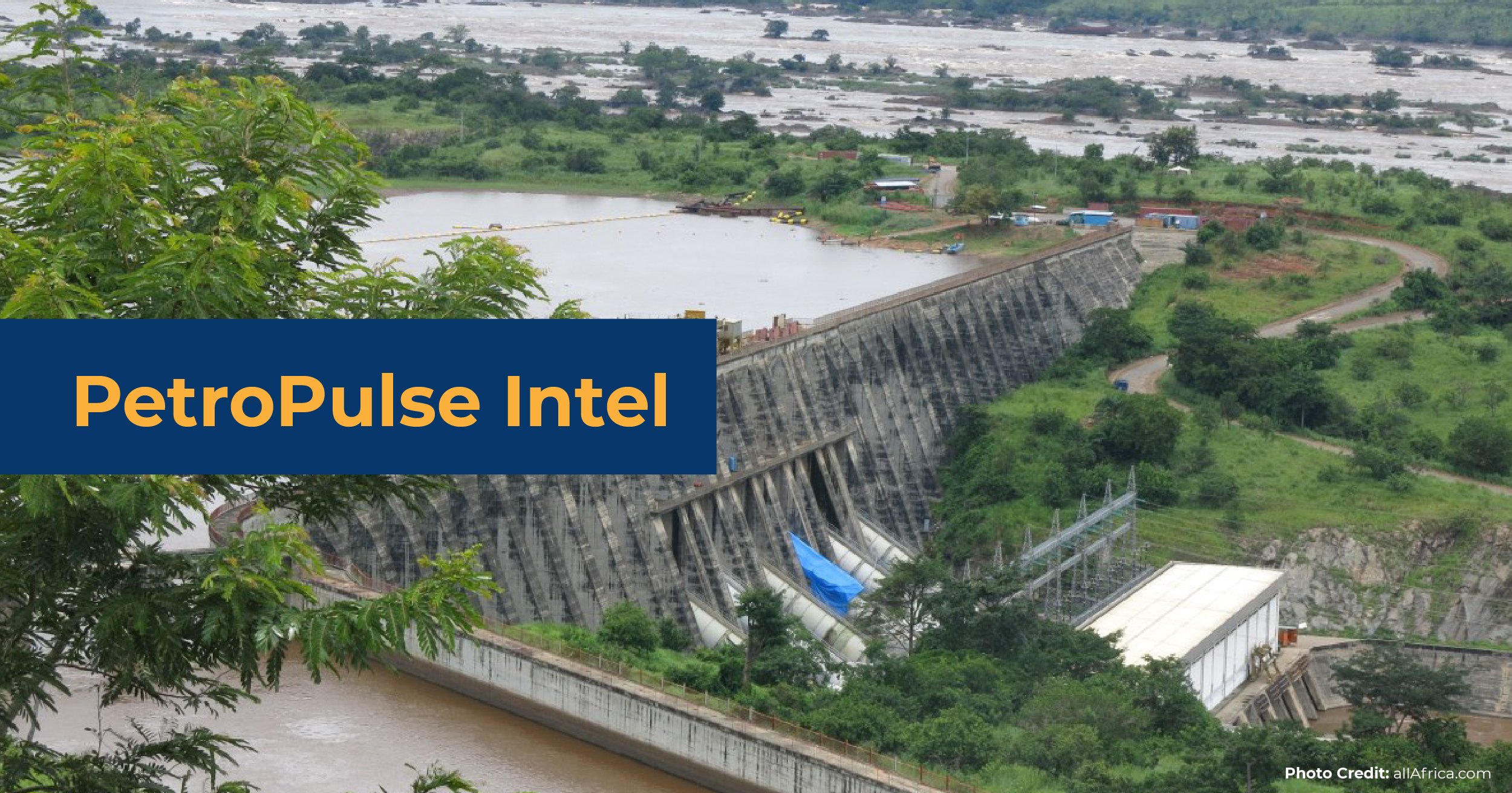
Photo Credit: allAfrica.com
Inga Falls, Congo | June 19, 2026 - The Democratic Republic of Congo’s long-stalled Grand Inga ambition is moving back onto the development map through a narrower, more cautious doorway: not the launch of the world’s largest hydropower complex, but a World Bank-backed effort to prepare Inga 3, test its governance architecture and deliver visible benefits to nearby communities before any construction decision is made.
The World Bank approved a $250 million International Development Association credit in June 2025 as the first phase of a $1 billion Inga 3 Development Program, explicitly framed as support to help the DRC “lay the foundations” for Inga 3 through investments in local people, infrastructure, jobs, studies, capacity-building and project structuring.
That sequencing matters. Grand Inga has spent decades suspended between continental promise and local distrust. On paper, the Inga site is unmatched: AUDA-NEPAD lists the Grand Inga Hydropower Project as an Agenda 2063 flagship in the DRC with a proposed installed capacity of over 42,000 MW, designed to contribute to electricity supply for both the DRC and the wider continent. In practice, the project’s history has been written in stalled concessions, shifting offtakers, financing gaps, governance concerns and the unresolved social legacy of Inga 1 and Inga 2.
A river with continental scale
The Inga hydropower site sits on the Congo River between Kinshasa and the Atlantic Ocean. The World Bank describes the site as benefiting from exceptionally high average river flows, a natural drop of around 97 metres caused by rapids and a bend in the river that makes a variety of lower-impact designs possible. Inga 1 was built in 1972 with 351 MW of installed capacity, followed by Inga 2 in 1982 with 1,424 MW. Together, the two plants currently operate at about 80% of capacity and still represent the majority of electricity generated by SNEL, the national energy utility.
The larger dream, however, has always been Grand Inga: a multi-phase hydropower build-out that could, depending on design and sequencing, dwarf existing dams globally and reshape African power trade. AUDA-NEPAD’s current project profile says the DRC’s 2018 redesign moved Inga 3 from a 4,800 MW concept to an 11,000 MW concept at an estimated total investment cost of $18 billion, including $4 billion for transmission lines.
That vision is not simply about electrons. It is about who controls them, who pays for the lines, who absorbs the risk and who gets connected first. AUDA-NEPAD’s profile frames the 11,000 MW concept around a proposed offtake mix that included 5,000 MW for South Africa, 3,000 MW for Nigeria, 1,300 MW for mining companies in the DRC and the balance for SNEL, while noting Guinea’s separate expression of interest in buying 7,500 MW.
The old bargain
The first Inga projects were built under Mobutu Sese Seko’s Zaire. International Rivers says Inga 1 was commissioned in 1972, and Inga 2 followed in 1982, together with the Inga-Kolwezi transmission line, which moved power to distant mining and urban demand centres. The advocacy group argues that the line bypassed villages near the dams, cities and other underserved communities, leaving affected populations largely outside the electricity benefits of the infrastructure built around them.
That history now hangs over every new Inga proposal. International Rivers says communities affected by Inga 1 and Inga 2 were never compensated, and that their relocation and loss of livelihoods impoverished tens of thousands of people across generations. It further warns that communities already displaced by the first two dams could face renewed displacement if subsequent Inga phases proceed.
For investors, that is not a marginal reputational issue. It is core project risk. Grand Inga’s strongest selling point is scale. Its weakest point is also scale: the larger the project, the larger the social, environmental, transmission, sovereign and offtake problems that must be solved simultaneously.
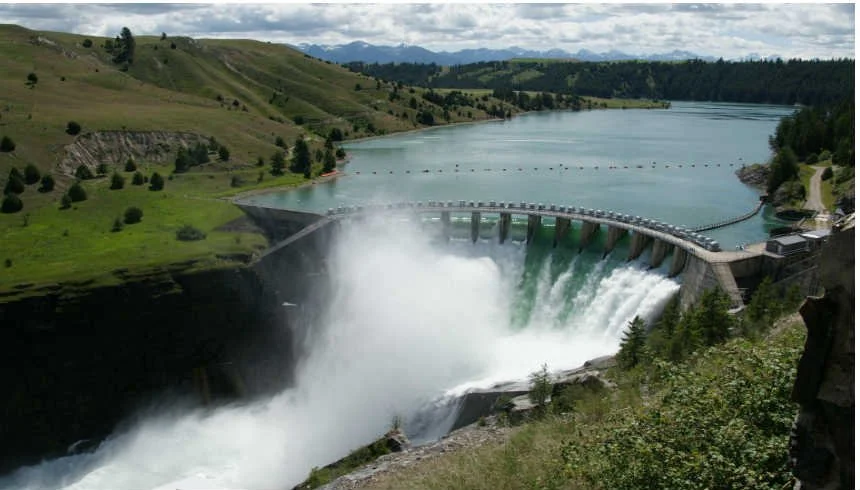
Photo Credit: Africa Energy Portal
The Kabila-era revival and the 2016 rupture
After the first two dams, attention returned to the Inga site under President Joseph Kabila following the end of the civil war. South Africa has long sat at the centre of Inga’s offtake story. International Rivers says an earlier ten-year DRC-South Africa treaty made Pretoria the key purchaser of 2,500 MW from the planned 4,800 MW Inga 3 design, then estimated at $14 billion for the dam and another $4 billion for transmission lines to the South African border. The World Bank, in its 2025 project document, says the DRC has a political-level memorandum of understanding with South Africa for the export of 2,500 MW from Inga, with discussions under way to renew the MoU and increase exports to 5,000 MW.
The World Bank entered the preparatory phase in 2014, when its board approved a $73.1 million IDA grant for the Inga-3 Basse Chute and Mid-Size Hydropower Development Technical Assistance Project, alongside $22.4 million of parallel co-financing from the African Development Bank. But the Bank withdrew in 2016, citing strategic differences with the government at the time, after only 6% of the grant had been disbursed.
That withdrawal became one of the defining moments in Inga’s modern history. It signalled that even a project of extraordinary physical potential could not outrun governance risk. International Rivers says the AfDB’s technical assistance support for Inga 3 later lapsed in 2019, while funding remained unsecured and progress stagnated.
The consortium years
The DRC tried to keep the project moving through private developer structures. AUDA-NEPAD says that in October 2018, the government signed an agreement with a consortium of Chinese and Spanish companies to undertake technical studies and environmental and socio-economic impact assessments for the 11,000 MW Inga 3 concept, with investment costs to be mobilised by the consortium.
But that structure also frayed. International Rivers says a consortium involving China Three Gorges, PowerChina and Spanish firm ACS was later disrupted when ACS withdrew in 2020, leaving a grouping of six Chinese companies led by China Three Gorges and Spanish company AEE Power Holdings. The same source says that, despite interest from several developers and potential offtakers, Inga 3 remained stalled for years without apparent progress.
The pattern was becoming familiar: the project could attract interest, but not closure. Grand Inga’s scale drew governments, utilities, mining companies and industrial players into its orbit. Yet it also multiplied the number of agreements needed, including cross-border transmission arrangements, sovereign undertakings, offtake contracts, environmental approvals and community consent.
The hydrogen detour
President Félix Tshisekedi’s administration brought another reimagining of the Inga story, this time through green hydrogen and industrial exports. International Rivers says Fortescue Future Industries signed a Deed of Agreement with the DRC government in September 2020 for green industries tied to hydropower from Inga, Matadi and Mpioka. But the green-hydrogen track should be treated as part of the project’s political and industrial imagination, not as a confirmed implementation pathway. Reuters reported in 2021 that Fortescue confirmed talks with Congo but said no formal binding agreement had been concluded.
That proposal widened the debate. Supporters could present Inga not only as an African power project but as a platform for the global energy transition. Critics saw a familiar risk: Congolese resources being mobilised for export-oriented industry while domestic access remained weak. International Rivers argues that Grand Inga’s power has repeatedly been framed around foreign demand centres, mining and industrial processes, rather than first addressing the needs of ordinary Congolese households.
The World Bank’s return
The World Bank’s 2025 return is therefore deliberately calibrated. The Bank is not financing dam construction. It is financing the architecture around the possibility of construction.
Its new programme begins with local communities in Kongo Central, institutional strengthening and the technical work needed for later decision-making. Ahead of any hydropower investment, the first phase is expected to benefit about 100 communities, or roughly 1.2 million people, through improved access to clean water, electricity and roads. About 10,000 people are also expected to benefit from skills and higher education training.
A separate World Bank feature says the programme includes a $100 million component for citizens living close to the Inga hydropower site, shaped by consultations in five territories near the Inga Rapids: Seke-Banza, Lukula, Tshela, Songololo and Luozi. Those consultations raised priorities including roads, water points, public buildings, stable and affordable electricity in key centres, education, health facilities and job creation.
This is the clearest sign that the Inga reset is as much political economy as engineering. The Bank’s own framing acknowledges the legacy problem: consultations discussed the prospects of Inga 3 as well as the impacts of past projects and concerns about hydrological effects, livelihoods and local infrastructure.
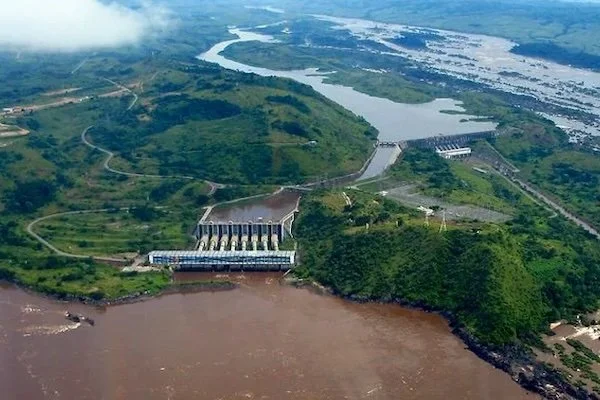
Photo Credit: Bankable Africa
A financing story still waiting for its main act
For now, the money on the table is preparatory, not construction capital. The $250 million IDA credit is the first phase of a planned $1 billion programme, while the eventual hydropower project remains a much larger undertaking. The World Bank says Inga 3 could generate between roughly 2 GW and 11 GW, depending on the final design, while its earlier factsheet placed the design range at 3 GW to 11 GW.
That leaves the central financing question unresolved. Who ultimately funds Inga 3? On what terms? With what offtake guarantees? Through which transmission routes? And under what allocation between DRC households, domestic industry, mining companies and regional buyers?
AUDA-NEPAD has already identified resource mobilisation as a central challenge, saying financial mobilisation has taken longer than expected and has delayed implementation. It also notes that the addition of new interested member states and the 11,000 MW concept would affect earlier agreements and coordination arrangements, including deals with countries through which transmission lines would pass.
The unresolved opposition
Grand Inga also remains contested on environmental and social grounds. International Rivers warns that construction could flood the Bundi Valley, affecting communities that farm, fish, hunt and live around the project area. It says an earlier, smaller Inga design estimated that about 37,000 people would be displaced, while a larger Grand Inga development could push the number significantly higher.
The group also argues that Grand Inga could alter the Lower Congo ecosystem, affect river flow and disrupt the Atlantic Congo Plume, which it describes as one of the world’s major carbon sinks sustained by Congo River sediment flows into the Atlantic.
The sharpest procedural critique is consultation. International Rivers says no Environmental and Social Impact Assessment had been conducted, as of its 2023 factsheet, to determine Grand Inga’s impacts or mitigation measures. It also accuses project actors of failing to secure meaningful community participation and free, prior and informed consent.
The World Bank’s new consultation-heavy approach appears designed to answer precisely that history. But it does not erase the burden of proof. It raises it. Inga 3 will now be judged not only on megawatts and transmission economics, but on whether communities near the site see development before displacement, services before sacrifice and accountability before concrete.
The current state
The current state of Grand Inga is therefore not a construction breakthrough. It is a governance reopening.
Inga 1 and Inga 2 are operating assets. Inga 3 is back in preparation. Grand Inga remains the continental-scale horizon. The World Bank has returned with a staged programme built around local development, studies and institutions. AUDA-NEPAD still treats the broader project as an Agenda 2063 flagship. Civil society remains deeply sceptical, citing unresolved compensation, displacement, ecological risk and the export orientation of previous designs.
The result is a project once again suspended between possibility and proof. If the DRC and its partners can convert Inga’s hydrology into bankable power while repairing the social contract around the site, Grand Inga could become one of Africa’s defining infrastructure stories. If they cannot, it risks becoming what it has too often been: a 42,000 MW continental ambition stranded by the politics, finance and human cost of building at continental scale.
