
Obelisk - Africa’s Hybrid Solar Champion
In the scrubland of southern Egypt, where transmission lines stretch like quiet industrial horizons, a 1.1 GW solar complex with grid-scale batteries has just crossed into commercial operation—and with it, a new argument is being stress-tested in real time: that emerging-market power systems can be financed, built, and stabilised as hybrid clean-energy machines, not just incremental green additions.
Obelisk, Africa’s largest solar-and-storage project, is less a single infrastructure asset than a layered financial and political construct—binding multilateral capital, sovereign guarantees, concessional climate finance, and now domestic equity participation into a 25-year US dollar revenue architecture anchored by the Egyptian state. Its promise is simple but loaded: turn intermittent sunshine into dispatchable power for a grid still overwhelmingly dependent on fossil fuels, and do so at a scale that begins to bend national energy balances.
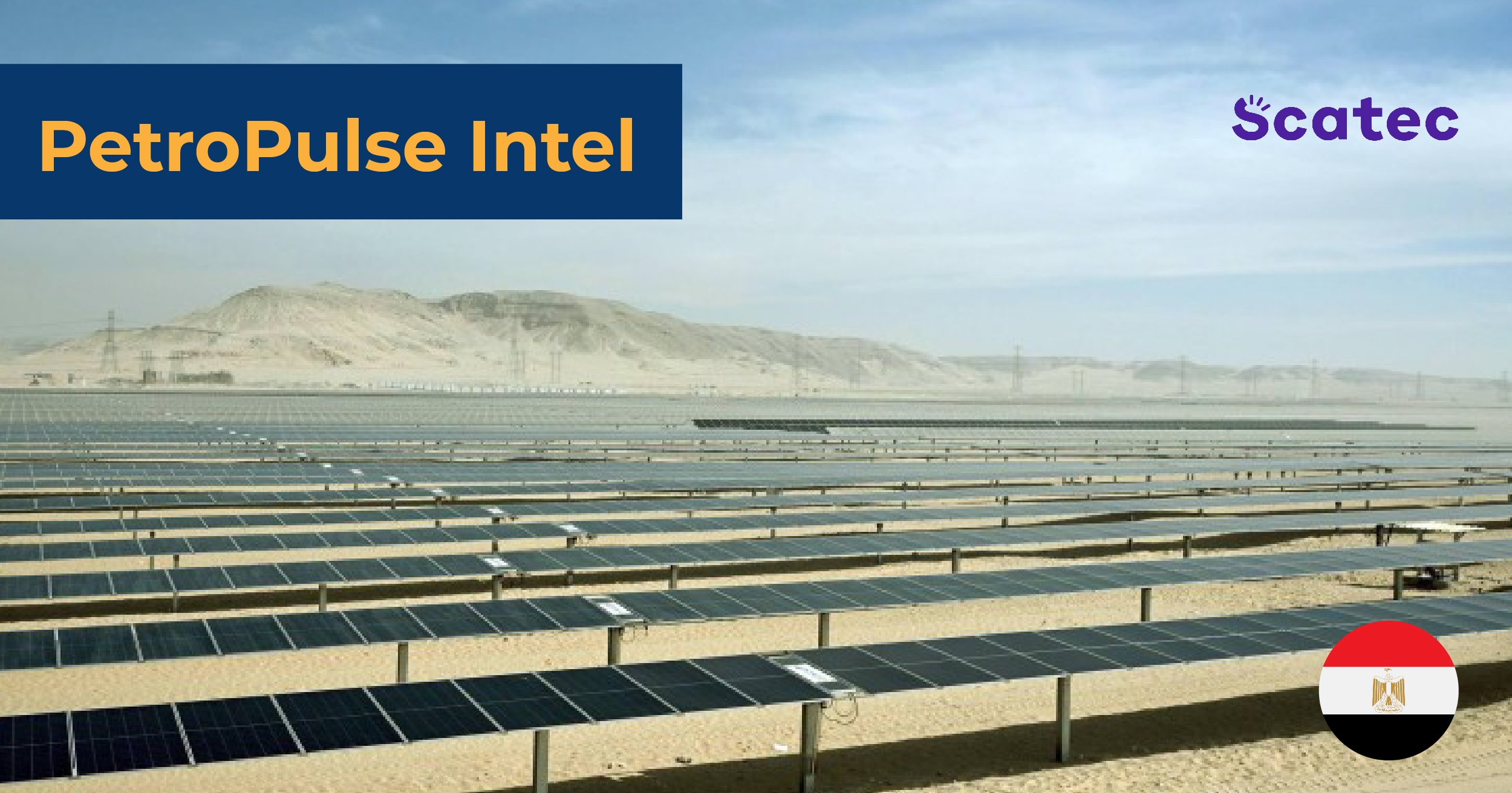
Photo Credit: Egypt Oil & Gas
Nagaa Hammadi, Qena, Egypt | May 8, 2026 - In the desert belt of Upper Egypt, where heatwaves increasingly strain electricity systems built around gas-fired generation, the first phase of the Obelisk Solar Power project has entered commercial operation, placing Egypt at the forefront of one of Africa’s most consequential energy experiments.
Developed by Scatec ASA through its Egyptian special purpose vehicle Obelisk Solar Power SAE, the project in Nagaa Hammadi, Qena Governorate, combines utility-scale solar generation with battery storage in a configuration that is rapidly becoming the defining architecture of the next-generation grid.
At full build-out, Obelisk is expected to reach 1.1 GW of solar capacity paired with a 100 MW/200 MWh battery energy storage system, producing more than 3,000 GWh annually while avoiding over 1.2 million tonnes of CO₂-equivalent emissions each year. If those projections hold, the facility alone would account for more than a tenth of Egypt’s 2024 renewable electricity generation in current terms.
The scale is significant. The structure behind it may prove even more important.
Africa’s Largest Hybrid Renewable Asset
The project’s first commercial operations milestone, announced on February 23, 2026, effectively moves Egypt into a new category of renewable deployment: hybridisation at continental scale.
For years, solar expansion across Africa has largely remained trapped in a familiar constraint cycle. Intermittent renewable generation collides with evening demand peaks, forcing grids to lean heavily on thermal backup systems. In Egypt, where air-conditioning demand surges deep into summer evenings, that vulnerability has become politically and economically visible.
Obelisk’s battery component is therefore not merely an engineering appendage. It is the mechanism that allows solar energy generated during daylight hours to remain dispatchable after sunset, when cooling demand remains elevated and grid stress intensifies.
The Harry Boyd-Carpenter, European Bank for Reconstruction and Development (EBRD) Managing Director for Sustainable Infrastructure described the project as taking Egypt’s green transition “to another level” by enabling solar energy delivery not only during the day but also at night, while reducing dependence on imported fossil fuels.
That distinction matters because Egypt’s electricity system remains overwhelmingly hydrocarbon-based. In 2024, roughly 90% of power generation still came from fossil fuels, with natural gas alone accounting for about 81% of generation. Solar contributed only around 3%.
Against that backdrop, Obelisk is not simply adding renewable megawatts. It is attempting to solve the central operational problem that has historically limited renewable penetration across emerging-market grids: dispatchability.
The Financing Architecture
Behind the solar panels and battery systems sits a financing and ownership architecture that may ultimately become Obelisk’s most exportable feature.
Total project costs are estimated at more than $590 million, underpinned by a multilayered capital stack combining multilateral development finance, concessional climate funding, sovereign-backed guarantees and now direct domestic financial-sector participation.
The African Development Bank is providing $184.1 million, including support from the Sustainable Energy Fund for Africa and the Canada-African Development Bank Climate Fund. The EBRD is contributing up to $173.5 million, partly de-risked through an EU-backed first-loss guarantee under the European Fund for Sustainable Development Plus framework. British International Investment joined as a consortium lender, while the Climate Investment Funds added a further $20 million through the Clean Technology Fund.
The ownership structure has meanwhile evolved into an equally strategic layer of the project’s bankability model. On May 6, Scatec ASA announced a shareholder agreement with the Naitonal Bank of Egypt, granting the Egyptian state-backed lender a 20% economic interest in the Obelisk project. Following the transaction, Scatec’s economic interest falls to 40%, while retaining majority control through a layered ownership structure. The remaining stakes are held equally by EDF power solutions and Norfund at 20% apiece.
What is emerging is less a conventional renewable-energy financing arrangement than a carefully engineered risk-allocation platform, where multilateral capital, concessional climate finance, sovereign guarantees and domestic institutional participation are deliberately stacked to absorb the political, currency and market risks that continue to constrain large-scale energy investment across emerging economies.
The core of that bankability still rests on the project’s 25-year US dollar-denominated power purchase agreement with the Egyptian Electricity Transmission Company (EETC) — the sole offtaker under the structure, anchoring long-term revenue certainty in hard currency terms rather than domestically exposed tariff dynamics.
That detail is critical. In a market shaped by currency pressures, subsidy distortions and periodic foreign-exchange constraints, the dollar-indexed structure effectively insulates project revenues from Egypt’s domestic tariff regime. The investment case therefore depends less on retail electricity pricing reform than on sovereign offtake credibility and the state’s willingness to preserve payment certainty over the long term. Joshua Narh, Executive Chairman of the Energy Chamber, Ghana, frames this shift in blunt terms, arguing that “Africa’s energy challenge is no longer about resource endowment. It is about alignment, execution, and disciplined capital deployment,” a reality Obelisk now appears designed to confront in real time.
For financiers searching for scalable clean-energy models in volatile macroeconomic environments, that architecture may prove every bit as influential as the project’s physical infrastructure itself.
Execution Versus Ambition
Obelisk also arrives at a delicate moment in Egypt’s energy-transition narrative. Cairo’s renewable ambitions have shifted repeatedly in recent years. The country’s Integrated Sustainable Energy Strategy originally targeted 42% renewable electricity by 2035 before accelerating the target to 2030. In mid-2024, policymakers briefly raised ambitions to 58% by 2040, only to revise the figure downward to 40% months later.
Those oscillations exposed a deeper tension inside Egypt’s energy strategy: how aggressively to pursue renewable expansion while preserving the economic and geopolitical role of natural gas.
Obelisk now becomes a litmus test for whether implementation can finally stabilise the rhetoric.
The project sits under Egypt’s Nexus of Water, Food and Energy platform, the COP27-linked framework designed to mobilise private capital into strategic infrastructure. Since its launch in Sharm El Sheikh in 2022, the NWFE energy pillar has reportedly mobilised roughly $4 billion in privately financed renewable investments, delivering about 4.2 GW of capacity.
Its longer-term objective is substantially larger: 10 GW of renewable additions and the retirement of 5 GW of fossil-fuel generation by 2030.
Obelisk is therefore not an isolated development. It is the flagship proof-of-concept for a financing and delivery platform Egypt hopes can industrialise renewable deployment.
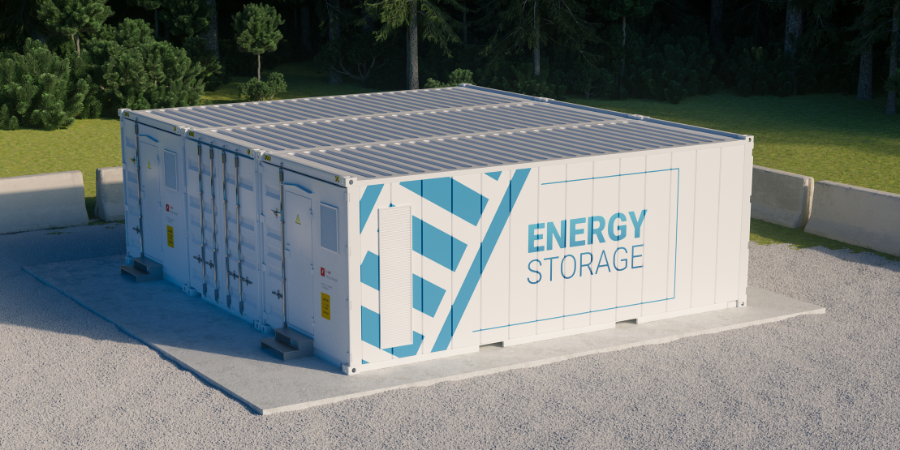
Photo Credit: Diversergy
A Continental Benchmark
The project’s continental significance extends well beyond Egypt.
As African grids absorb larger shares of intermittent renewable power, hybridisation is increasingly becoming unavoidable. Solar without storage risks curtailment and instability. Storage without scale remains economically prohibitive. Obelisk attempts to solve both simultaneously.
For African development financiers, Obelisk is increasingly being positioned as a continental template rather than a standalone Egyptian power asset. Wale Shonibare, Director of Energy Financial Solutions, Policy, and Regulation at the African Development Bank described the project as a demonstration of “how strong partnerships and innovative solutions contribute to balancing three core objectives in the energy sector, namely energy security, affordability, and sustainable economic development.” He added that the model carried “high potential for replicability across the continent.”
That observation reflects a broader shift now unfolding across African energy systems. Development finance institutions are moving away from isolated renewable assets toward integrated system-stabilisation infrastructure capable of supporting larger renewable penetration without undermining grid reliability.
The Pace Question
For Scatec itself, the project also demonstrates how rapidly large-scale renewables can move when financing, permitting and offtake certainty align.
Scatec CEO Terje Pilskog said the development progressed “at record pace” from the signing of the power purchase agreement in September 2024 to first commercial operations in early 2026, crediting the company’s integrated EPC approach.
That compressed timeline stands in stark contrast to the historically protracted development cycles that have slowed many African infrastructure projects.
In practical terms, Obelisk suggests the continent’s energy-transition bottleneck may no longer be technological viability. The harder problem is institutional coordination: sovereign guarantees, currency structures, concessional risk absorption and policy consistency.
The engineering is increasingly the easy part.
The Strategic Meaning of Obelisk
The symbolism surrounding Obelisk is unavoidable. Egypt, one of Africa’s largest gas producers and among the continent’s most fossil-dependent electricity markets, is simultaneously positioning itself as a continental leader in hybrid renewable deployment.
That duality reflects a wider truth about the energy transition across emerging markets: decarbonisation is no longer unfolding as a clean replacement story. It is becoming a balancing exercise between energy security, fiscal stability, industrial competitiveness and climate commitments.
Obelisk sits precisely at that intersection.
It is a solar project, certainly. But it is also a currency-risk experiment, a sovereign-credit test, a storage deployment model and a geopolitical financing template wrapped into a single asset.
Ultimately, as Joshua Narh captures the trajectory of African energy systems, “Energy leadership is ultimately about converting potential into tangible outcomes: measurable megawatts, productive industrial demand, viable exports, and long-term socio-economic value,” a standard against which Obelisk will now be measured as much as by its generation capacity.
Whether it succeeds will matter far beyond southern Egypt’s transmission corridors.
