Yakaar-Teranga Tests Senegal’s Gas Sovereignty Gamble
Senegal’s Yakaar-Teranga gas project is entering a decisive new chapter. Once framed as a deepwater prize for international operators, the 25-tcf gas-in-place discovery is now becoming the flagship test of Dakar’s resource-sovereignty agenda after Prime Minister Ousmane Sonko announced a withdrawal agreement involving Kosmos Energy and PETROSEN. But the harder question is no longer who controls the licence. It is whether Senegal can turn control into capital, engineering execution and a bankable gas model that serves domestic power, industrial demand and investor confidence at once.
Dakar, Senegal | May 29, 2026 - Senegal’s Yakaar-Teranga gas project has entered its most consequential phase yet, not because the gas has moved closer to market, but because control of the asset is moving closer to the state. The deepwater project, long framed as one of Senegal’s great offshore gas prizes, is now becoming a test of whether Dakar can turn resource sovereignty into bankable gas development.
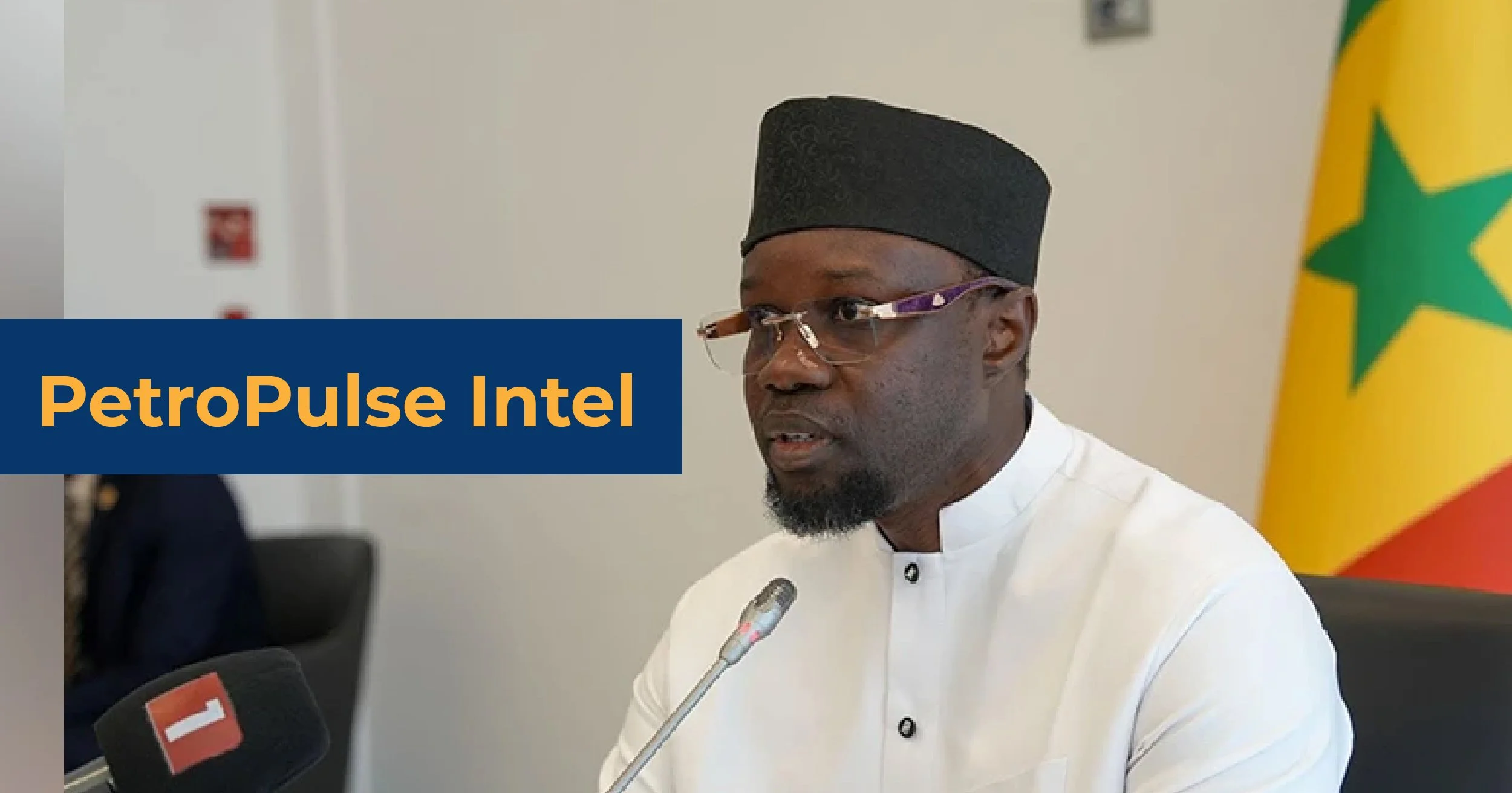
The latest turn came after Prime Minister Ousmane Sonko said Senegal had obtained and signed, without financial compensation for the country, the joint withdrawal agreement covering Kosmos Energy and PETROSEN from the licence for the Cayar gas block, known as Yakaar-Teranga. Sonko announced in an April 2026 post, and Senegal’s official press agency, APS, also reported the statement, quoting him as saying that April 22, 2026 would remain a historic date for Senegal.
That makes Yakaar-Teranga more than a gas-field story. It is now a sovereignty story, a financing story and a test of Senegal’s ability to move from first hydrocarbons into strategic gas industrialisation. The political direction is clear. The commercial route is less so.
A world-scale asset, still waiting for a model
Yakaar-Teranga has always had the scale to command attention. Kosmos Energy said in November 2023 that the Yakaar-Teranga discoveries held around 25 trillion cubic feet of gas in place, with negligible carbon dioxide and minimal impurities.
Kosmos also said it had increased its working interest to 90% and assumed operatorship, subject to customary government approvals, after BP exited the field; PETROSEN held the remaining 10%.
The development concept Kosmos described in 2023 was designed to bridge two ambitions. It envisaged an offshore development producing around 550 million standard cubic feet of gas per day, with domestic gas transported by pipeline to shore and export volumes liquefied through a floating LNG vessel.
It was a model that tried to give Senegal both domestic gas supply and exposure to global LNG markets. But scale and purity did not make the project easy. Deepwater gas requires more than a large resource. It needs creditworthy offtakers, financing depth, engineering certainty, fiscal stability and a development concept that can satisfy both the state and investors. That is where Yakaar-Teranga stalled.
From BP exit to Kosmos reset
The chronology matters because it shows how a flagship opportunity became a state-control test.
Kosmos’ November 2023 update marked a major reset: BP had exited Yakaar-Teranga, Kosmos had moved to 90% and operatorship, and PETROSEN remained with 10%. The handover initially looked like a development reset rather than a retreat, because Kosmos said the field could support Senegal’s long-term domestic gas needs while also providing LNG export volumes.
By late 2024, the project still appeared to be moving towards a development decision. Reuters reported in November 2024 that PETROSEN expected a final investment decision in 2025 and that the first phase was expected to cost about $5 billion to $6 billion.
That first phase, according to Reuters, was expected to produce three million tonnes per annum for export markets while reserving 150 million standard cubic feet for domestic power and other projects.
The same Reuters report showed that the project still needed more partners. PETROSEN’s then-director general, Thierno Ly, said the partners were looking at international oil companies, Middle Eastern and Algerian national oil companies and trading companies as possible entrants.
By March 2026, Kosmos made the problem explicit. In its fourth-quarter 2025 results, the company said it was working with PETROSEN to withdraw from the block because it had not been able to attract a suitable partner or agree a commercially attractive development concept with Senegal’s government.
That sentence is the hinge of the Yakaar-Teranga story. The available company record suggests the project’s difficulty was not geology, but commercial alignment.
Not quite nationalisation, not business as usual
The legal framing around Yakaar-Teranga deserves precision. In December 2025, Reuters reported that Senegal planned to nationalise the Kosmos-run Yakaar-Teranga gas project, citing Senegal’s energy minister and describing the field as one of the world’s largest recent gas discoveries.
Kosmos then issued its own statement saying it had confirmed with Senegal’s ministry that there was no intention to nationalise Yakaar-Teranga. The company said that, in the absence of a new partner, it would work with PETROSEN to transfer the block back to the Senegalese state on or before the licence expiry in July 2026.
That distinction matters. Based on the available record, Yakaar-Teranga is better described as a negotiated withdrawal and licence-return pathway than as a straightforward expropriation narrative. It may still carry political force. It may still unsettle investors watching Senegal’s contract-review agenda. But the documentary record points to licence recovery through withdrawal, expiry and reallocation rather than a simple seizure of an operating asset.
PETROSEN steps into the deepwater test
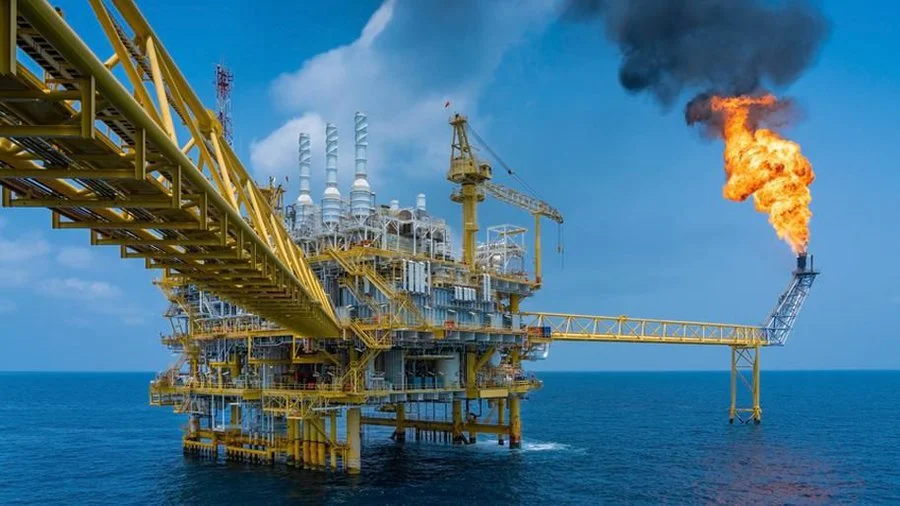
For PETROSEN, Yakaar-Teranga is an opportunity and a burden. PETROSEN has said it is positioning itself to become an operator and to exploit undeveloped projects such as Yakaar-Teranga to maximise benefits for Senegal and its population.
That ambition now has a flagship asset attached to it. Operatorship of a deepwater gas project is not a ceremonial title. It requires reservoir management, subsea systems, gas processing, pipeline or FLNG integration, procurement discipline, project finance, offtake structuring and long-cycle delivery. For a national oil company trying to move up the value chain, Yakaar-Teranga is both a statement of intent and an institutional examination.
The state can recover the licence, and PETROSEN can be granted a central role. But the gas will still have to pass through the discipline of capital markets, contractors, lenders and buyers. The withdrawal of foreign operators does not remove the need for foreign capital and technical capability. It only changes the terms on which Senegal must attract them.
The domestic gas dilemma
Yakaar-Teranga’s political appeal lies in its promise of domestic value. Kosmos’ 2023 concept included domestic gas transported to shore, while Reuters’ 2024 reporting on PETROSEN’s expected first phase referred to a provision of 150 million standard cubic feet for domestic power and other projects.
The challenge is that domestic gas and project finance do not always move at the same speed. A domestic-first model can reduce dependence on imported fuels and support industry, but it must answer difficult questions about gas pricing, payment guarantees, infrastructure readiness and tariff recovery. An export-heavy LNG model may be easier to finance because it can lean on hard-currency offtake, but it risks clashing with Dakar’s emphasis on domestic benefit.
That is the central tension. Yakaar-Teranga is the point where Senegal’s sovereignty agenda meets the balance sheet.
A wider contract reset
The Yakaar-Teranga pivot is not happening in isolation. Since President Bassirou Diomaye Faye’s election, Senegal has been reviewing extractive-sector contracts and signalling a tougher posture on deals the new administration considers unfavourable. Reuters reported in April 2024 that Senegal’s new energy and mines minister said oil, gas and mining contracts would be reworked if necessary after an audit.
Senegal later set up a commission to review oil and gas contracts, with Reuters reporting in August 2024 that the commission was intended to help rebalance contracts in favour of the national interest.
The contract-review agenda intensified in 2026. Reuters reported in March 2026 that Sonko challenged the fairness of the BP-operated Greater Tortue Ahmeyim gas contract, revoked 71 mining licences and said broader reviews would continue.
That makes Yakaar-Teranga part of a broader recalibration. Senegal is trying to rebalance control, value capture and investor confidence. The political reward is clear: a stronger claim over national resources. The risk is equally clear: if the reset is seen as unpredictable, the capital needed to develop those resources may become more expensive or harder to secure.
Why Yakaar-Teranga matters after Sangomar and GTA
Senegal is no longer simply a prospective hydrocarbons province. Woodside announced first oil from Sangomar in June 2024, describing it as the safe delivery of Senegal’s first offshore oil project.
Greater Tortue Ahmeyim has also moved Senegal and Mauritania deeper into the LNG conversation. Kosmos said in its fourth-quarter 2025 results that GTA Phase 1 ramped up to the floating LNG vessel’s 2.7 million tonnes per annum nameplate capacity and averaged nameplate production through December 2025.
That wider context matters for Yakaar-Teranga. Sangomar and GTA have moved Senegal from prospectivity into production. Yakaar-Teranga is different because it is not primarily about first production. It is about what Senegal does next with gas.
If Senegal can build credible domestic gas demand, bankable offtake structures and a financing model that gives investors confidence, Yakaar-Teranga could become the next anchor for gas-to-power and industrial use. If not, the project risks remaining what it has long been: a large, attractive and difficult gas discovery waiting for the right commercial frame.
The next test
Yakaar-Teranga’s next milestones will be legal, financial and technical. APS reported, citing Sonko’s statement, that the withdrawal would be formalised by ministerial order and followed by a new licence exclusively for PETROSEN, but the formal licence pathway still needs to be confirmed through the relevant legal instrument or an official PETROSEN or ministry notice. (APS - Agence de Presse Sénégalaise)
A revised development concept must emerge. A financing plan must be assembled. New partners, if any, must decide whether Senegal’s state-led model offers enough certainty to justify entry. Those questions matter because Reuters reported in 2024 that PETROSEN had expected a 2025 FID, while Kosmos said in 2026 that it had not been able to attract a suitable partner or agree a commercially attractive development concept with the government.
The project’s future will not be decided by a single announcement. It will be decided by whether Senegal can reconcile domestic gas ambition with the requirements of a multibillion-dollar offshore development.
Yakaar-Teranga may yet become the centrepiece of Senegal’s domestic gas future. But its next phase will be judged by a harder standard than political control. The real test is whether Dakar can convert a recovered asset into a financed project, a bankable gas market and a development model that keeps sovereignty and investor confidence in the same frame.
