
Energy Commission Puts Civil Society at the Centre of Ghana’s Energy Transition Push
Ghana’s energy transition is moving from policy ambition to public accountability. At a civil society forum in Accra, the Energy Commission made the case for a transition that is not only cleaner and more technologically advanced, but also inclusive, transparent and trusted by the citizens it is meant to serve.
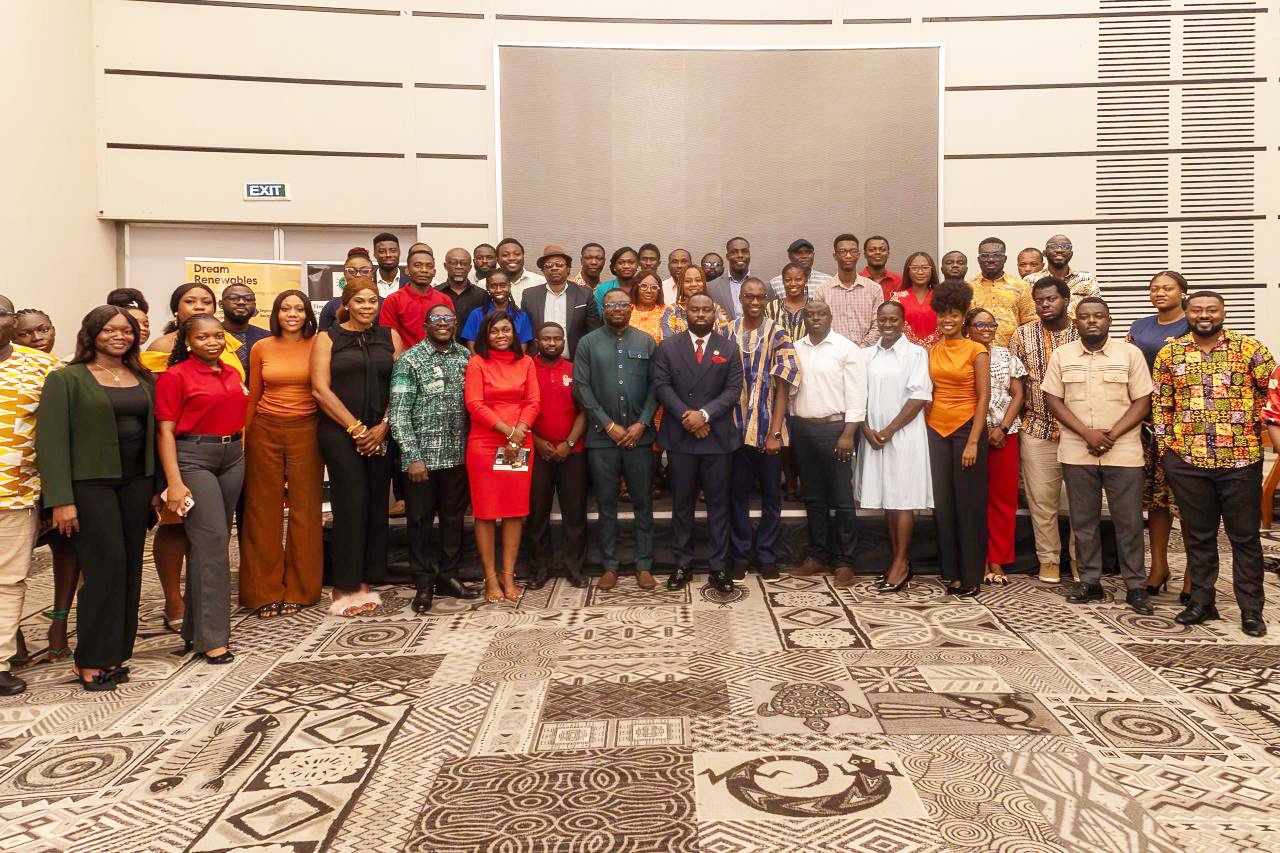
Accra, Ghana | May 5, 2026 — The Energy Commission has used a civil society platform in Accra to frame Ghana’s energy transition as a test not only of technology and infrastructure, but also of inclusion, accountability and public trust.
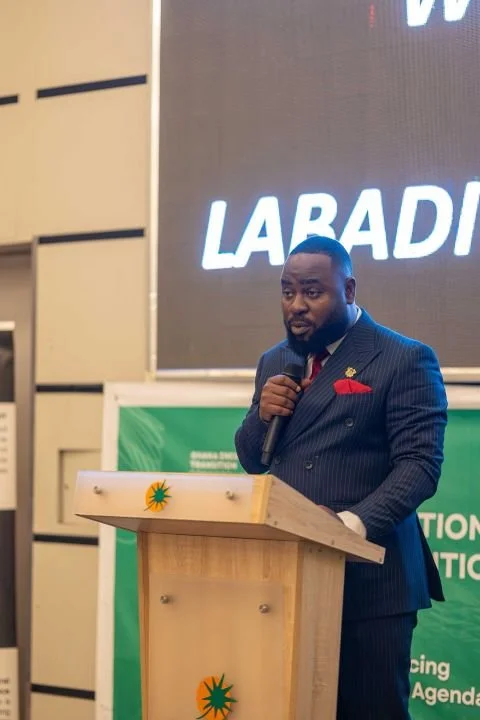
Chris Nanabanyin Yalley, Deputy Executive Secretary of the Energy Commission, delivered that message during his keynote address at the Civil Society National Forum on Energy Transition held at the Labadi Beach Hotel in Accra, where he urged a more inclusive, transparent and accountable approach to the country’s transition agenda.
The forum brought together civil society actors, policymakers and energy-sector representatives to examine Ghana’s transition pathway at a time when the country is trying to balance rising energy demand, renewable energy expansion, power-system reliability, electric mobility, affordability and long-term energy security.
Yalley’s central argument was clear: Ghana’s energy transition cannot be treated as a technical exercise alone. It must also be managed as a social and economic project, one that creates green jobs, protects consumers and gives civil society a meaningful role in oversight and accountability.
According to the Energy Commission’s account of his remarks, Ghana remains committed to expanding renewable energy and improving energy efficiency, with a target for renewable sources to account for 10 percent of the country’s energy by 2030. Yalley also stressed the need to rapidly scale solar power, adopt more decentralised energy systems, improve the power grid, accelerate electric vehicle charging infrastructure, update digital regulations and keep energy affordable and secure.
From policy ambition to public accountability
The Commission’s intervention comes as Ghana’s energy transition moves from high-level policy ambition into the harder terrain of implementation.
The country’s Renewable Energy Master Plan provides one of the clearest policy anchors for that shift. The plan sets out a 2030 target of 2,567 MW of installed renewable energy capacity, decentralised renewable electrification options for 1,000 off-grid communities, and stronger local content and local participation in the renewable energy industry.
It also places a large price tag on the transition. The master plan estimates that Ghana will require about US$8 billion in investment, or roughly US$620 million annually, to deliver its renewable energy ambitions. If successfully implemented, the plan projects 225,000 jobs and carbon savings of about 20.6 million tonnes of CO₂ by 2030.
Those numbers underline both the opportunity and the institutional test. Ghana’s transition will require not only capital and technology, but also credible regulation, coordinated implementation and public legitimacy. Without sustained public participation, the country’s transition could become technically coherent but politically thin, with weaker public trust than the scale of reform requires.
That is the space civil society is now being asked to occupy more visibly.
The GETC civil society front
The forum’s significance lies not only in what the Energy Commission said, but in who it said it to.
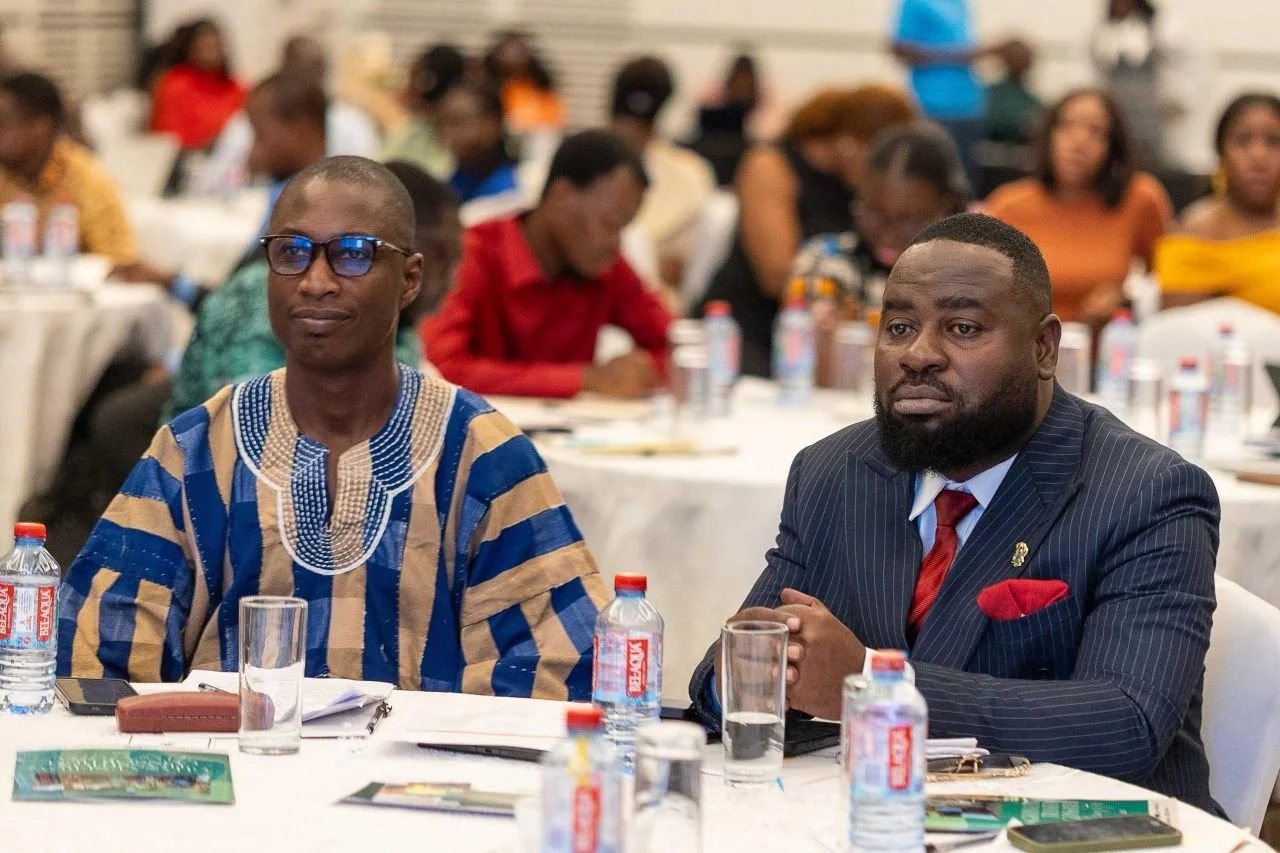
The Ghana Energy Transition Consortium (GETC) is a collaborative, multi-stakeholder platform made up of NGOs and allied partners working on energy transition issues in Ghana. Convened by the Strategic Youth Network for Development (SYND), the consortium was officially launched in July 2024 and is designed to position civil society as a stronger accountability force in the implementation of Ghana’s energy transition plan.
GETC emerged from a group of NGOs that had begun collaborating through shared discussions as fellow grantees of Gower Street, a UK-based family foundation. Its stated mission is to foster collaboration, build strategic synergies and create space for CSOs to contribute meaningfully to Ghana’s energy transition goals.
Its membership gives the platform a broad advocacy base. Listed members include the Centre for Extractives and Development Africa, Kasa Initiative Ghana, the Civil Society Platform on Oil and Gas and WACAM, bringing together organisations with experience across extractives governance, environmental advocacy, oil and gas oversight and community-rights work.
For GETC, the forum reinforced the consortium’s stated role as a civil society platform seeking to hold government accountable while contributing constructively to a more ambitious and inclusive implementation of Ghana’s energy transition plan.
That matters because Ghana’s transition is no longer a narrow debate about generation technology. It now cuts across electricity access, transport electrification, local manufacturing, green jobs, consumer protection, community rights and public accountability.
Energy Commission’s transition agenda widens
Yalley’s remarks also land at a moment when the Energy Commission has been visibly expanding its work across the practical building blocks of the transition.
In electric mobility, the Commission has been moving to structure the emerging EV-charging market. It has already signalled that electric vehicle charging stations and battery-swap systems cannot be installed or operated in Ghana without prior approval from the Commission, a regulatory posture aimed at ensuring that the infrastructure meets national safety, technical and operational standards.
The Commission has also carried out stakeholder sensitisation on draft regulations for EV charging stations and battery-swap systems, part of the groundwork needed before electric mobility can scale beyond isolated pilots and prestige projects.
That regulatory work is increasingly important. Ghana’s EV transition will depend not only on vehicle imports and consumer appetite, but also on the safety, reliability and accessibility of charging infrastructure. Without clear rules, the market risks fragmentation. With credible regulation, Ghana has a better chance of building a charging ecosystem that can support transport electrification without undermining grid stability or consumer confidence.
The Commission’s recent solar-related activities point in the same direction. Its inspection of major rooftop solar installations, engagement around solar power stations and broader push for renewable-energy deployment all sit within the same implementation arc: moving from policy language to physical assets, market rules and institutional supervision.
A just transition, or a narrow transition
The strongest thread running through Yalley’s keynote was the call for a “just” transition.
In Ghana’s case, that phrase carries practical weight. A just transition must address who gets access to cleaner energy, who pays for new infrastructure, who benefits from green jobs, how communities are consulted and whether citizens can hold institutions accountable for delivery.
It also means ensuring that the energy transition does not become a top-down exercise driven only by policy documents, donor finance and technical agencies. Civil society’s role, as framed at the Labadi forum, is to help keep the process honest: pushing for ambition, scrutinising implementation and ensuring that transition benefits do not bypass the communities most exposed to energy poverty, pollution or economic disruption.
For the Energy Commission, the message was equally strategic. Ghana cannot build the transition on regulation alone. It will need public buy-in, investor confidence, institutional coordination and a governance model that makes room for civil society without reducing it to ceremonial consultation.
The harder transition ahead
The chronology now matters.
Ghana’s renewable energy ambitions have been set out in policy. GETC’s launch in July 2024 gave civil society a more organised platform from which to engage the transition. The Energy Commission’s recent work on EV-charging regulation, solar deployment and stakeholder sensitisation has begun to translate policy direction into market rules and operational oversight. The Labadi forum added another layer: a public accountability conversation around how Ghana’s transition should be governed.
Yalley’s keynote, therefore, placed civil society more squarely inside the accountability chain of Ghana’s energy transition.
The test ahead is whether that inclusion becomes routine practice or remains a conference-stage principle. Ghana’s transition will ultimately be judged not only by the number of megawatts installed, charging stations approved or regulations drafted, but by whether the shift delivers cleaner energy, affordable access, green jobs and public trust.
For a country trying to decarbonise without weakening energy security, that may be the harder part of the transition: not simply changing the energy system, but making sure citizens can see themselves inside it.
