Ghana Moves to Deepen OCTP Gas as Power-Sector Cushion Things
Ghana’s latest OCTP gas term sheet is more than another upstream signing. It is a calculated move to deepen domestic gas supply, reduce exposure to imports and reinforce a power system whose margins are already tightening. With Eni, Vitol and GNPC now lined up behind a potential boost to 350 mmscfd by 2028, the Sankofa gas project is being pushed into a new phase as the country’s gas-to-power strategy faces its sternest reliability test yet.
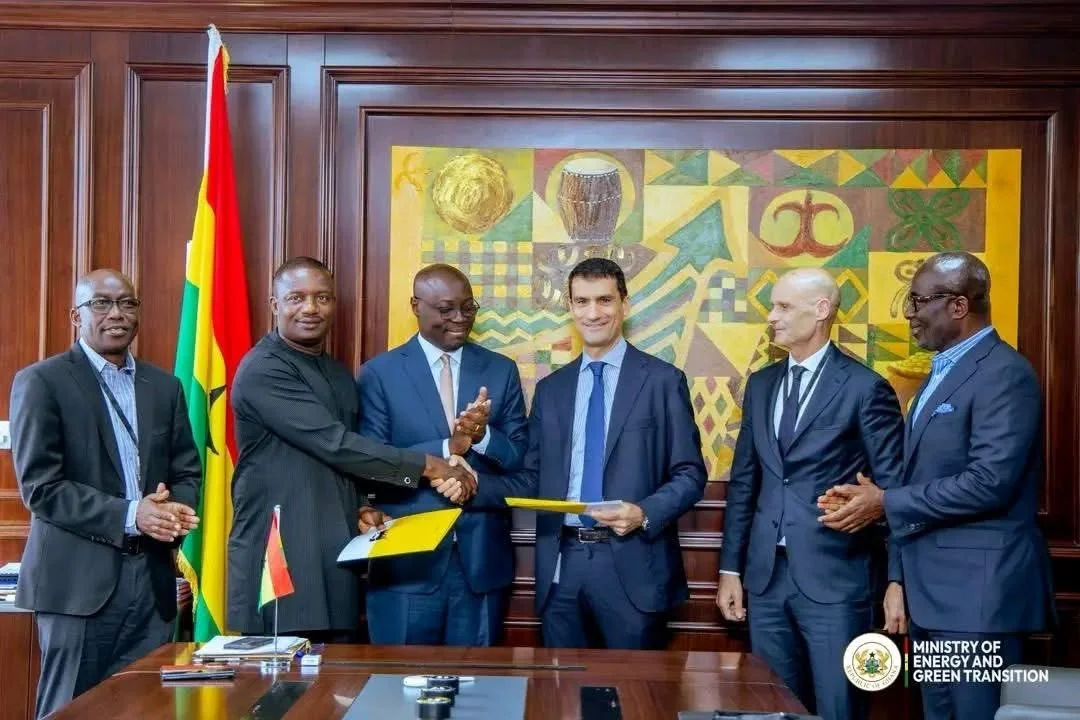
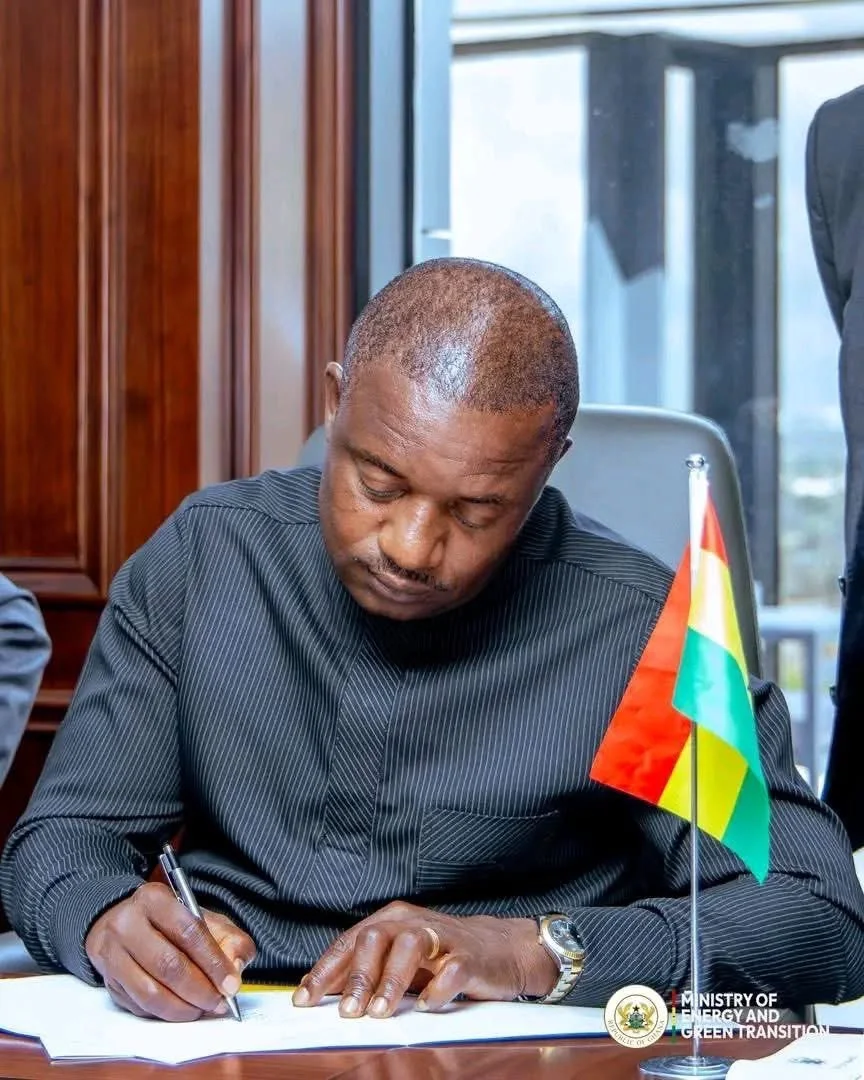
Accra, Ghana | May 6, 2026 — Minister for Energy and Green Transition, Hon. Dr. John Abdulai Jinapor, has signed a key term sheet to expand domestic gas production under the Offshore Cape Three Points project, setting Ghana on a fresh push to pull more value from one of its most strategic upstream assets.
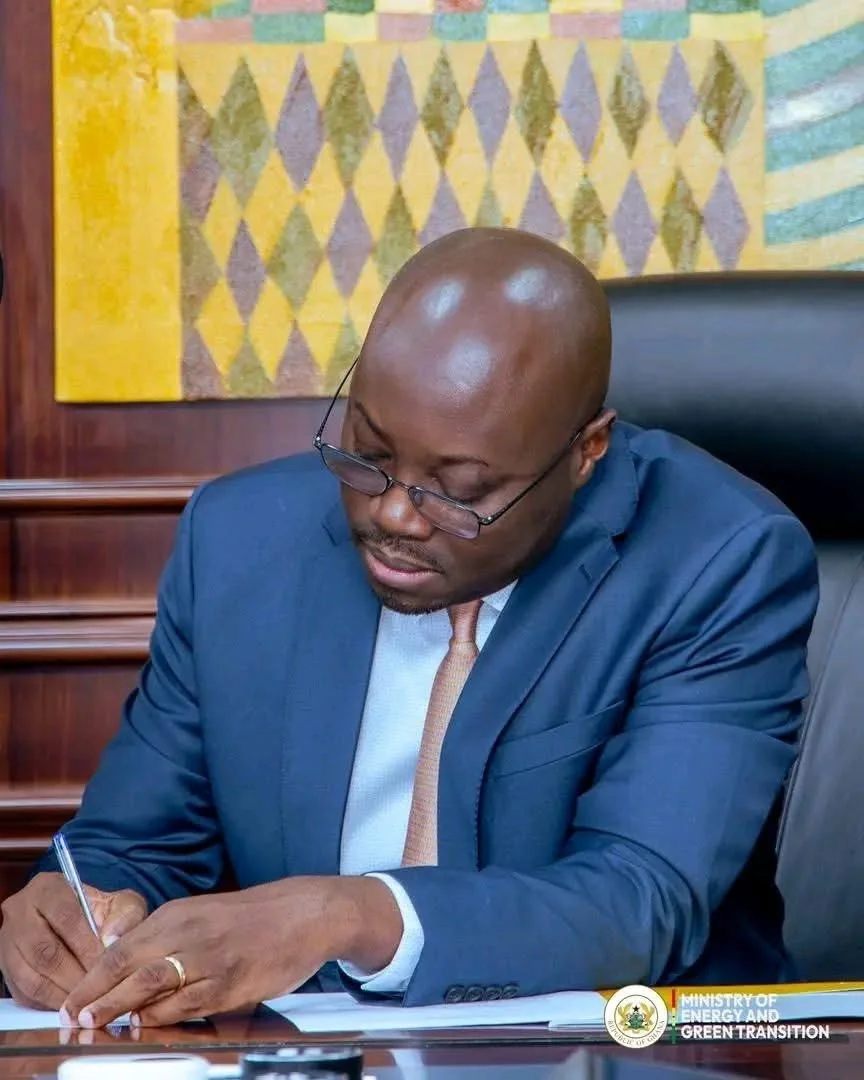
The agreement, signed with the Minister for Finance, Dr. Cassiel Ato Forson, alongside Eni Ghana, Vitol and the Ghana National Petroleum Corporation, sets the framework for new gas infrastructure development under OCTP. If executed as planned, the upgrade could lift gas output by up to 350 million standard cubic feet per day by 2028, strengthening domestic supply at a time when Ghana’s gas-to-power system is becoming more exposed to rising demand, import dependence and planned maintenance outages.
For the government, the signal is deliberate. Dr. Jinapor said the move underlines Ghana’s readiness for investment while ensuring the responsible development of the country’s energy resources. But the larger story is more structural: Accra is trying to turn domestic gas from a critical supply source into the firmer backbone of national energy security.
From offshore discovery to gas-to-power anchor
The OCTP is not a marginal asset in Ghana’s petroleum architecture. Operated by Eni Ghana Exploration & Production Limited with a 44.44% interest, the block is held with Vitol Upstream Ghana Limited at 35.56% and GNPC at 20%. The contract area covers 693 square kilometres, with an effective date of May 5, 2008, and is currently in production.
The integrated oil and gas development comprises the Sankofa Main, Sankofa East and Gye-Nyame fields, located about 60 kilometres off Ghana’s Western Region coast. The fields hold about 770 million barrels of oil equivalent in place, including 500 million barrels of oil and 270 million barrels of oil equivalent of non-associated gas, estimated at about 40 billion cubic metres. Crucially, the gas fields were developed for Ghana’s domestic market, making OCTP one of the clearest expressions of the country’s gas-to-power strategy.
First oil was achieved in July 2017 through the John Agyekum Kufuor FPSO, which produces through 18 subsea wells. A 63-kilometre submarine pipeline transports gas to the Onshore Receiving Facilities at Sanzule, where it is processed and transmitted into Ghana’s national grid, supplying approximately 180 million standard cubic feet per day. Eni’s own project highlights place the OCTP Non-Associated Gas system processing capacity at 270 million standard cubic feet per day.
That distinction matters. The 180 mmscfd figure reflects approximate supply to the grid. The 270 mmscfd figure speaks to processing capacity. The 350 mmscfd target now attached to the expansion is the next ambition. Ghana is not simply celebrating an upstream signing; it is attempting to move the Sankofa system into a higher operating band.
The September MoI set the table
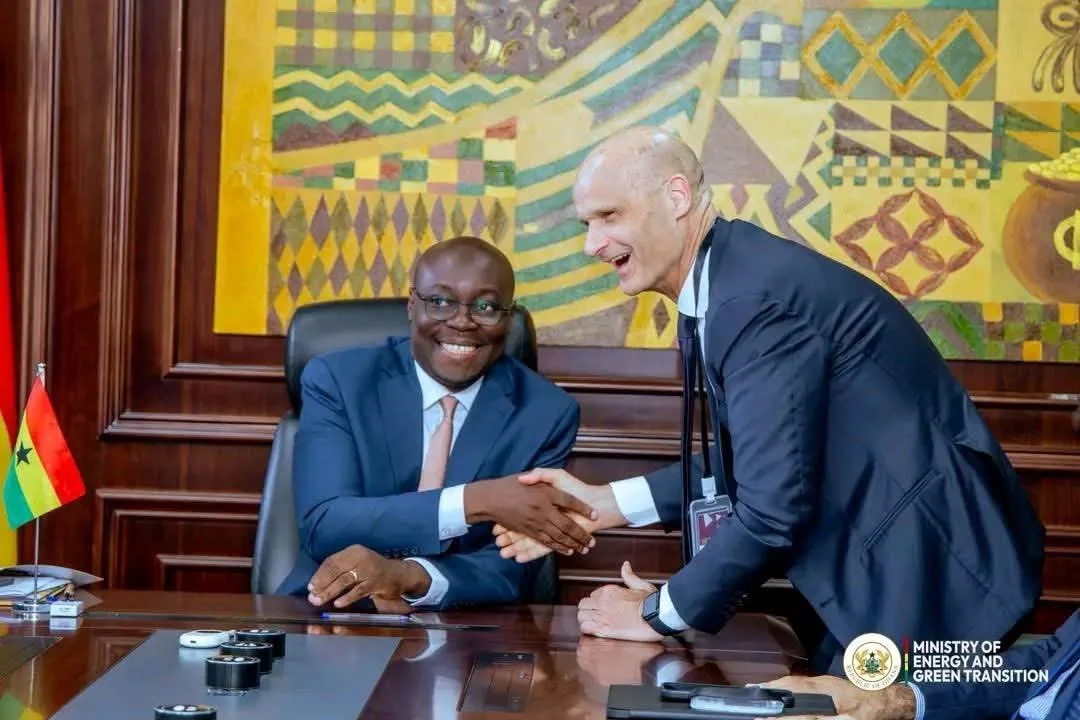
The May 5 term sheet did not emerge in isolation. The first formal step came in September 2025, when Eni, Vitol and GNPC signed a Memorandum of Intent with the Government of Ghana, represented by the Energy and Finance Ministers. That signing, held in the presence of President John Dramani Mahama, targeted increased oil and gas production and new sustainability initiatives.
The MoI committed the parties to evaluate a comprehensive and integrated investment plan aimed at supporting reliable, affordable and lower-impact access to energy. Among the proposed initiatives was a possible increase in OCTP production capacity, using synergies between offshore and onshore upgrades to meet Ghana’s growing domestic energy demand.
The same September agreement also widened the frame beyond Sankofa. It included the evaluation of exploration activities and the potential development of the Eban-Akoma field in Cape Three Points Block 4, following a declaration of commerciality in July 2025. The logic was clear: use existing infrastructure to shorten time to market, reduce development friction and bring additional supply into a system that needs more domestic gas volumes.
Since 2018, according to Eni, the OCTP project has produced more than 107 million barrels of oil and 480 billion standard cubic feet of gas, helping to meet approximately 70% of Ghana’s gas demand for power generation. That makes the new term sheet a high-stakes continuation of an already central supply relationship, not a speculative greenfield bet.
Why the timing matters
Ghana’s power system is leaning harder on gas, even as the supply balance tightens. In 2025, total lean gas supplied from domestic sources and imports rose to 169.49 TBtu from 153.33 TBtu in 2024. Of that, 35.82 TBtu came from the Atuabo Gas Processing Plant using raw gas from Jubilee, 97.16 TBtu came from non-associated gas received at the Eni Offshore Receiving Facility and 36.51 TBtu was imported from Nigeria through the West African Gas Pipeline operated by WAGPCo.
The import line is the political and economic pressure point. Nigeria gas averaged 89.5 million standard cubic feet per day in 2025, above the projected 65 million standard cubic feet per day. In 2026, Ghana expects about 100 million standard cubic feet per day from Nigeria, with N-Gas capable of supplying up to contractual flows of 120 million standard cubic feet per day. LNG imports are not expected in 2026.
That leaves Ghana with a narrow balancing act. Domestic supply is projected to come from Jubilee exports to Atuabo, expected at 120 million standard cubic feet per day, and Sankofa non-associated gas, expected to average 260 million standard cubic feet per day in 2026. But the system is still exposed to outages. A planned 10-day shutdown on the John Agyekum Kufuor FPSO in the third quarter is expected to reduce deliveries to the Offshore Receiving Facility.
The pressure is demand-led. Natural gas demand in 2026 is projected to be dominated by power generation, which is expected to account for more than 85% of total consumption. Under the base case, average gas demand for power generation is estimated at 460 million standard cubic feet per day, while non-power demand is expected to average 36 million standard cubic feet per day.
On paper, the available supply is expected to average roughly 460 million standard cubic feet per day. In practice, the cushion is thin. The 2026 outlook projects supply to meet demand only through September under the base case, before shortfalls emerge in the final quarter as maintenance and rising power demand collide. October is expected to record the largest deficit, estimated at about 163 million standard cubic feet per day.
Under the high-demand scenario, the problem becomes more acute. Deficits appear throughout the year, averaging about 68 million standard cubic feet per day in the first half before worsening to about 137 million standard cubic feet per day in the final quarter. In that context, an OCTP expansion to as much as 350 million standard cubic feet per day by 2028 is not merely an upstream production target. It is a power-sector reliability instrument.
The gas-to-power strategy comes into sharper focus
The term sheet also aligns with the government’s broader upstream push to anchor energy security around domestic production. The Energy Minister and Vice President Prof. Jane Naana Opoku-Agyemang had aligned around a $3.5 billion upstream expansion drive designed to deepen reliance on indigenous gas, cut exposure to imported fuel volatility and lower the cost base of power generation.
That programme included a $1.5 billion Sankofa-focused investment with Eni and Vitol, aimed at deepening the Eban-Akoma fields and strengthening Ghana’s long-term gas-to-power backbone.
The May 5 term sheet gives that strategy a more concrete project pathway. By setting the framework for new infrastructure under OCTP, the government and its partners are moving from broad alignment to execution architecture.
The policy bet is straightforward. More domestic gas can reduce the need for Nigerian imports and emergency liquid-fuel use, improve fuel security for thermal generation and create a more predictable cost structure for power producers. But the benefits will depend on delivery: infrastructure must be financed, constructed, tied into existing offshore and onshore systems and operated reliably enough to matter when the power sector needs it most.
A strategic asset enters its next phase
For Eni, Vitol and GNPC, OCTP has already become one of Ghana’s most important petroleum partnerships. Eni has been present in Ghana since 2009 and operates both the OCTP permit and the Cape Three Points Block 4 exploration licence, placing the company at the centre of Ghana’s offshore gas expansion strategy.
The project’s relevance has already been tested in the power sector. In 2020, according to Eni, OCTP supplied more than 50% of the gas used for thermal power generation in Ghana. The September 2025 MoI later placed the project’s cumulative contribution in sharper perspective, stating that OCTP had produced more than 107 million barrels of oil and 480 billion standard cubic feet of gas since 2018, helping to meet approximately 70% of Ghana’s gas demand for power generation.
The new term sheet now tests whether that asset can be scaled for the next phase of Ghana’s demand curve. The issue is no longer whether Sankofa matters to Ghana’s power system. It is whether Ghana can move fast enough to convert a proven gas base into the additional volumes required for a system whose margins are already narrowing.
By 2028, if the expansion delivers the stated 350 million standard cubic feet per day target, OCTP could move from being a major domestic gas supplier to the central stabiliser of Ghana’s thermal generation fleet. If it slips, the country’s 2026 outlook already shows the alternative: a tighter system, deeper fourth-quarter shortfalls and greater dependence on imports or liquid fuels to keep the lights on.
For now, the term sheet marks a decisive step in Ghana’s gas-to-power reset. The next test will be whether the framework signed in Accra can translate into financing, offshore works, onshore processing upgrades and dependable flow.
