Ghana Moves to Acquire Lukoil’s 38% Stake in Offshore Pecan Block
Ghana is moving to turn Lukoil’s sanctions problem into a strategic upstream opening, pursuing the Russian company’s 38% stake in the Deepwater Tano Cape Three Points block, home to the long-awaited Pecan development. If successful, the acquisition could lift Ghana’s state-linked exposure to one of its most important undeveloped oil assets, giving Accra a bigger claim over future barrels just as sanctions, capital discipline and ultra-deepwater risk reshape the project’s next chapter.
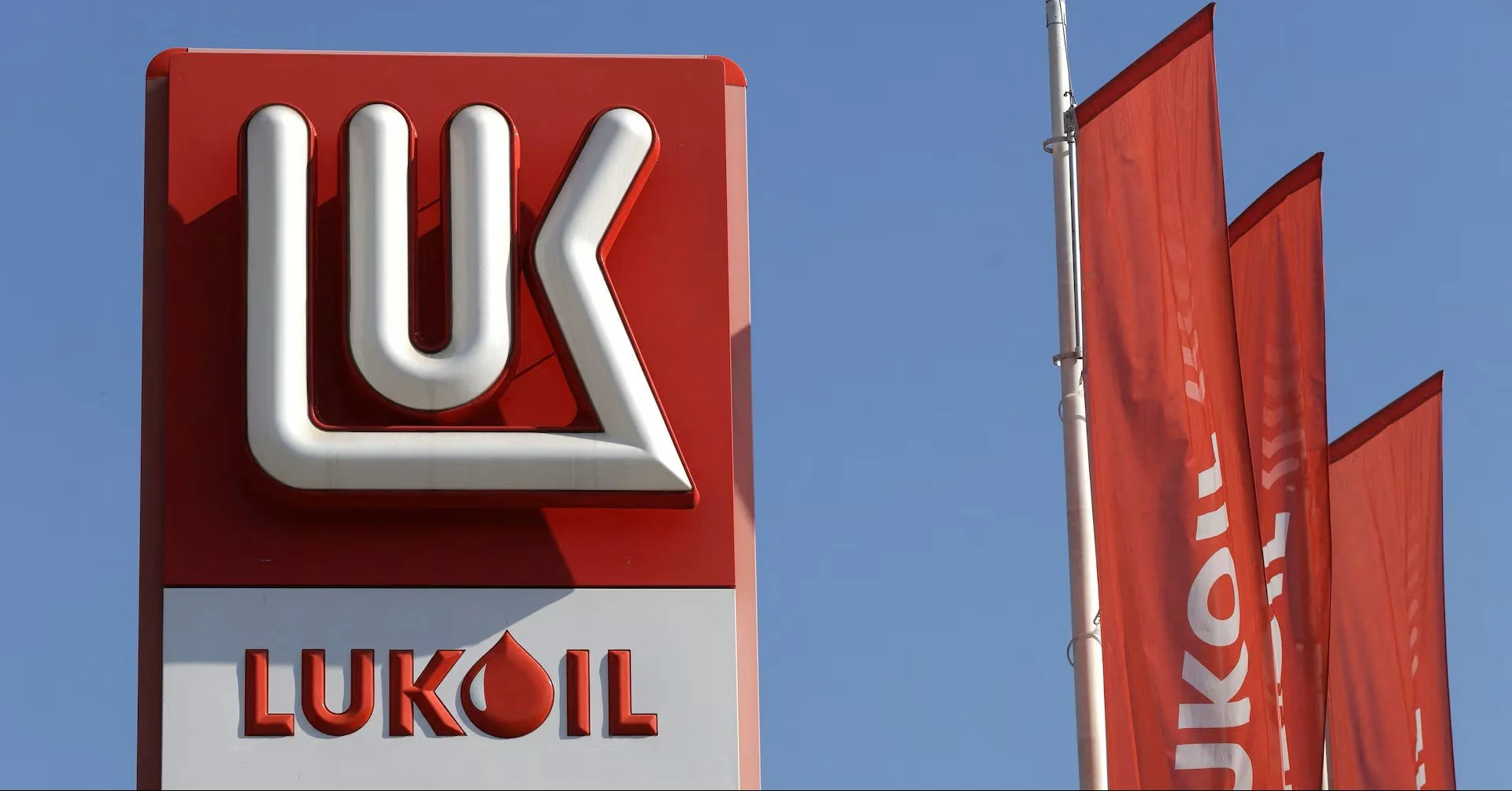
Photo Credit: Reuters
Cape Three Points, Western Region, Ghana | May 19, 2026 -Ghana is taking steps to acquire Russian oil company Lukoil PJSC’s 38% stake in the Deepwater Tano Cape Three Points offshore block, a sanctions-hit interest that sits inside one of the country’s most important undeveloped oil assets and could give the state a far larger claim over future production from the Pecan field.
The move, first reported by Bloomberg, centres on Lukoil’s holding in the DWT/CTP block, where Ghana’s Petroleum Register lists Pecan Energies Ghana Ltd as operator with a 50% interest, Lukoil Overseas Ghana Limited with 38%, Fueltrade Exploration and Production Limited with 2% and Ghana National Petroleum Corporation with 10%. The register also lists the contract area at 2,100 square kilometres, with an effective date of July 19, 2006, a seven-year exploration period and a current pre-development status.
Sanctions Turn an Oil Stake Into a Strategic Opening
The opening for Ghana has been created by sanctions pressure on Lukoil, whose international portfolio has become a forced chessboard for governments, financiers and oil companies weighing commercial opportunity against regulatory risk.
The U.S. Treasury’s Office of Foreign Assets Control sanctioned Lukoil on October 22, 2025, as part of measures aimed at increasing pressure on Russia’s energy sector. The Office of Foreign Assets Control, OFAC’s own guidance says General Licence 131E authorises certain transactions related to negotiations and contingent contracts for the sale of Lukoil International GmbH and its majority-owned subsidiaries, but does not authorise the actual sale, disposition or transfer of those assets without separate approval. The same OFAC guidance states that General Licence 131E expires on May 30, 2026.
Reuters reported on April 29, 2026, that the U.S. Treasury had extended the deadline for talks over Lukoil’s foreign assets from May 1 to May 30, with any final transaction still requiring OFAC approval. That timing gives Ghana a narrow but consequential window to move on an interest that could otherwise be swept into a wider international asset sale.
A Block Two Decades in the Making
The Deepwater Tano Cape Three Points block has travelled a long road from licence award to development planning. Its petroleum agreement became effective in July 2006, placing it in Ghana’s western offshore basin, a region that has become central to the country’s upstream oil story since the Jubilee discovery transformed Ghana from a frontier prospect into a producer. The DWT/CTP block itself remains in pre-development, but its discovered resource base has kept it firmly in the frame for Ghana’s next production cycle.
Lukoil entered the project later in that journey. According to Lukoil’s upstream profile, the company joined the offshore deepwater Tano project in March 2014, with the transaction closing in October 2015. Lukoil says the Tano block covers a little over 2,000 square kilometres, lies offshore Ghana in the Gulf of Guinea, has water depths ranging from 1.6 to 3 kilometres and contains seven hydrocarbon discoveries, comprising five oil fields and two gas fields.
That history matters because Ghana is not chasing an exploration punt. It is weighing a larger position in a discovered, approved but capital-heavy deepwater development whose economics will depend on financing, partner alignment and the timing of final investment decision.
Photo Credit: Tek.fm
Pecan Moves From Approval to the FID Queue
The project’s most important recent milestone came on July 3, 2023, when Pecan Energies announced that Ghanaian authorities had approved the Plan of Development for the DWT/CTP contract area.
The approved development plan begins with the Pecan field in two phases, Phase 1a and Phase 1b. Pecan Energies says those two phases are expected to produce 268 million barrels, with capital expenditure estimated at $3.5 billion. Across all discoveries in the DWT/CTP contract area, the company estimates recoverable resource potential at 550 million barrels.
The Pecan field lies in ultra-deep waters of about 2,400 to 2,700 metres, roughly 115 kilometres offshore Ghana. It is planned around a floating production, storage and offloading vessel and a subsea production system, placing it among the kind of complex offshore developments that can materially lift national output but also demand disciplined capital mobilisation.
AFC’s Entry Reset the Project
The project’s ownership story also shifted before the latest Lukoil development. Africa Finance Corporation completed the acquisition of Pecan Energies, formerly Aker Energy, in April 2023, placing the operator under an African infrastructure finance platform at a decisive point in the project’s development cycle. Pecan Energies now holds the 50% participating interest in the block and has said its owners are working towards a final investment decision following engagement with stakeholders and partners.
That makes Lukoil’s 38% stake especially consequential. It is the largest non-operating interest in the block and, if acquired through the state or a state-backed vehicle, could potentially lift Ghana’s state-linked exposure to as much as 48%, combining the 38% Lukoil stake with GNPC’s existing 10%. That figure would still fall short of majority control, but it would materially change Ghana’s exposure to the project’s risks and future barrels.
Carlyle Deal Adds Another Layer
The Ghana move is unfolding alongside a wider sale process for Lukoil’s international assets. On January 29, 2026, Lukoil announced that it had signed an agreement with U.S. investment firm Carlyle for the sale of Lukoil International GmbH, the subsidiary that owns Lukoil Group’s international assets. The company said the transaction excludes its Kazakhstan assets, is not exclusive and remains subject to conditions including regulatory approvals and OFAC permission.
That distinction is important. Ghana’s interest in the DWT/CTP stake is not occurring in isolation, but inside a sanctions-driven divestment process where Lukoil is negotiating with potential buyers, regulators are controlling the terms and host governments have incentives to protect strategic assets within their jurisdictions.
A Bigger Bet on Ghana’s Upstream Future
For Ghana, the calculation is both strategic and fiscal. Pecan offers scale, discovered resources and an approved development framework at a time when the country needs new upstream volumes to offset natural decline and strengthen long-term petroleum revenues. But a larger stake would also bring larger exposure to development risk, capital calls and the long execution cycle of an ultra-deepwater project.
That is the balance Accra now has to strike. The sanctions against Lukoil have opened a route into an asset Ghana already knows, in a block where the state has been present from the beginning through GNPC’s 10% interest. But the opportunity comes wrapped in legal, financial and geopolitical complexity.
A block that became effective in 2006, drew Lukoil in by 2015 and secured development approval in 2023 has now been pulled into the sanctions politics of 2026. Ghana’s move to acquire the 38% stake is therefore more than a bid for a stranded interest. It is a test of whether the country can use a geopolitical disruption to deepen its grip on future barrels, without inheriting more risk than the asset is worth.
