
TotalEnergies’ 60 MT LNG Ambition: How One Company Is Redrawing the Global Gas Map
TotalEnergies’ push to lift its LNG portfolio to 60 million tonnes a year by 2030 is more than a growth target. It is a bid for influence over the next gas-trading order, stretching from US liquefaction plants and Qatari megaprojects to Mozambique’s restart and Europe’s expanding import terminals. But as Canada, Cheniere and new European FSRU projects crowd the same Atlantic Basin corridor, TotalEnergies’ LNG wager is running into a sharper reality: scale may win market access, but sovereign risk, cost disputes and infrastructure bottlenecks will decide how much of that ambition becomes durable power.
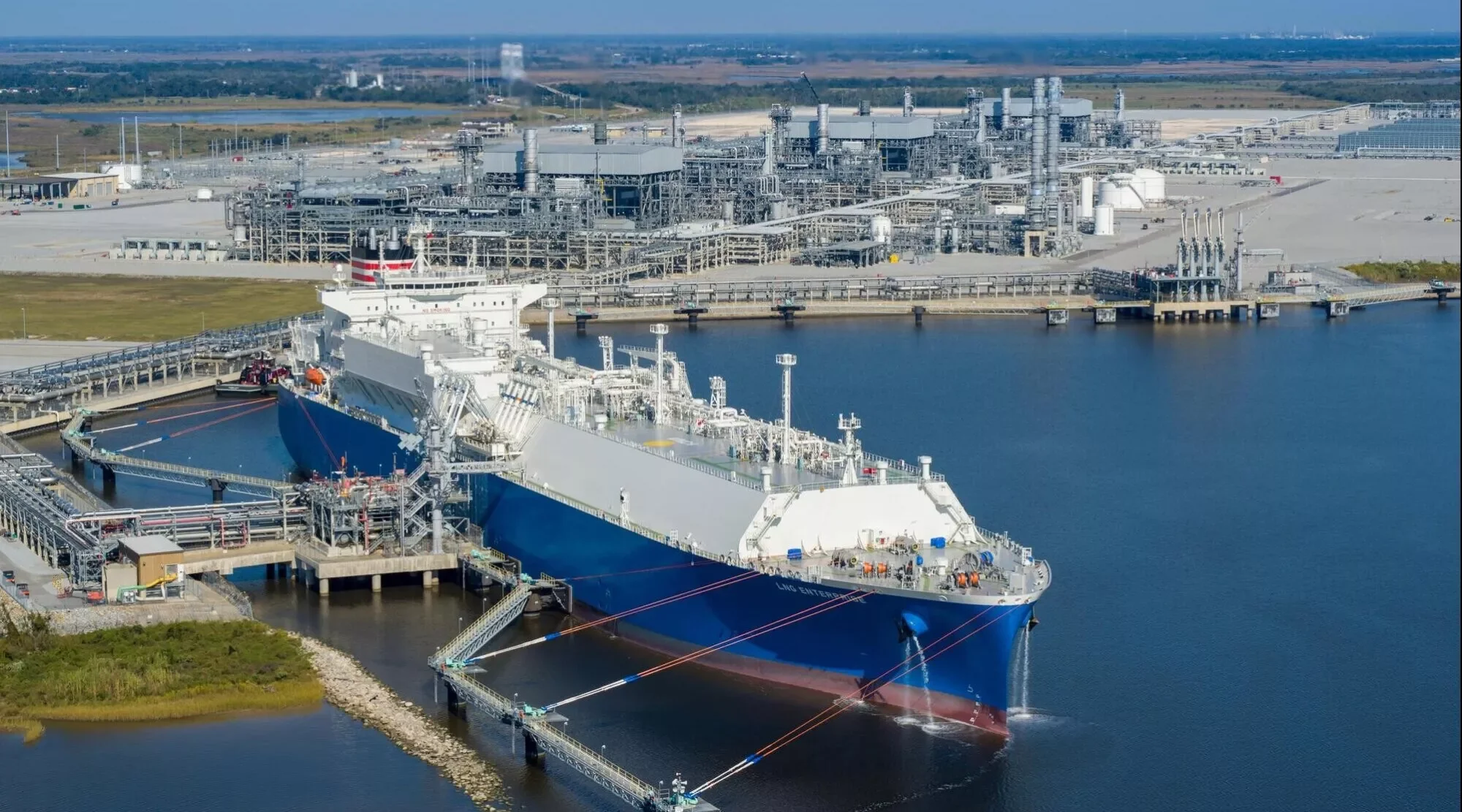
Paris, France | June 2, 2026 - TotalEnergies is making a 60-million-tonne bet on the next global gas cycle, and the timing is no accident. By 2030, the French major wants its LNG sales portfolio to reach about 60 million tonnes a year, a 50% increase from 2025 levels, positioning it to preserve roughly a tenth of the global LNG market while deepening its ability to arbitrage between European and Asian demand. That target, set out in the company’s 2025 Strategy & Outlook materials, is not just a corporate growth marker. It is a map of where the gas trade is moving next: the United States, Qatar, Mozambique, Mexico, Canada and a widening chain of European import terminals.
The company enters that race from a position of scale. TotalEnergies describes itself as an integrated LNG player across production, transport, regasification access in Europe, trading and bunkering. Its own energy-transition materials say LNG volumes from equity and long-term third-party purchases, excluding Russia after 2027, are expected to grow by 50% between 2025 and 2030. This is not a company trying to enter LNG. It is one trying to enlarge its influence over how flexible LNG is produced, contracted, shipped and priced.
A portfolio built for a looser LNG market
The ambition lands just as the LNG market is preparing for its largest supply wave in years. The International Energy Agency’s Gas 2025 Outlook says the United States and Qatar together account for 70% of the roughly 300 billion cubic metres a year of new LNG liquefaction capacity expected to come online globally by 2030. In a tight LNG market, scarcity rewards almost every producer. In a looser one, the advantage shifts to companies with scale, destination flexibility, portfolio diversity, shipping access and trading capability.
That is the market TotalEnergies is positioning for. Its 60 Mtpa plan is therefore less a simple volume chase than a portfolio thesis: the company wants enough supply diversity to balance Atlantic and Pacific demand, enough contractual depth to serve long-term buyers and enough flexibility to redirect cargoes when Europe or Asia becomes the premium market.
The recent history of LNG trade shows why that matters. The International Gas Union’s 2025 World LNG Report said global LNG trade rose 2.4% in 2024 to 411.24 million tonnes, connecting 22 exporting markets with 48 importing markets. But Europe’s LNG imports fell by 21.22 million tonnes to 100.07 million tonnes that year, pulled down by high storage levels, weak demand and steady pipeline flows. Europe, in other words, is not a one-way demand story. It is a swing market, and the companies with flexible portfolios are the ones best placed to monetise that volatility.
The Atlantic Basin gets crowded
The competitive field around TotalEnergies is widening quickly. On May 28, Cheniere Energy Partners signed a lump-sum, turnkey engineering, procurement and construction contract with Bechtel for the first phase of the Sabine Pass Expansion Project and issued a limited notice to proceed. The first phase is expected to add more than 6 mtpa of LNG production capacity, while the broader expansion has been framed at up to about 20 mtpa of peak production capacity, subject to regulatory approvals, financing and a final investment decision.
That matters because the United States is no longer merely a growth source in the LNG trade. It is the scale machine around which much of the next supply cycle is being built. Cheniere, already one of the dominant US LNG exporters, is adding capacity at the same time TotalEnergies is presenting the US as one of the main growth theatres in its own LNG map. Bechtel’s role also gives the expansion industrial weight. This is not a new contractor entering cold; it is the EPC partner tied to Sabine Pass’ earlier transformation into a major export platform.
Canada is now placing its own marker on Europe’s future LNG procurement map. SEFE, Germany’s state-owned energy company, and Canada’s Ksi Lisims LNG have signed a Heads of Agreement under which SEFE would purchase one million tonnes per annum of LNG on a free-on-board basis, with deliveries expected by the early 2030s, for up to 20 years. Natural Resources Canada framed the agreement as a milestone for Ksi Lisims as it moves toward a final investment decision, construction and production.
That distinction matters. Canada is not suddenly flowing LNG into Europe today. This is a future-dated supply-positioning move, and Reuters has reported the arrangement as non-binding. Even so, it is strategically significant. Europe’s long-term buyers are not waiting for one supplier bloc to dominate. They are stitching together a portfolio of US, Qatari, Canadian, African and Mediterranean options, looking for security not in a single route but in redundancy.
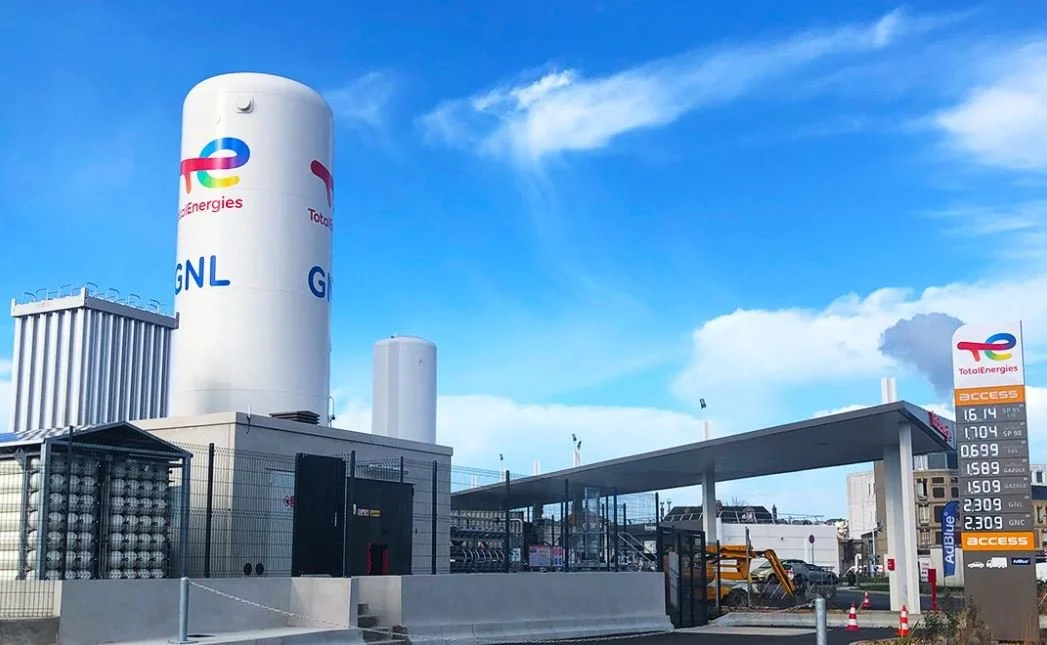
Photo Credit: LNGPrime
Europe builds the receiving end
The European side of the map is changing just as quickly as the supply side. In the Netherlands, VTTI and Höegh Evi are advancing Zeeland Energy Terminal, a planned LNG import terminal at Vlissingen-Oost that would add another import gateway to a market currently served by terminals at Maasvlakte in Rotterdam and Eemshaven in Groningen. The project’s own materials say Zeeland would be the first privately operated LNG import terminal in the Netherlands.
Höegh Evi’s January open-season announcement placed Zeeland’s intended role in the late-2029 supply-security window, with planned send-out capacity of about 7.5 bcm a year and at least 180,000 cubic metres of LNG storage. That timing aligns closely with the early-2030s wave of new LNG supply from North America, Qatar and Africa. It also reinforces a central point: Europe’s LNG strategy is not only about signing supply contracts. It is about owning enough import slots, storage and regasification flexibility to turn those contracts into usable energy.
Southeast Europe is moving along the same logic. Mercuria and Motor Oil Hellas signed a memorandum of understanding in May to cooperate on LNG supply through the Dioriga Gas floating storage and regasification unit in Greece’s Saronic Gulf. The framework covers regasification capacity reservation, long-term LNG supply by Mercuria to Motor Oil Hellas and the commercial arrangements needed to bring the project into operation.
That makes the Dioriga Gas FSRU more than a local Greek infrastructure story. It fits into Europe’s broader attempt to create multiple LNG gateways after the shock of reduced Russian pipeline flows. TotalEnergies’ portfolio may be global, but its commercial value depends heavily on whether Europe can keep expanding the receiving architecture needed to absorb, redirect and price LNG cargoes when the market turns.
Mozambique: the growth theatre with a governance test
Africa is central to the ambition, and Mozambique is the clearest test case. TotalEnergies announced in January 2026 that Mozambique LNG had fully restarted onshore and offshore activities after the consortium lifted force majeure on November 7, 2025. The company said more than 4,000 workers had been mobilised, more than 3,000 of them Mozambican nationals, while first LNG was expected in 2029 and project progress stood at about 40%.
The chronology is essential. Mozambique LNG began with major offshore gas discoveries in 2010 and later became one of Africa’s largest LNG developments, built around offshore gas from Area 1 and an onshore liquefaction complex at Afungi. The project’s official materials describe it as a two-train liquefaction development based on approximately 65 trillion cubic feet of recoverable natural gas, with expansion potential of up to 43 mtpa.
But Mozambique also shows the sovereign-risk edge of TotalEnergies’ LNG map. Bloomberg Tax reported in late May that Mozambique is disputing roughly US$2 billion in costs that TotalEnergies and its partners say were incurred during the project’s years-long stoppage. Reuters had earlier reported that TotalEnergies told Mozambique that the LNG project’s costs had risen by US$4.5 billion due to the four-year suspension. Both points should be read with attribution: they are reported claims around a live fiscal and contractual issue, not a settled public accounting position.
That dispute should not be treated as an accounting footnote. In a tax- and cost-recovery-sensitive LNG project, the treatment of delay-related expenditure determines how quickly investors recover capital and how soon the host government sees larger fiscal flows. For TotalEnergies, Mozambique is a key African growth theatre. For Mozambique, the same project is a national wager on revenue and development. The friction between those two positions is precisely where large LNG projects become political as well as commercial.
Canada, Congo and the new scramble for Europe
The broader Europe-facing contest is not limited to the companies in TotalEnergies’ portfolio. Canada’s Ksi Lisims-SEFE agreement shows how new Atlantic Basin suppliers are using long-term offtake arrangements to enter Europe’s strategic procurement conversation. US developers are expanding liquefaction capacity. Greek and Dutch terminal developers are adding receiving optionality. African gas, from Mozambique to the Congo, is being framed increasingly as part of Europe’s diversification story.
That is the deeper significance of TotalEnergies’ 60 Mtpa target. The company is not operating in an empty field. It is expanding into a market where host governments are more assertive, European buyers are more security-conscious, traders are more central to infrastructure-backed supply, and new exporters are trying to turn geopolitical disruption into commercial entry.
The transition-era gas wager
TotalEnergies’ LNG strategy rests on a clear corporate conviction: gas will remain central to energy security and to the company’s transition-era hydrocarbon portfolio. That thesis is plausible but not risk-free. LNG demand growth remains contested; Europe’s import appetite can rise or fall sharply with storage, weather and industrial demand, and the coming supply wave could compress margins for projects without cost discipline or destination flexibility.
For now, TotalEnergies is betting that scale will be its protection. Sixty million tonnes a year would give it more cargoes to trade, more geographies to balance and more leverage across a market moving from scarcity toward optionality. But the same map that makes the strategy compelling also exposes its vulnerabilities. In the United States, competitors are adding capacity. In Canada, new exporters are courting European buyers. In Europe, terminals are multiplying, but demand is volatile. In Mozambique, the company’s African growth pillar is already entangled in security history and fiscal negotiations.
The global LNG map is being redrawn. TotalEnergies wants to be one of its cartographers. The harder question, as 2030 approaches, is whether the company can turn a 60 Mtpa ambition into profitable control in a market where every buyer wants flexibility, every host government wants a larger share, and every new exporter wants a route into Europe.
