Ghana’s Crude Test: TOR, Trust and the Refining Reset
Ghana’s refine-at-home ambition is about to meet its hardest test: a crude run at TOR. President Mahama’s pledge to process Ghanaian offshore crude at the state-owned refinery lands just as TOR is trying to turn recovery into credibility, backed by a Bonga crude cargo, audited accounts, SIGA’s commendation and renewed leadership recognition. The question now is whether Ghana’s legacy refinery can become more than a symbol of industrial policy and emerge as a bankable instrument for value addition, supply security and downstream confidence.
London, UK | June 2, 2026 - Ghana’s next downstream test will not be announced in a policy paper. It will arrive as crude in a refinery.
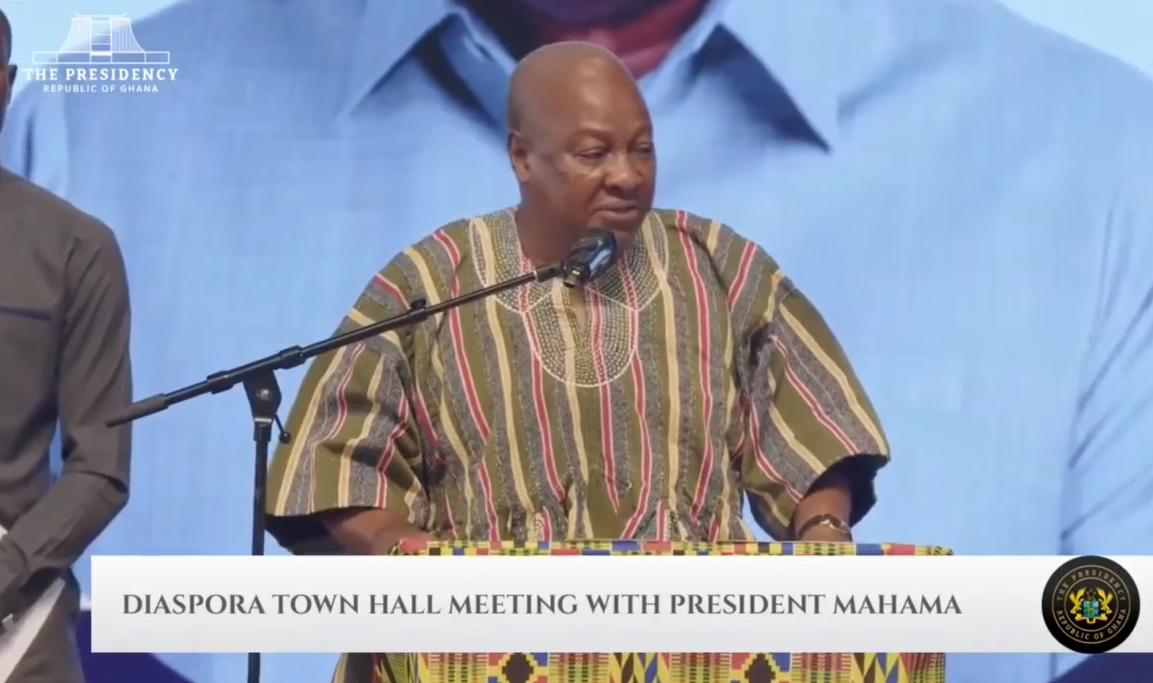
President John Dramani Mahama has put Tema Oil Refinery at the centre of Ghana’s next value-addition test, saying the country is preparing to send a parcel of Ghanaian crude from its own oil fields to TOR for processing in June. In a clip from the London diaspora engagement, Mahama said Ghana was “about to start to refine our own crude,” framing the move as part of a broader push to stop exporting raw resources while jobs and industrial value are created elsewhere. Jubilee House streamed the wider town hall, while the circulating transcript of the relevant segment captures the refining pledge directly.
That makes TOR’s recovery more than an internal turnaround story. It is now a national credibility test. Can a refinery that spent years battling operational dormancy, financial opacity and balance-sheet stress become a bankable instrument of Ghana’s downstream policy? The answer will matter well beyond Tema.
The State Refinery Returns to the Centre
TOR is not simply another plant in Ghana’s downstream landscape. Commissioned in September 1963 as the Ghanaian Italian Petroleum Company, the refinery is Ghana’s legacy state-owned refining asset and the public institution through which the government’s immediate refine-at-home ambition must now be tested. TOR describes itself as the nation’s first value-added investment after the Akosombo Dam and says its current goal is to rank among the sub-region’s most productive refineries.
That legacy is what gives Mahama’s June crude-processing pledge its political and commercial weight. Ghana has other private refining capacity in the downstream ecosystem, but TOR remains the state asset carrying the immediate policy burden. If it succeeds, the signal is not merely that Ghana can process a cargo of crude. It is that a legacy public refinery can be made operationally useful again.
From Restart to Crude Continuity
The recovery arc began before the latest policy signal. In December 2025, TOR announced that it had resumed refining operations after completing major turnaround maintenance and securing the necessary regulatory clearances. TOR framed the restart as part of its revitalisation journey, marking the refinery’s return from prolonged operational weakness into phased crude-processing activity.
PetroPulse has already tracked the deeper mechanics of that recovery, including TOR’s Crude Distillation Unit turnaround maintenance, National Petroleum Authority clearance and initial operations at about 28,000 barrels per stream day as part of a phased movement towards higher utilisation.
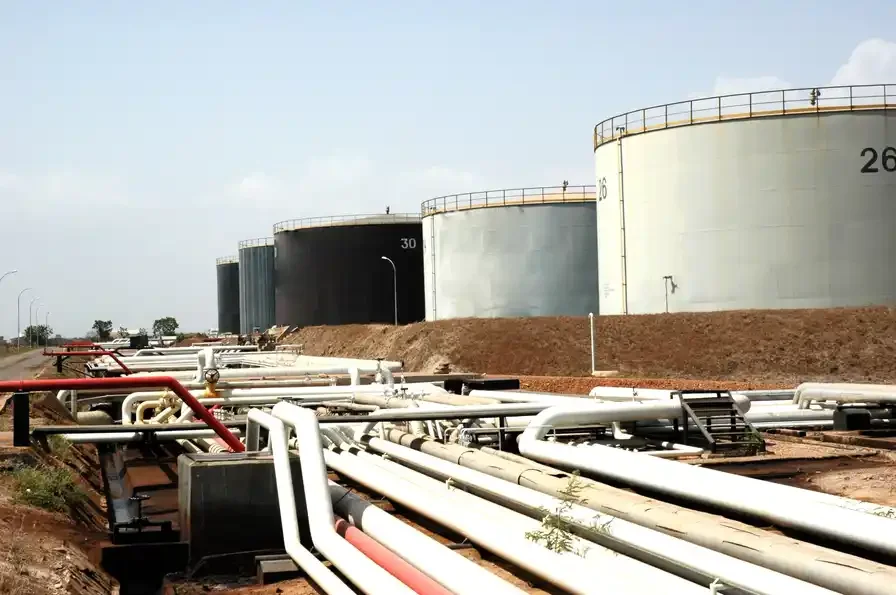
Then came the cargo that gave the restart a physical marker. On May 27, TOR received approximately one million barrels of Bonga crude aboard the MT Cap Felix as part of its refinery revitalisation and crude-processing programme. The cargo was purchased from Shell and supplied through TOR’s tolling partner, Fujeirah/Triangle Commodities Trading, with the refinery saying the crude would be processed into LPG, gasoline, diesel, kerosene, ATK and fuel oil for domestic and regional markets.
The Bonga crude receipt matters because it shifts the conversation from intent to throughput. A refinery can be rehabilitated on paper, but its real test is feedstock, processing stability, product output, evacuation and repeatability. TOR’s receipt of a large crude cargo after its restart therefore becomes the bridge between maintenance success and operational continuity.
Why the Timing Matters
The timing also gives the President’s pledge sharper market meaning. Ghana’s refine-at-home push is unfolding against a global oil market still distorted by Middle East tension and disruptions around the Strait of Hormuz. The IEA’s April Oil Market Report said global crude throughputs were struggling with feedstock disruptions and infrastructure damage, with Middle East and feedstock-constrained Asian refineries cutting runs by around 6 million barrels per day, tightening product markets and temporarily lifting refining margins as middle-distillate cracks reached all-time highs.
The pressure did not disappear in May. The IEA’s May report forecast refinery crude throughputs to plunge by 4.5 million barrels per day in the second quarter of 2026, with margins remaining historically high and new trade flows emerging to compensate for lost Gulf product exports. (IEA)
For a country still exposed to imported refined petroleum products, those disruptions travel through cargo costs, freight, margins and foreign exchange before they reach the domestic market. Domestic refining will not insulate Ghana from global crude prices. It cannot make Ghana immune to Brent, freight or currency pressure. But a functional TOR could give the state a stronger supply-security instrument when imported-product markets tighten, especially if crude availability, refinery reliability and pricing discipline can be aligned.
The Governance Repair
If the Bonga cargo is the operational story, the audited accounts are the governance story.
SIGA’s June 1 statement commended TOR’s Board, Management and staff for completing and submitting outstanding audited financial statements covering 2019, 2020, 2021, 2022, 2023, 2024 and 2025. In a state-owned enterprise where years of delayed financial reporting had weakened transparency, the submission marks a significant compliance and accountability milestone.
The numbers gave the commendation its commercial bite. TOR recorded GHS 1.24 billion in Profit Before Tax in 2025, its first profit in ten years. SIGA also cited strong revenue growth, the refinery’s best financial performance since 2019, a foreign-exchange gain of GHS 1.3 billion from prudent financial and forex management strategies, associate profit growth to GHS 155 million, reduced trade and other payables from GHS 7.1 billion in 2024 to GHS 5 billion in 2025, improved receivables management, a fall in receivable days from 1,099 to 652 days and a notable decline in total debt levels between 2024 and 2025.
That is not mere accounting housekeeping. In downstream finance, audited statements are the paper infrastructure of trust. A refinery seeking crude supply, tolling partnerships, trade credit and investment needs more than operational enthusiasm. It must be legible to financiers, regulators, suppliers and counterparties. Audited accounts begin to repair the informational gap that keeps counterparties guessing about a state asset’s real financial position.
SIGA’s commendation was not a blind celebration. The Authority also pointed to continuing liquidity pressures, retained deficits and the need for long-term balance-sheet restructuring. That caveat matters. TOR’s turnaround is not complete because accounts have been filed or because one year produced a profit. But the combination of audited statements, improving financial indicators, and crude-processing activity gives the recovery story an institutional footing it previously lacked.
Leadership, Recognition and the Public Turnaround Narrative
The recovery narrative has also acquired a leadership signal. On May 28, TOR said its Managing Director, Edmond Kombat, had been honoured at the Ghana CEO Summit 2026 with the “Outstanding Public Leadership Excellence in the Public Sector” award, recognising his leadership, strategic vision and commitment to operational excellence and transformation at the refinery.
Refineries are turned around by feedstock, maintenance discipline, margins, product evacuation, governance and balance-sheet repair. But the timing is instructive. Coming after the operational restart, the Bonga crude receipt and the audited-account milestone, the recognition adds to the public validation surrounding TOR’s comeback attempt.
This is the delicate part of the story: TOR is no longer invisible. Its performance is now being watched across government, industry and the investor community. That visibility can help mobilise support, but it also raises the standard of proof. A successful turnaround will need to show not only that TOR can restart, but that it can repeat, finance and govern the restart.

The Larger Capacity Ambition
TOR’s June crude run is therefore not Ghana’s entire downstream strategy. It is the near-term credibility test inside a much larger industrial agenda.
Beyond TOR, Ghana is pursuing a longer-term petroleum and petrochemicals hub at Jomoro through the Petroleum Hub Development Corporation, the state vehicle created to develop integrated refining, petrochemical, storage and port infrastructure for the sub-region.
The Petroleum Hub Development Corporation says the planned hub will include three refineries with a total minimum capacity of 900,000 barrels per day, each designed for 300,000 barrels per day and expandable to 500,000 barrels per day between 2030 and 2035. PHDC also lists petrochemical plants, storage tanks, jetties and port infrastructure as part of the hub’s architecture.
That context matters because TOR is the immediate asset, while PHDC is the long-range scale play. Ghana’s downstream strategy is not only about reviving an old plant. It is about proving that the country can manage the governance, infrastructure and commercial discipline required to become a regional petroleum and petrochemical centre.
Investor Confidence and the State-Asset Test
Mahama’s London refinery signal also sits inside a broader investor-confidence narrative. The Ghana High Commission in the United Kingdom announced the Ghana–UK Investment Summit 2026 as a two-day forum at Raffles London on the theme “Restoring Investor Confidence to Unlock Opportunities and Shared Prosperity,” bringing together government officials, institutional investors, industry leaders and development-finance actors. The summit was preceded by Mahama’s May 31 diaspora town hall, where the crude-refining pledge was made.
That framing is useful because the downstream story is ultimately an investment story. A refinery that cannot publish accounts struggles to attract confidence. A refinery that cannot secure crude cannot run. A refinery that cannot run cannot meaningfully support import substitution, price stability or industrial value addition.
The private-sector prism points in the same direction. AmCham Ghana’s Energy, Extractive and Infrastructure Committee highlighted renewed optimism around oil and gas investment activity following government interventions aimed at restoring investor confidence, while also flagging concerns around production sustainability, infrastructure planning, delayed payments, power-sector inefficiencies and the need for stable regulatory and contractual frameworks.
That is the environment into which TOR is trying to re-enter. Ghana’s downstream ambition will need credible state institutions, regulatory predictability, bankable infrastructure and commercial discipline. TOR’s audited accounts and SIGA commendation are therefore not side notes; they are part of the investor-confidence architecture.
The Test Ahead
The story now turns on execution. Ghana’s plan to process its own crude at TOR gives the state a near-term instrument for value addition. TOR’s restart and Bonga cargo show that crude-processing activity is no longer merely aspirational. SIGA’s commendation shows that the refinery is beginning to repair its governance record. PHDC’s petroleum hub shows that Ghana’s downstream ambitions extend far beyond Tema.
Still, the sequence is stronger than it has been in years: policy direction from the Presidency, operational evidence from TOR, governance validation from SIGA, leadership recognition from the Ghana CEO Summit and a larger refining-capacity horizon through PHDC. The convergence gives Ghana’s refine-at-home push a more credible architecture.
The hard question is whether that architecture can survive contact with crude markets, refinery margins, debt, feedstock logistics and political cycles. For now, TOR has moved from dormancy to scrutiny. Ghana’s legacy state refinery has been handed the country’s downstream credibility test. The next proof will be in the run.
