
Cabinda Starts Fuel Exports, Putting Angola’s Refinery Ambition to Its First Real Test
Angola’s Cabinda Refinery has begun supplying the domestic market and exporting fuel, turning a long-delayed project into a live test of the country’s push to capture more value from its crude. Built after decades of import dependence and coming in the wake of Angola’s OPEC exit, the refinery now stands as both an energy-security asset and a signal of Africa’s wider struggle to break the crude-export, fuel-import cycle.
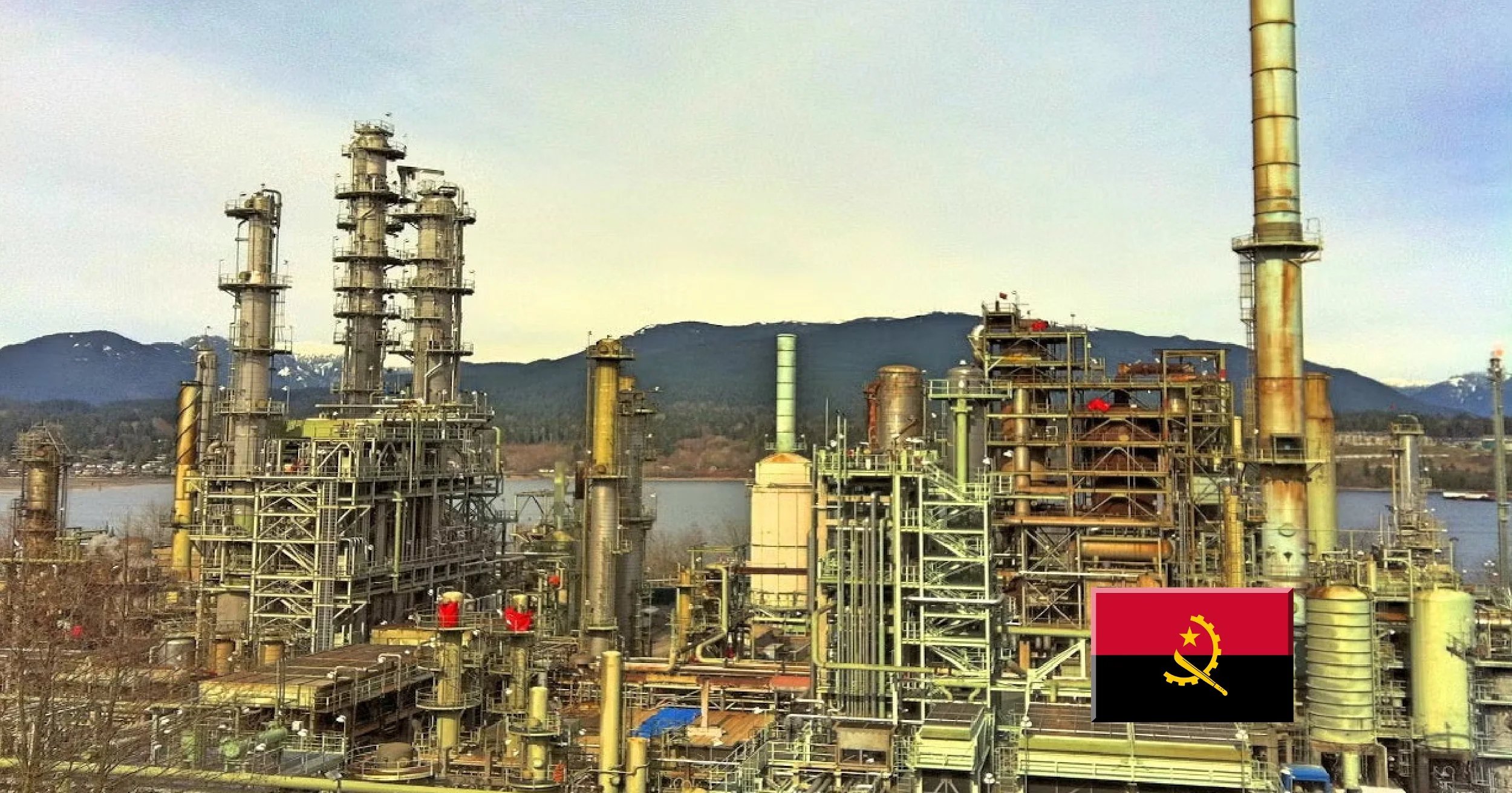
Photo Credit: Offshore Technology
Cabinda, Angola | May 8, 2026 - Angola’s Cabinda Refinery has begun exporting fuel and supplying the domestic market, converting a long-delayed industrial project into a working test of the country’s push to refine more of its crude at home.
The refinery, built in Cabinda province and majority-owned by Gemcorp Capital, is the first refinery constructed in Angola since independence. Its first phase has the capacity to process 30,000 barrels of crude per day, with diesel now being supplied into the Angolan market while naphtha and heavy fuel oil are being exported to international buyers. Gemcorp owns 90 per cent of the facility, while state oil company Sonangol holds the remaining 10 per cent and supplies crude feedstock.
Developed at a cost of more than $470 million, Cabinda is designed to ease one of Angola’s most persistent energy contradictions: a major crude producer that still imports most of the refined products used by its economy. The refinery’s first phase is expected to meet about 5 to 10 per cent of national fuel demand, with a second phase planned to double capacity to 60,000 barrels per day.
Angola’s Old Crude Problem
For decades, Angola’s oil economy has been defined by a familiar African imbalance. The country pumps crude, exports a large share of it, then buys back refined fuel at prices shaped by foreign refining capacity, freight costs, currency pressure and international supply disruptions.
Before Cabinda, Angola operated only one refinery, located in Luanda and run by Sonangol. That left domestic fuel security heavily exposed to imports. Reuters reported in September 2025 that Angola imported around 72 per cent of its domestic fuel consumption, equivalent to about 3.3 million metric tonnes of refined petroleum products annually, according to Sonangol.
Cabinda does not eliminate that exposure. But it begins to alter it. Its first cargoes mark a shift from refinery ambition to refinery operation, and from policy language to physical supply.
That matters beyond Angola. Across Africa, the refining deficit remains one of the continent’s most expensive structural weaknesses. According to the African Petroleum Producers’ Organisation, Africa exports about three-quarters of its crude oil while importing nearly 70 per cent of refined petroleum products, an imbalance estimated to cost the continent about $50 billion annually.

The OPEC Break That Framed Angola’s Reset
The Cabinda milestone also lands in the shadow of Angola’s break with OPEC.
In December 2023, ahead of the 2024 quota year, Angola announced it was leaving the producers’ group after a months-long dispute over its output target. S&P Global reported that Angola’s 2024 quota had been cut from 1.46 million barrels per day to 1.11 million barrels per day, below its November 2023 production of 1.13 million barrels per day, according to the Platts OPEC Survey.
The disagreement had been building for months. Angola had been under pressure to accept a lower production target that reflected declining capacity. The country was given time to demonstrate higher production potential to external consultancies and analysts from S&P Global, but ultimately failed to avert the quota cut.
Oil Minister Diamantino Azevedo framed the withdrawal as a defence of national interest. “We feel that in this Angola currently gains nothing by remaining in the organisation and, in defence of its interests, decided to leave,” he said in a statement reported by S&P Global. He added that the decision was “not a thoughtless, untimely decision.”
Cabinda does not directly solve the upstream problem that sat behind the OPEC dispute. Angola still faces the harder task of sustaining crude production after years of pressure on mature fields. But the refinery gives the country another lever in its petroleum strategy. If crude output is one side of sovereignty, refining capacity is the other.
From Concept to Commissioning
The Cabinda Refinery was first introduced in 2019 and then moved through a prolonged build-out shaped by financing constraints, execution complexity, cost pressure and commissioning delays. PetroPulse previously reported that the project followed a six-year trajectory from concept to commissioning, with its first phase structured around a 30,000-barrel-per-day modular refinery.
By July 2024, the project was already being presented as the most advanced of Angola’s planned new refining assets. Reuters reported then that Cabinda’s first phase was expected to produce naphtha, jet fuel, diesel and heavy fuel oil, with naphtha and heavy fuel oil intended for export markets because Angola had limited domestic use for those streams. The same report put the first-phase cost at $473 million and said the expansion was expected to double capacity to 60,000 barrels per day.
The timetable then shifted. In October 2024, Reuters reported that Gemcorp expected the refinery to start supplying the local market by March or April 2025, after commissioning in early 2025. But the project later moved beyond that timeline, with final testing and safety validation extending the route to commercial supply.
The decisive public milestone came in September 2025, when Angola’s government inaugurated the refinery and said first output was expected by year-end. The plant received its first crude shipment from Malongo that month and entered its final operational phase.
By March 2026, the refinery was targeting supply before the second quarter after the prolonged build-out. The latest movement into domestic diesel supply and export cargoes now closes that commissioning chapter and opens the commercial one.
First Cargoes, Bigger Questions
The first-phase numbers are modest by global refining standards. Cabinda’s 30,000-barrel-per-day capacity is small beside Africa’s new mega-refining projects and far below the scale of the plants that dominate global products trade. But in Angola’s domestic context, the refinery is strategically important because it creates local conversion capacity where import dependence has long carried fiscal and supply-security costs.
The product split also matters. Diesel is being supplied locally, supporting the domestic market, while naphtha and heavy fuel oil are being exported. That makes Cabinda both a fuel-security asset and an export-oriented refining platform, albeit at early-stage scale.
The next test is expansion. The second phase is expected to lift capacity to 60,000 barrels per day, and the expansion could require about $700 million in additional capital.
That will determine whether Cabinda remains a useful but limited supply buffer, or becomes a more consequential pillar of Angola’s downstream system.
A Smaller Refinery With a Larger Signal
Cabinda’s start-up does not end Angola’s fuel-import problem. It does not restore upstream production capacity, erase subsidy pressures or make the country self-sufficient in refined products. But it does move Angola from aspiration to execution in one important area of oil-sector reform.
After leaving OPEC over a quota dispute, Angola has been forced to define its petroleum interests outside the familiar comfort of cartel membership. The answer cannot be only higher crude output. It must also include greater domestic value capture, better fuel-security resilience and a stronger downstream industrial base.
Cabinda is the first proof point in that argument. It is small, late and still unfinished in its full ambition. But it is now supplying fuel, exporting products and giving Angola something it has lacked for decades: a new refinery built after independence and finally operating inside the country’s own energy-security equation
