
Eni’s CCS Bet Draws £500m as Rivals Retreat From Transition Projects
Eni and BlackRock’s GIP have pulled more than £500 million into a CCS platform anchored by Liverpool Bay, even as Shell’s Rotterdam biofuels retreat and reported pressure around ConocoPhillips’ Refugio project show a tougher transition-finance market. The signal is clear: capital is still available for decarbonisation, but only where projects look bankable, contracted and built to scale.
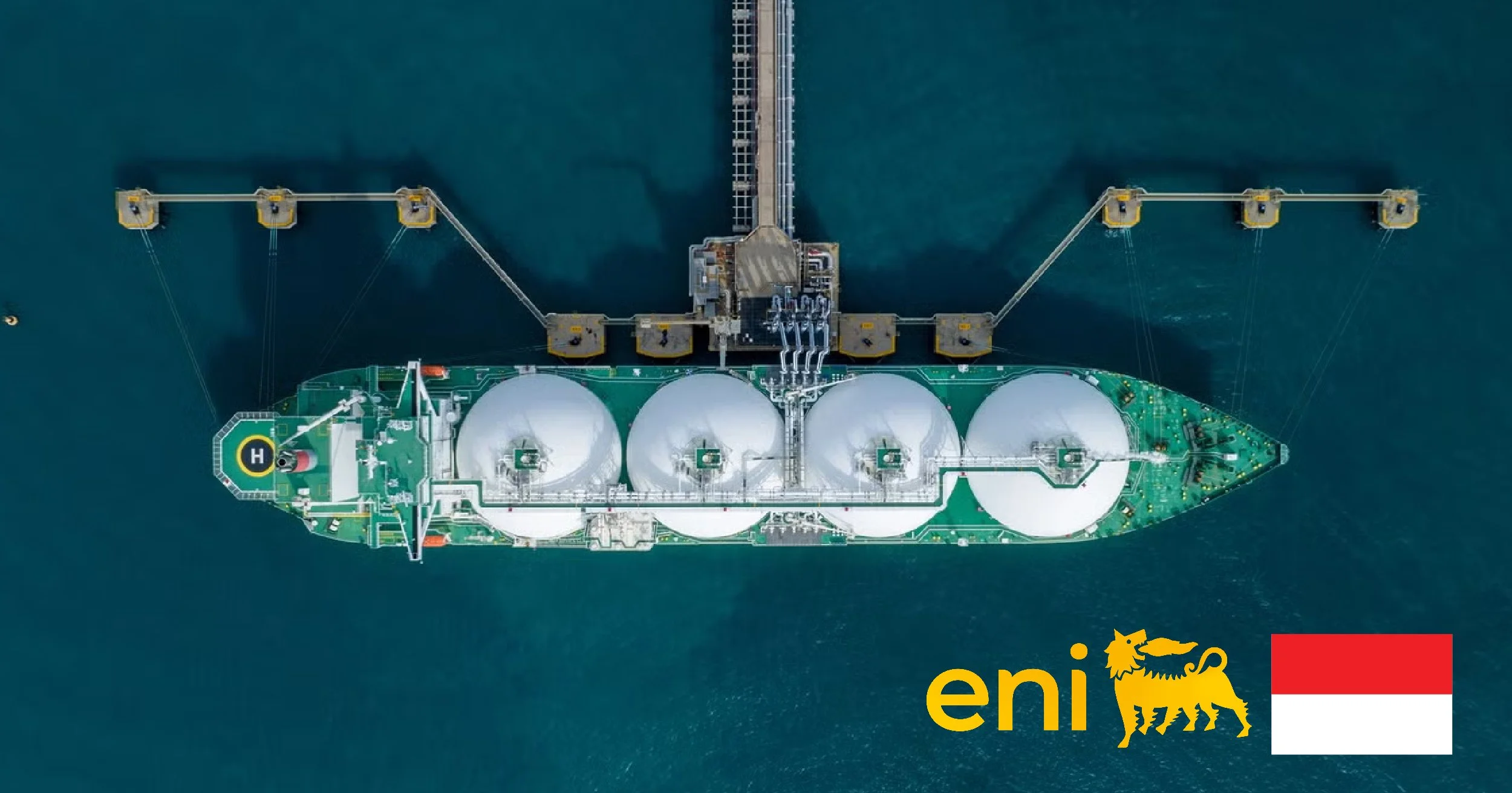
London, UK | May 27, 2026 - Eni and BlackRock’s Global Infrastructure Partners have pulled more than £500 million of fresh lender capital into their carbon-capture platform, sharpening a market split in which bankable, infrastructure-style decarbonisation assets are still attracting serious money while less competitive low-carbon projects are being paused, scrapped or put on the block.
The new financing facility, secured by Eni CCUS Holding from 13 international lenders, comes only months after Eni closed the sale of a 49.99% joint-control stake in the UK-based company to Global Infrastructure Partners, the infrastructure investor that is now part of BlackRock. It is a notable vote of confidence in carbon capture and storage at a moment when the energy transition’s capital markets are becoming more discriminating, rewarding projects with contracted infrastructure logic and punishing those exposed to weak demand, high completion costs or immature offtake structures.
From Satellite Vehicle to Financeable Platform
The chronology matters. In August 2025, Eni signed the agreement for GIP to enter Eni CCUS Holding’s share capital, folding its carbon capture, utilisation and storage interests into a dedicated vehicle built around Liverpool Bay and Bacton in the United Kingdom, L10-CCS in the Netherlands and a right to acquire Eni’s 50% stake in Ravenna CCS in Italy. By December 2025, the transaction had closed, leaving Eni and GIP in joint control of the platform.
That structure is the heart of Eni’s satellite model: carve out a transition business, give it industrial definition and invite aligned capital to scale it. The May 2026 facility suggests the model is beginning to do what it was designed to do. Eni CCUS Holding said participation requests from lenders significantly exceeded the initially targeted amount after the project financing of Liverpool Bay CCS, the transport and storage backbone of the UK’s HyNet industrial decarbonisation cluster. The final pool of lenders includes Banco BPM, BNP Paribas, BPER, DNB, ING, Intesa Sanpaolo, Mediobanca, Mizuho, MUFG, NatWest, SMBC, Societe Generale and UniCredit, with BNP Paribas acting as sole financial adviser.
Liverpool Bay Becomes the Anchor Asset
The financing story is anchored in Liverpool Bay CCS, not in an abstract decarbonisation promise. The project reached financial close with the UK Government in April 2025 and is being developed as a carbon dioxide transport and storage network for emitters in the HyNet cluster. Eni says more than 30% of construction work has been completed and that the project remains on its original schedule.
In its first phase, Liverpool Bay CCS is designed to store 4.5 million tonnes of CO₂ a year, with potential to rise to 10 million tonnes annually during the 2030s. The project is expected to start operations in 2028, using depleted gas reservoirs beneath Liverpool Bay and a mix of repurposed offshore platforms, existing pipelines and new pipeline links to connect industrial sites across North West England and North Wales.
For lenders, that matters. CCS has often struggled to move from policy ambition to financeable infrastructure because the revenue model, liability regime and industrial-customer base must all line up. Liverpool Bay offers something closer to recognisable midstream infrastructure: capture happens at industrial sites, CO₂ moves through transport assets and storage occurs in identified geological formations.
The Wider Portfolio Play
The new facility also widens the lens beyond Liverpool Bay. Eni CCUS Holding’s portfolio includes L10-CCS in the Netherlands, which Eni describes as one of the leading storage sites in Northwest Europe, and Bacton CCS in the United Kingdom, a project aimed at supporting industrial decarbonisation in South East England and potentially continental Europe. The platform also has the right to acquire Eni’s 50% stake in the Ravenna CCS project, developed in Italy with Snam.
That makes the Eni-GIP platform less a single-project financing story than a bet on CCS as a networked infrastructure class. Carbon capture and storage generally involves capturing CO₂ from industrial or energy-related sources, transporting it and storing it underground to prevent it from entering the atmosphere. That basic architecture, once tied to regulated or contracted industrial clusters, is what Eni is trying to turn into a repeatable investment platform.
Shell’s Rotterdam Reversal Shows the Other Side of the Market
The contrast with Shell’s Rotterdam project is stark. Shell said in September 2025 that it would not restart construction of its planned biofuels facility at the Shell Energy and Chemicals Park in Rotterdam after a commercial and technical review found the project insufficiently competitive. Construction had begun in 2022, but Shell said it would no longer proceed with the plant.
The decision followed an earlier July 2024 pause in on-site construction, when Shell said it would slow activity to address project delivery and ensure future competitiveness. By September 2025, that pause had hardened into cancellation.
By April and May 2026, specialist industry outlets reported that assets linked to Shell’s partly built Rotterdam biofuels project, and related blue-hydrogen-linked equipment, were being marketed for sale. Biofuels International reported that International Process Plants (IPP) was leading the global marketing and sale of major process units from Shell’s discontinued SAF and renewable biofuels project at Shell Pernis, Rotterdam, and that said assets at the complex were available for acquisition and completion. Gasworld noted that only assets related to the project were up for sale, not the project site itself.
The Rotterdam case underlines the harsher arithmetic now confronting transition projects. Low-carbon fuels may still be strategically important, but capital is no longer moving on strategic labels alone. Projects must now clear the harder tests of competitiveness, completion cost, demand depth and shareholder-return discipline.
Refugio Adds a U.S. CCS Warning Sign
In the United States, the Refugio CCS project in Texas offers a more tentative but still telling cautionary signal. Sources reported in May 2026 that ConocoPhillips looked set to exit the proposed Refugio carbon capture and storage site on the Texas coast, which the outlet said had been designed to decarbonise a blue ammonia project the company had planned to develop with Japan’s JERA before that ammonia project was cancelled.
That report sits against a firmer backdrop. ConocoPhillips has separately disclosed that it suspended its Gulf Coast blue ammonia project because of “market immaturity and the pace required for commercial investment.” Public project trackers also describe Refugio as a proposed carbon sequestration site in Refugio and Aransas Counties in southern Texas, near Corpus Christi.
The lesson is not that CCS is failing. It is that CCS projects without durable industrial demand, clear policy support, bankable counterparties and a credible path to utilisation are increasingly vulnerable. In this market, carbon storage is not enough; the full chain has to work.
A More Ruthless Transition-Finance Market
Taken together, the three developments show a transition-finance market becoming more ruthless, not less active. Eni and GIP have attracted more than £500 million into a CCS platform built around transport and storage infrastructure, UK cluster development and a portfolio model that can be expanded across Europe. Shell has stepped back from a Rotterdam fuels project that failed its competitiveness review. In the United States, Energy Intelligence’s reporting on Refugio, set against ConocoPhillips’ own suspension of its Gulf Coast blue ammonia project, points to similar pressure on CCS schemes whose industrial anchor weakens.
For Eni, the timing is powerful. The company has not merely announced another decarbonisation ambition; it has converted a CCS portfolio into a capital-raising vehicle with heavyweight infrastructure backing and broad lender participation. In a transition market increasingly divided between slogans and cashflows, that is the difference between a project that reads well and a platform that banks will finance.
