QatarEnergy, Egypt and ExxonMobil Move to Open a Mediterranean Route for Cyprus Gas
QatarEnergy’s new MoU with Egypt and ExxonMobil is not yet a final investment decision, but it could mark the first serious commercial pathway for long-stranded Cyprus gas. By studying how Block 10 discoveries could be routed through Egypt’s existing LNG export system, the partners are testing a Mediterranean corridor that could deepen Egypt’s hub role, give Cyprus a monetisation route and hand QatarEnergy a growth option beyond the Gulf’s chokepoints.
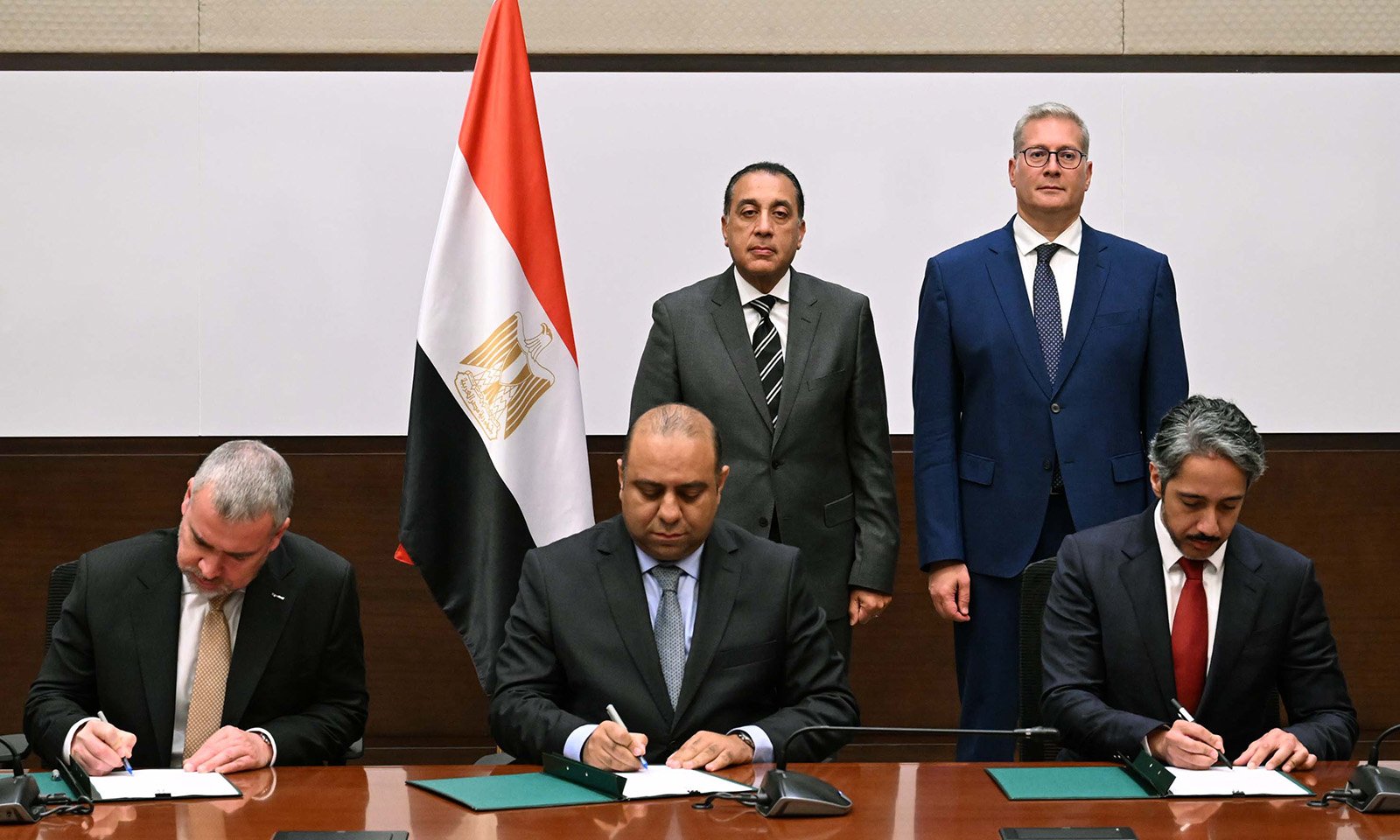
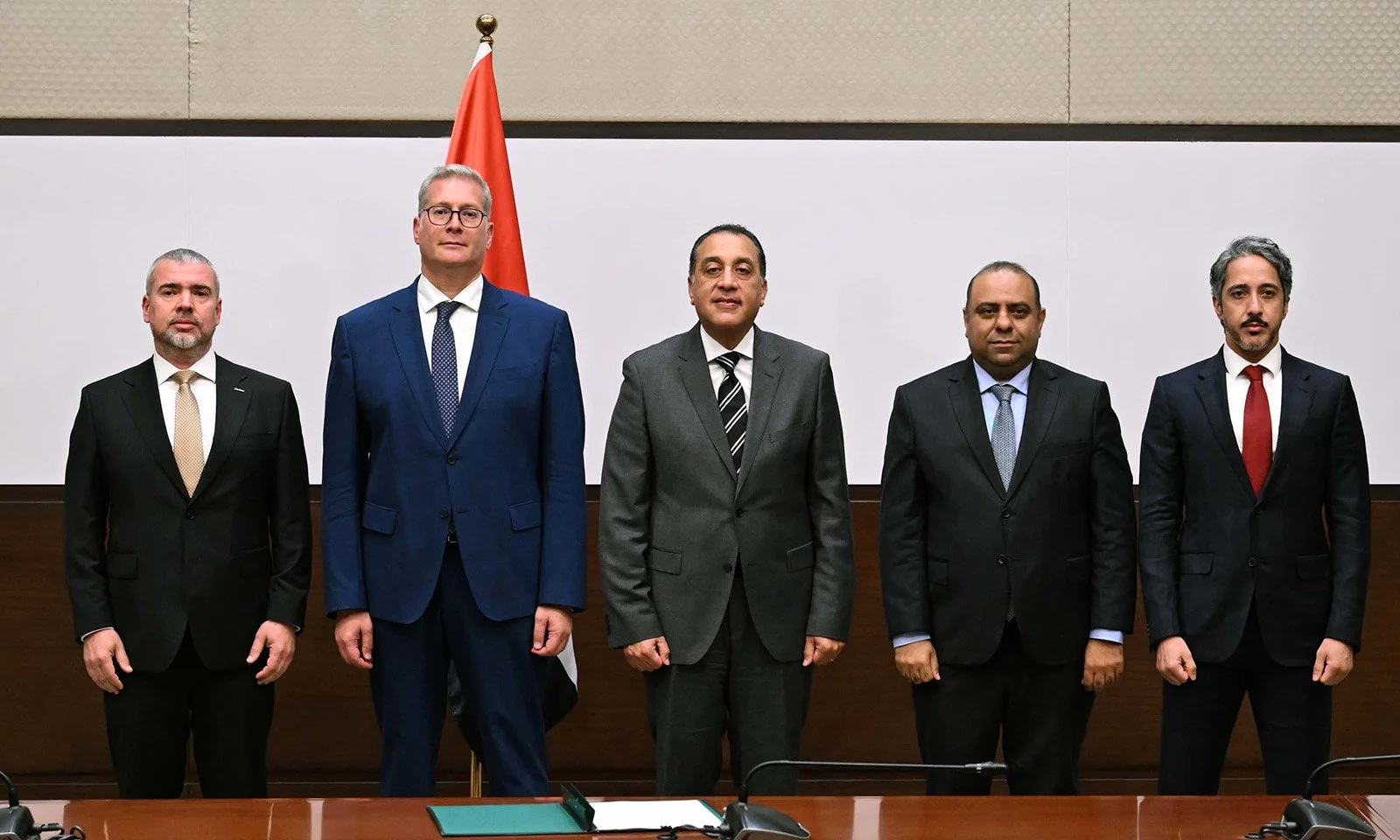
Doha, Qatar | May 26, 2026 - QatarEnergy has signed a memorandum of understanding with Egypt and ExxonMobil to study the development and commercialisation of natural gas discoveries in Cyprus through Egypt’s existing gas and LNG export infrastructure, marking a formal step towards a long-discussed Eastern Mediterranean gas corridor that could turn stranded offshore resources into exportable supply. QatarEnergy announced the agreement in Doha on 21 May 2026, saying the MoU would enable the parties to study future growth opportunities and flexible commercial frameworks around Egypt’s regional position and gas infrastructure.
The agreement does not yet sanction a project. It is not a final investment decision, nor does it settle the commercial architecture for future gas flows. But its strategic weight lies in what it brings into the same frame: Cyprus’ offshore discoveries, ExxonMobil and QatarEnergy’s upstream position in Block 10, and Egypt’s established liquefaction network on the Mediterranean coast.
For years, Cyprus gas has been caught between geology and infrastructure. Discoveries have accumulated, but development has moved slowly because offshore gas is only as valuable as the route that takes it to market. The new MoU points to Egypt as that route, using the country’s existing gas system and LNG export plants rather than requiring Cyprus to build a new liquefaction hub from scratch.
QatarEnergy said the MoU highlights Egypt’s role as a potential hub for Eastern Mediterranean gas, supporting deeper integration between Egypt and Cyprus in natural gas while optimising the use of existing infrastructure. It also said the infrastructure serves domestic consumers and global markets, giving the agreement both a regional and export-market logic.
“This MoU represents an important step in advancing regional energy cooperation across the Eastern Mediterranean through unlocking the long-term commercial potential of natural gas resources across that region,” said Saad Sherida Al-Kaabi, Qatar’s Minister of State for Energy Affairs and QatarEnergy’s President and Chief Executive.
The Cyprus prize
The immediate prize sits offshore Cyprus, where ExxonMobil and QatarEnergy have been building a position around Block 10. The chronology matters. ExxonMobil announced the Glaucus-1 discovery in February 2019, saying the well had encountered a gas-bearing reservoir in Block 10, southwest of Cyprus in the Eastern Mediterranean. ExxonMobil said the well encountered approximately 436 feet, or 133 metres, of gas-bearing reservoir, with preliminary interpretation suggesting an in-place natural gas resource of about 5 trillion to 8 trillion cubic feet, subject to further analysis.
The 2019 discovery established the first major anchor for the block. ExxonMobil’s own announcement identified ExxonMobil Exploration and Production Cyprus (Offshore) Limited as operator with a 60% interest, while Qatar Petroleum International Upstream O.P.C., now part of QatarEnergy’s upstream portfolio, held 40%. Cyprus’ Hydrocarbons Service later listed Block 10 as licensed to ExxonMobil Exploration and Production Cyprus (Offshore) Limited and QatarEnergy International E&P LLC, and placed the current best-estimate gas-in-place resource for Glaucus at 3.7 trillion cubic feet as of 2022.
By 2025, the Block 10 story had widened with Pegasus-1. Reuters, citing the Cypriot government, reported in July 2025 that an ExxonMobil-led consortium with QatarEnergy had found a natural gas reservoir at Pegasus-1 in Block 10, with preliminary results indicating a gas-bearing reservoir of about 350 metres at a depth of 1.9 kilometres. The same report said Pegasus was the consortium’s second gas discovery in Block 10 after Glaucus-1.
By April 2026, the Block 10 story had moved from discovery to commercial planning. Cyprus Energy Minister Michalis Damianos confirmed that the ExxonMobil-QatarEnergy consortium had submitted a declaration of commerciality for both Pegasus and Glaucus on 30 March 2026, describing it as a significant milestone towards exploitation. The minister said the two fields totalled around 7 trillion cubic feet and that the consortium was expected to submit a development plan within a year, paving the way for a final investment decision in the coming years and a possible 2033 production milestone.
That is the context behind the larger resource figure now circulating around the MoU. The agreement does not by itself unlock 9 trillion cubic feet of gas. What it does is open a structured process for examining whether Cyprus gas can be routed through Egypt, monetised through existing facilities and eventually sold into regional and global markets.
The distinction is important. The MoU is an enabling document, not a development plan. It gives the parties a framework to test commercial terms, infrastructure requirements, sequencing and the economics of tying Cyprus’ offshore discoveries into Egypt’s gas network. Still, in a basin where export-route uncertainty has repeatedly slowed projects, even a non-binding framework can mark a material shift.
Egypt’s missing-piece infrastructure
Egypt’s advantage is simple: it already has what Cyprus lacks. The country hosts LNG export infrastructure on its Mediterranean coast. Egyptian LNG says its Idku facility, located 50 kilometres east of Alexandria, has two trains in operation, each with a capacity of 3.6 million tonnes per annum, giving the plant a combined capacity of 7.2 million tonnes per annum.
At Damietta, Egypt has a second LNG export outlet. Eni announced in 2021 that it had closed an agreement with its partners for the restart of the Damietta liquefied natural gas plant in Egypt, describing the facility as having a capacity of 7.56 billion cubic metres per year. That puts Damietta back into the centre of Egypt’s LNG export system, alongside Idku.
That infrastructure has long made Egypt the natural gathering point for Eastern Mediterranean gas. For Cyprus, Egypt offers a path around one of the hardest questions in gas development: how to justify capital-intensive liquefaction when reserves are substantial but not yet at the scale of the world’s largest LNG provinces. Sending gas to Egypt could allow the partners to use established liquefaction infrastructure and reduce the need for a standalone LNG plant in Cyprus.
For Egypt, the logic runs in the opposite direction. Imported or regionally sourced feedgas can support higher utilisation of export assets, reinforce Cairo’s hub ambitions and deepen its role as the basin’s commercial clearing house. QatarEnergy’s announcement explicitly framed the MoU as a way to optimise existing infrastructure and strengthen integration between Egypt and Cyprus.
A corridor outside the Gulf chokepoints
The agreement also carries a wider strategic undertone. QatarEnergy is one of the world’s most influential LNG players, but its home geography is tied to the Gulf and the shipping routes that flow out of it. Cyprus-to-Egypt gas, by contrast, would sit on the Mediterranean side of the energy map.
That does not replace Qatar’s North Field position. It gives QatarEnergy another growth line in a different maritime theatre. For Europe-bound cargoes, LNG loaded from Egypt’s Mediterranean coast would not need to transit the Strait of Hormuz or the Red Sea. QatarEnergy has not framed the MoU in chokepoint terms, but the geography is commercially relevant.
The point should not be overstated. No pipeline route, sales agreement or final investment decision has been announced. But if Cyprus gas is ultimately developed through Egypt, QatarEnergy and ExxonMobil would be participating in an Eastern Mediterranean supply chain that connects offshore Cyprus to Egyptian liquefaction and onward markets from the Mediterranean basin.
Part of a wider Mediterranean push
The Egypt-Cyprus MoU did not arrive in isolation. It came shortly after QatarEnergy signed another memorandum of understanding, this time with TotalEnergies, ConocoPhillips and the Syrian Petroleum Company, for cooperation in oil and gas exploration offshore Syria. QatarEnergy’s own announcement said the agreement covers a technical review to evaluate the potential of Block 3 offshore Syria and establishes a framework for further technical and commercial discussions. Block 3 lies in the Levantine Basin in the eastern Mediterranean waters offshore Latakia, in water depths ranging from 100 to 1,700 metres.
Read together, the two May agreements show QatarEnergy sharpening its focus on the Mediterranean as a frontier of optionality. In Syria, the move is exploratory and politically complex. In Cyprus and Egypt, the question is less about whether gas exists and more about whether it can be commercialised at scale.
The ExxonMobil partnership gives QatarEnergy an anchor in Cyprus. Egypt gives the partnership an infrastructure option. The MoU gives all three parties a formal table around which to test whether those pieces can be assembled into a bankable development.
The road from MoU to market
The hard work begins after the announcement. The parties will have to assess pipeline routing, gas quality, processing needs, third-party access, fiscal terms, offtake structures, financing and the allocation of risk across upstream development and downstream liquefaction. They will also have to align the interests of Cyprus, Egypt, ExxonMobil and QatarEnergy in a region where energy projects often move as much by diplomacy as by engineering.
Al-Kaabi framed the agreement as a cooperative step with Egypt and ExxonMobil. “We look forward to working closely with the Government of Egypt and our strategic partner ExxonMobil to achieve the objectives of this MoU for the benefit of all parties,” he said.
That formulation captures the narrow and broad significance of the deal. Narrowly, it is a study arrangement. Broadly, it is a test of whether the Eastern Mediterranean can move from discovery-led optimism to infrastructure-led monetisation.
For Cyprus, the MoU offers the possibility of a credible export pathway. For Egypt, it reinforces the country’s bid to remain the basin’s gas hub. For ExxonMobil and QatarEnergy, it could turn Block 10 from a resource position into a development platform. And for the wider market, it signals that the Eastern Mediterranean’s next LNG story may not require a new liquefaction plant at all, but the disciplined use of infrastructure already waiting on Egypt’s coast.
