
SMEC Appointment Puts Solomon Islands’ Tina River Hydropower Push Into the Grid-Delivery Phase
SMEC’s appointment to oversee the Tina River Transmission System in the Solomon Islands captures a wider turn in global hydropower: the sector is no longer being sold only as dams and turbines, but as firm clean power for grids under stress. From Norway’s reinvestment in ageing hydro assets to Portugal’s wind-hydro hybrid model, Vietnam’s floating solar push and Brookfield’s Google-backed hydro deal in the US, hydropower is being recast as a flexible, strategic anchor for the next phase of the energy transition.
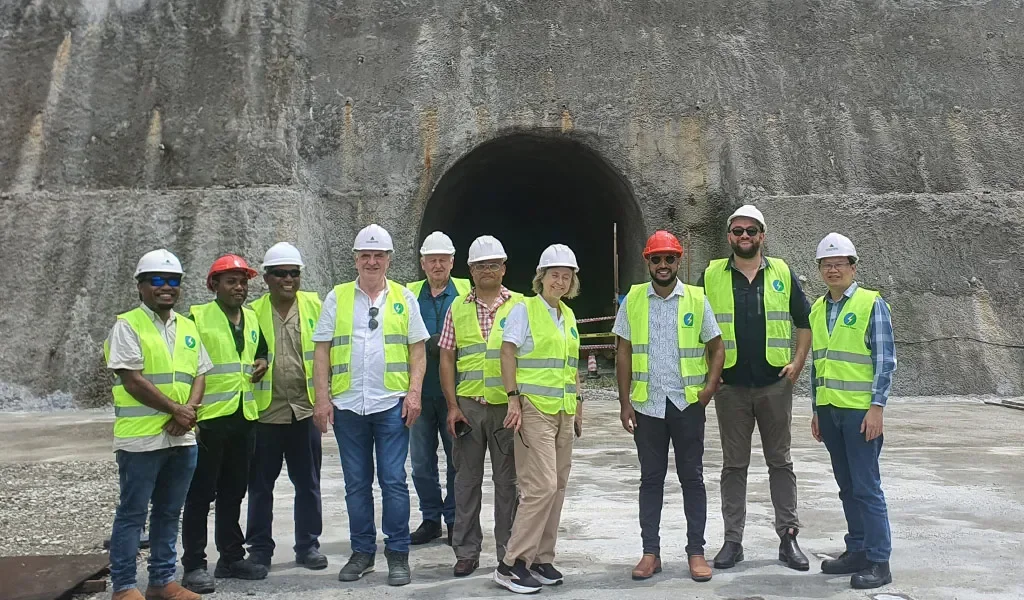
Honiara, Solomon Islands | May 25, 2026 - SMEC has been appointed as Project Management and Supervision Consultant for the Tina River Transmission System in Honiara, moving the Solomon Islands’ flagship hydropower programme into the critical grid-delivery phase at a moment when hydropower is being repositioned globally as more than legacy baseload.
Across recent developments in Norway, Portugal, Turkey, Vietnam, Bhutan and the United States, the sector is showing a sharper investment logic: upgrade old assets, hybridise dams with wind and solar, use reservoirs more intelligently, and make hydropower work harder for grids under pressure from electrification, data centres and intermittent renewables.
Solomon Islands Moves From Hydropower Promise to Transmission Execution
The Solomon Islands appointment is the hard infrastructure signal in that wider shift. SMEC, an SJ Group company, said on May 13, 2026 that it had been appointed by the Solomon Islands Electricity Authority, trading as Solomon Power, as Project Management and Supervision Consultant for the Tina River Transmission System.
The assignment covers the transmission link that will carry electricity from the Tina River Hydropower Project to the Honiara grid, helping move the country away from a power system historically exposed to imported diesel, high generation costs and fuel-price volatility.
The Tina River Hydropower Project has long carried national significance because it is the Solomon Islands’ largest renewable energy initiative and a central piece of the country’s effort to diversify generation. The associated transmission system is the bridge between that ambition and usable electricity. Once operational, SMEC says it is expected to enable the delivery of roughly 70–80 GWh of renewable electricity a year to the Honiara grid.
The scope is specific and consequential. It includes construction of a 22-kilometre, 66 kV overhead transmission line between the Tina River Substation and the Lungga Substation, together with 33/66 kV and 66/33 kV transformers and related substation works at both locations. Solomon Power separately describes the line as a 22-kilometre transmission project that will carry electricity from the Tina Hydropower Facility to the existing Lungga Power Station, adding that 66 kV will be the highest voltage rating the utility has operated.
SMEC’s role is not merely advisory. As Project Management and Supervision Consultant, the firm will provide project management, contract administration and construction supervision services, acting as Engineer under the FIDIC Red Book. Its responsibilities include planning and programming, supervision of the infrastructure works contractor, design review, quality assurance, safeguards compliance, risk management and contract administration.
The project is backed by the Australian Government through the Australian Infrastructure Financing Facility for the Pacific (AIFFP) and Export Finance Australia, and is being delivered with Solomon Power and the Solomon Islands Government. AIFFP has described the transmission line as part of the broader Tina River Hydropower Project, which it identifies as the country’s largest renewable energy initiative, Australia’s largest climate-finance investment in the Pacific and the Solomon Islands Government’s first large-scale public-private partnership.
A Global Rewind Shows Hydropower’s New Investment Thesis
The Solomon Islands development lands in a week that underlined hydropower’s changing global role. In Norway, Statkraft has raised its ten-year investment plan for Norwegian power generation to about NOK80 billion, or roughly €7.4 billion, with more than NOK70 billion directed to hydropower.
The updated estimate is above the NOK44 billion to NOK67 billion range presented in January 2024 and reflects a larger project portfolio, inflation and an extended planning horizon. For Statkraft, the programme is less about building hydropower from scratch than rebuilding the backbone of a mature power system.
The company plans major maintenance of existing assets, upgrades, further development and new capacity, with at least five major upgrade projects expected to be initiated by 2030. It is assessing opportunities at assets including Nore, Mår and Aura, while also planning to expand the Alta hydropower plant with a third generating unit.
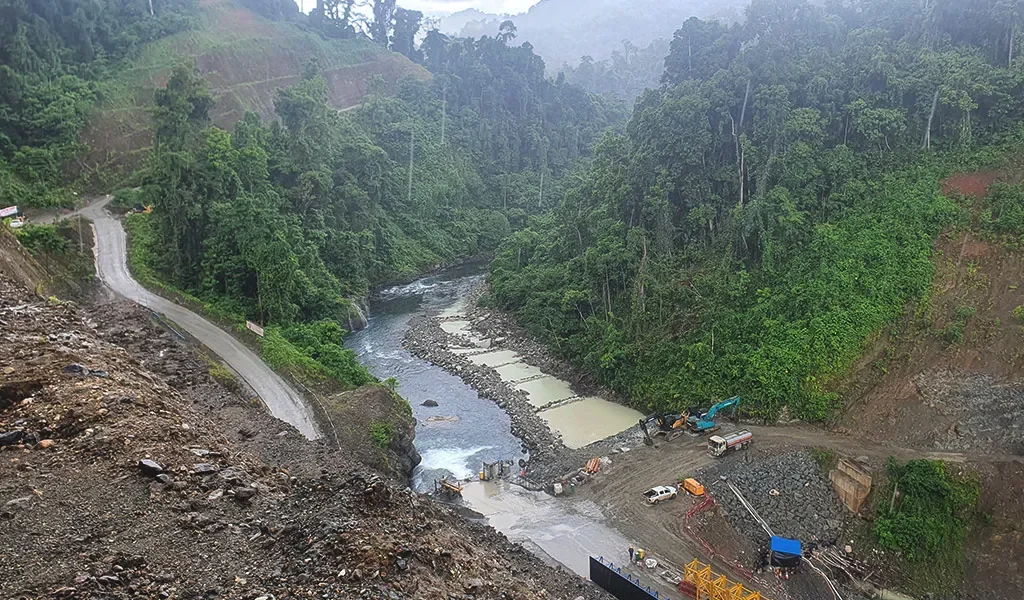
Portugal is moving along a different but related track: hybridisation. Iberdrola has begun commissioning the Tâmega Norte wind farm, the first of two wind farms tied to the Tâmega Complex in northern Portugal. The company describes the development as the first grid-connected wind-hydro hybrid project on the Iberian Peninsula, pairing the wind farms with a large pumped-storage hydroelectric system so both technologies can complement each other and release stored energy when the system needs it.
The two wind farms, Tâmega Norte and Tâmega Sul, will have a combined 274 MW of capacity and are being developed with a total expenditure of €346 million. Iberdrola says the wind farms will share grid-connection infrastructure with the Tâmega Electroproduction System substation and are expected to produce about 601 GWh a year while avoiding more than 230,000 tonnes of CO₂ emissions annually.
Turkey is showing the same hybrid logic through solar. ENERGO-PRO verifies the 280 MW capacity, acquisition timeline and commissioning history of its Alpaslan 2 hydropower plant, while sector coverage has reported that the facility has been upgraded into a hybrid plant with the addition of a 40 MW photovoltaic system below the dam.
The company acquired Alpaslan 2 in 2017, commissioned the first Francis-type turbine in 2020 and completed construction in 2021, bringing four units into operation. The development illustrates how operators are increasingly treating hydropower sites not only as generation assets but as platforms for hybrid clean-power systems.
Vietnam’s next move may come on hydropower reservoirs themselves. VietnamPlus, citing Vietnam News Agency, reported that EVNGENCO1 has proposed nearly 270 MW of floating solar across three hydropower reservoirs in Lam Dong province, comprising 96 MW at Dai Ninh Lake, 100 MW at Ham Thuan Lake and 70 MW at Da Mi Lake.
The proposal carries an estimated investment of about VND4.4 trillion, or $166 million, and builds on Vietnam’s existing Da Mi floating solar project, which began commercial operation in 2019 and generates about 70 million kWh annually. The strategic logic is clear: reservoirs can serve a dual purpose, providing water storage for hydropower while offering surface area for land-light solar deployment.
Bhutan, meanwhile, is still expanding the traditional project pipeline, but with a multipurpose edge. Druk Green Power Corporation says main civil works have begun on the 25 MW Begana Integrated Multipurpose Small Hydropower Project, a run-of-river scheme on the Thimchhu River expected to generate about 104 million units of energy annually.
The project is being implemented by Druk Hydro Energy Limited, a subsidiary of Druk Green Power Corporation, with financing support from the OPEC Fund for International Development and the Kuwait Fund for Arab Economic Development. Beyond generation, Begana is designed to support drinking-water supply reliability for Thimphu and surrounding areas, placing it squarely within the growing category of multipurpose water-energy infrastructure.
Hydropower’s New Frontier Is Flexibility, Not Just Concrete
The most revealing shift may be in the United States, where hydropower is being pulled into the data-centre and clean-power economy. The verified signal is Brookfield’s 2025 framework agreement with Google. Under that arrangement, Brookfield Asset Management and Brookfield Renewable agreed to deliver up to 3,000 MW of carbon-free hydroelectric capacity across the United States.
The first contracts covered the Holtwood and Safe Harbour hydroelectric facilities in Pennsylvania, representing more than $3 billion of power and 670 MW of capacity. The strategic point is not simply that large technology buyers are procuring clean energy. It is that hydropower’s dispatchability, long asset life and grid-support value are becoming more central in power markets shaped by artificial intelligence, cloud infrastructure, electrification and variable wind and solar.
Taken together, the developments point to a sector whose value proposition is changing. Hydropower is still about water, turbines and concrete, but the current investment cycle is increasingly about transmission, flexibility, hybrid operation, reservoir optimisation, asset-life extension and grid services.
In the Solomon Islands, that story is now visible in the 22-kilometre line needed to turn Tina River from a national project into delivered power for Honiara. Globally, the same story is playing out at different scales: old plants are being rebuilt, reservoirs are being repurposed, hydro is being paired with wind and solar, and large electricity buyers are rediscovering the strategic value of firm clean power when the grid is under stress
