The Strait, the Shock and the Sovereignty Race: How Accra Read the Loudest Silence in Oil Markets
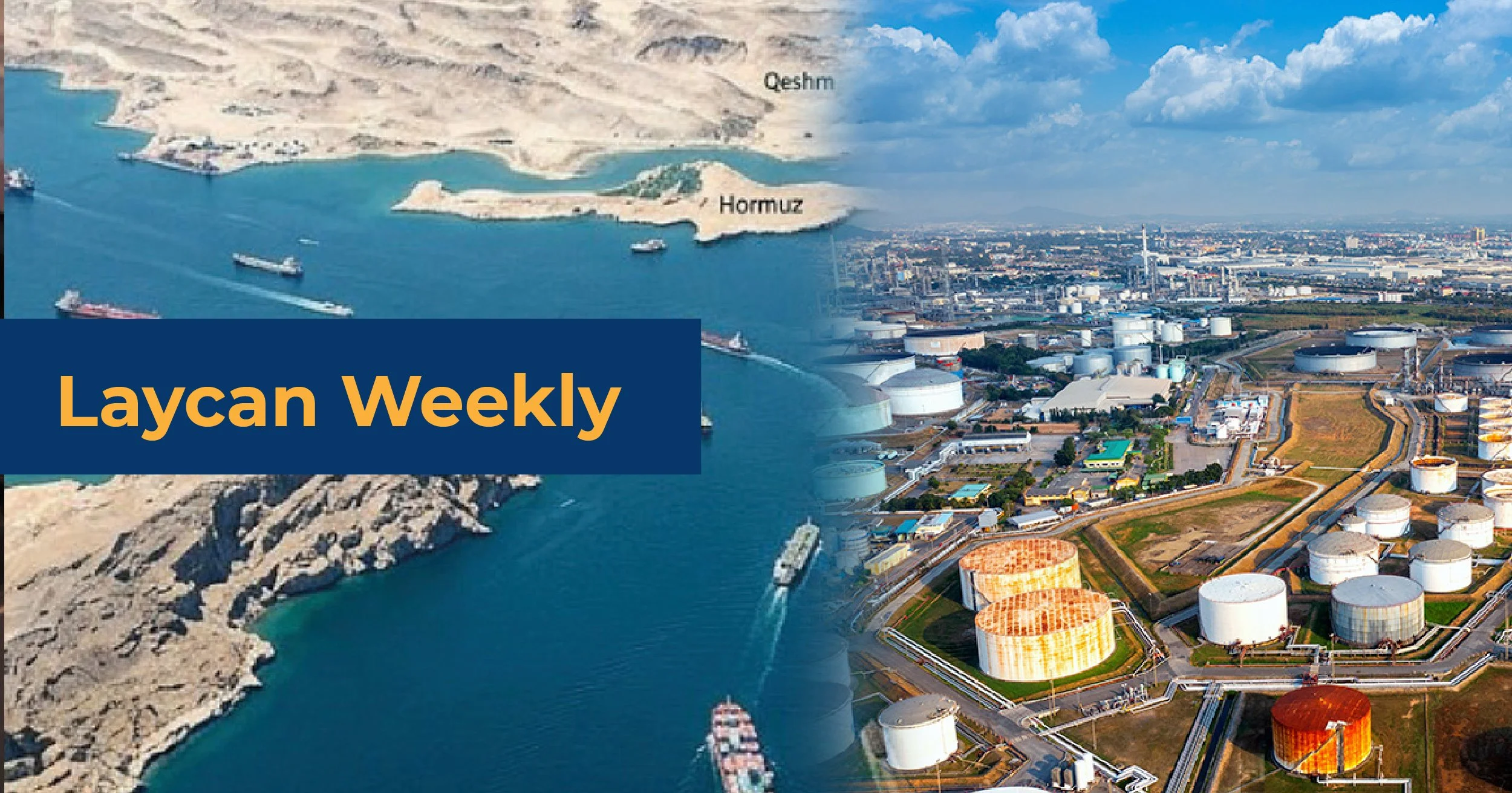
There are moments in petroleum history when the market stops behaving like a spreadsheet and starts behaving like weather. This week felt less like trading and more like atmospheric disturbance. Tanker routes became fault lines. Freight premiums began speaking louder than ministers. Insurance markets started pricing anxiety itself. And somewhere between the Strait of Hormuz and Accra’s forecourts, the global oil order revealed a nervous system few countries can still afford to outsource.
Airport Residential Area, Accra | May 16, 2026 - The phrase “All Quiet on the Western Front” has rarely sounded more deceptive.
Because beneath the surface calm of relatively orderly pump stations and restrained public messaging sits what may become the most consequential restructuring of energy sovereignty since the oil crises that forged modern OPEC itself. Only this time, the fracture is not merely between producers and consumers. It is between countries that refine and countries that wait. Between states that command molecules and states that merely purchase them. Between nations building sovereign energy architecture and those still renting stability from geopolitical luck. In Ghana, the warning lights were subtle, but unmistakable.
Hormuz Is No Longer Geography. It Is a Pricing Mechanism.
The Chamber of Oil Marketing Companies’ latest market outlook carried the kind of sentence analysts usually circle in red ink long before consumers feel its consequences. “In the coming window, pump prices are expected to rise due to the combined effect of the rise in international prices and the slight depreciation of the cedi, coupled with the recent surge in the freight and insurance premiums due to the insecurity issues around the Middle East.”
That statement matters because it captures the modern anatomy of oil shocks. Crude prices alone no longer tell the story. The real violence now hides in logistics, insurance, maritime risk and financing spreads. A barrel delayed by insecurity becomes a more expensive barrel long before it reaches Tema.
And just as the market was recalibrating around Middle Eastern instability, the United Arab Emirates detonated perhaps the largest structural surprise in the oil market in decades: its departure from OPEC.
The exit of the cartel’s third-largest producer is not simply an institutional divorce. It is a philosophical one. Abu Dhabi appears to have concluded that in a fragmented energy future, strategic agility may matter more than cartel discipline. At precisely the moment the market needed coherence, one of its largest stabilizing actors chose optionality instead.
That changes the psychology of supply security globally.
The old oil order functioned like a heavily armed orchestra. Chaotic, certainly, but coordinated when panic emerged. What happens now is less predictable. The market is entering a phase where sovereign producers increasingly behave like strategic free agents. Every importer must therefore begin thinking less like a buyer and more like an architect of survival.
Against that backdrop, Ghana’s tax subvention this pricing window, intended to cushion consumers from immediate pump pressure, reflects a government trying to buy time against imported volatility, in much the same way that Accra has been experimenting earlier and more explicitly with demand-side relief tools that are now finding echoes in advanced economies. Washington’s recent move to suspend the federal gas tax reads less like innovation and more like convergence, a late-cycle adoption of a stabilisation reflex that emerging-market importers like Ghana have already been forced to normalise under the pressure of structurally volatile oil markets. But subsidies during structural shocks resemble umbrellas in cyclones. Useful, but insufficient without deeper shelter.
At the same time, Accra’s energy managers appear increasingly aware that supply security is not only threatened by geopolitical fractures abroad, but by leakages within the domestic chain itself. Over the past year, regulators and security agencies have steadily hardened their posture against illicit petroleum activity, evolving from fragmented enforcement into a more coordinated inter-agency containment architecture aimed at protecting both state revenues and downstream integrity.
That posture reached its most theatrical expression this week in Sekondi-Takoradi, where a joint operation between the National Petroleum Authority and the Western Naval Command culminated in the destruction of impounded smuggling vessels linked to illicit fuel movements along Ghana’s coast. Declaring that “enough is enough,” NPA Chief Executive Officer Godwin Kudzo Tameklo signalled an enforcement mood increasingly shaped by deterrence rather than tolerance, as authorities attempt to seal the informal leakages that become especially dangerous during periods of global supply strain.
In an era of tightening freight corridors, volatile import premiums and nervous fuel markets, every diverted litre begins to look less like petty illegality and more like an assault on national energy resilience itself.
Accra’s Quiet Pivot Toward Strategic Petroleum Nationalism
Against that backdrop, Bloomberg’s report that Ghana is seeking a major stake in the Deepwater Tano Cape Three Points block reads less like an investment story and more like doctrine formation.
The effort to acquire Lukoil’s 38% stake, reportedly complicated by Western sanctions, signals a country increasingly unwilling to remain downstream of its own destiny. The move appears tied not merely to reserve accumulation, but to something more operationally immediate: securing future crude streams for domestic refining infrastructure, particularly as industry insiders signal concerns over crude procurement reliability for the Tema Oil Refinery (during the NPA’s Consumer Rights Day Event’s second panel discussion).
This is where the global energy map begins folding into itself. For decades, African oil economies exported crude, imported refined products and absorbed the inflationary punishment in between. The continent effectively outsourced industrial capture while retaining geological exposure. That model is now being stress-tested by war, sanctions, fractured shipping lanes and volatile refining spreads.
The question confronting African states is becoming brutally simple: who controls the barrel between extraction and combustion? Ghana’s apparent upstream interest suggests policymakers increasingly understand that energy sovereignty is not merely about discovering hydrocarbons. It is about securing custody across the chain.
The 24-Hour Economy Is Really an Energy Reliability Experiment
This is also why Ghana’s launch of the downstream petroleum sector’s 24-Hour Economy pilot deserves to be read as more than a labour or industrial policy initiative.
The programme, spanning 268 fuel stations, eight depots and two refineries across key regions, is effectively a stress test of whether Ghana’s petroleum logistics backbone can support continuous economic motion under conditions of global supply instability. That matters enormously.
Industrial economies are not built by speeches. They are built by uninterrupted flows. Diesel at midnight. Jet fuel before dawn. LPG during grid instability. Truck movements synchronized with refinery throughput. The modern economy is ultimately choreography powered by hydrocarbons.
The memorandum between the National Petroleum Authority and the 24-Hour Economy Authority, with its emphasis on lighting, digital fuel monitoring, staffing systems and fire safety protocols, suggests regulators increasingly appreciate that energy infrastructure is not peripheral to industrial policy. It is industrial policy.
The symbolism is equally striking. At the exact moment global oil systems are fragmenting externally, Ghana is attempting to tighten operational coherence internally. That is not accidental timing. It is adaptive statecraft.
Angola, Dangote and the New African Refining Imagination
Elsewhere on the continent, the sovereignty race is becoming more visible.
Angola’s Cabinda Refinery has now entered live operation, supplying domestic markets while beginning fuel exports. The project arrives after Angola’s own exit from OPEC and carries the unmistakable signature of a country seeking greater value retention from its crude streams.
For years, African refining projects resembled unfinished cathedrals: politically celebrated, financially delayed and perpetually awaiting operational salvation. Cabinda’s activation changes the tone. It transforms theory into throughput. More importantly, Angola is beginning to occupy a dual role in the current supply shock: domestic stabilizer and international buffer.
Tokyo’s engagement with Angolan crude supply illustrates how rapidly African barrels are being repositioned within global strategic calculations. Japanese political signalling around deeper participation in Angolan crude transactions reflects something larger than bilateral cooperation. OECD economies are diversifying risk geography in real time.
Africa is no longer merely a supply frontier. It is becoming an insurance policy.
Nigeria’s Dangote Refinery has meanwhile demonstrated what domestic refining scale can do during external dislocation. Its reported surge in jet fuel exports to Europe amid the continent’s aviation fuel pressures reveals the real prize in energy industrialization: not self-sufficiency alone, but geopolitical leverage. Refining transforms countries from price takers into margin participants. A crude-exporting nation sells potential. A refining nation sells capability.
Egypt and the Financial Architecture of Energy Sovereignty
But sovereignty without financing remains theatre.
That is why Egypt’s emerging role in coordinating discussions around the Africa Energy Bank, APPO’s institutional agenda and broader continental financing mechanisms may prove one of the most important long-term developments beneath the week’s headlines.
For years, African energy conversations have suffered from a structural contradiction: the continent possesses hydrocarbons, but often relies on external capital systems increasingly hesitant to finance them. The result has been a peculiar dependency cycle where African states own the resources but negotiate from financial vulnerability.
Cairo now appears to be positioning itself as a convening ground for something more coordinated: African-led petroleum financing aligned with African developmental priorities. The convergence of Afreximbank meetings, AU coordination sessions and the Alamein Africa Forum signals a continent increasingly aware that energy sovereignty without capital sovereignty is incomplete. Pipelines, refineries and storage systems are ultimately monuments built from financing terms.
Houston and the Reinvention of Ghana’s Petroleum Story
This broader recalibration was also visible at OTC 2026 in Houston, where Ghanaian energy institutions appeared unusually synchronized in their messaging.
GNPC and GIPC pushed the upstream investment narrative while TOR projected downstream recovery and industrial capability. Together, the pitch represented something more ambitious than sector promotion. Ghana was effectively attempting to rewrite its petroleum identity from fragmented operator landscape into coordinated national energy platform.
That distinction matters.
Investors no longer evaluate petroleum jurisdictions solely by reserve potential. They increasingly assess operational coherence, regulatory durability, refining ambition and strategic direction. In a world entering chronic supply uncertainty, countries able to present integrated energy visions gain credibility disproportionate to reserve size.
The market is no longer rewarding possession alone. It is rewarding preparedness.
The New Oil Order Is Being Written in Freight Costs, Refineries and Institutional Nerve
The deeper irony of this moment is that the world’s largest oil supply shock may not ultimately be remembered for shortages alone. It may be remembered for what it revealed about the hierarchy of resilience.
Countries with refining depth gained maneuverability. Countries with strategic reserves gained breathing room. Countries with institutional coordination gained investor confidence. Countries without them discovered how quickly sovereignty leaks through shipping lanes.
And so, while the western front may appear quiet, the petroleum world beneath it is anything but silent. It is grinding, recalculating and repositioning itself with the metallic groan of a new order being assembled mid-crisis.
From Accra to Houston, from Cabinda to Cairo, the signal emerging through the noise is increasingly difficult to ignore: The next oil superpowers may be defined less by reserves underground than by resilience above it.
